
It was a geography of reassurance. For decades, the Pacific Ocean looked more like a moat than a highway to New Zealand’s defence planners. That assumption has cracked.
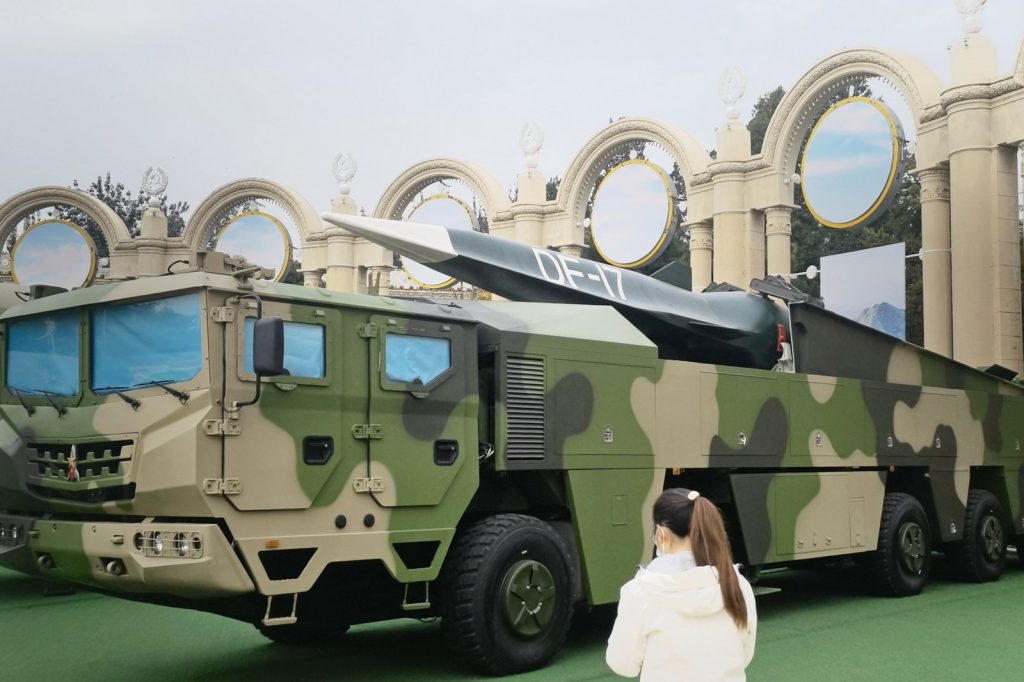
The Lowy Institute now says China’s DF-27 ballistic missile, with a range between 5,000 and 8,000 kilometres, is operational. With refinements, the analysis warns, it could reach the New Zealand mainland.
This is the new arithmetic of distance. The numbers tell a blunt story. A missile that can cross the Tasman Sea in minutes.
A live-fire exercise last year by a Chinese naval task group in that same sea, below a vital air route linking Australia and New Zealand. No warning was given.
The breach of the regional norm for advance notification was deliberate. It demonstrated something New Zealand had not had to face before: force projection into waters long considered remote. Then came April.
A New Zealand surveillance aircraft, monitoring North Korean sanctions evasion, was accused by China of “close-in reconnaissance and harassment.” The accusation was not new. In December, Chinese fighter jets locked fire-control radar onto Japanese F-15s near Okinawa. In March, Australia protested after a Chinese naval helicopter conducted what Canberra called an unsafe intercept of one of its military helicopters over the Yellow Sea.
These are not distant incidents. They form a pattern.
New Zealand is a trading nation. Its economy runs on secure shipping lanes. Its marine estate is vast.
The buffer of ocean that once made those things feel safe is shrinking. The question now is whether the country’s defence posture has kept pace.
The signs suggest it has not. The shift is not sudden. China’s military expansion has been reshaping the Indo-Pacific security order for years.
What has changed is the speed and the reach. The DF-27 is not a theoretical weapon. It is operational.
That means the calculus for New Zealand is no longer about hypotheticals. It is about range maps and flight times.
The Tasman Sea exercise last year was a concrete demonstration. A Chinese naval task group, conducting live fire below a major air route. No notification.
No precedent. It showed that Beijing can project power into waters New Zealand has long treated as a natural barrier.
The buffer is gone. The April incident with the New Zealand surveillance aircraft was another marker. China’s accusation of “close-in reconnaissance and harassment” was a standard diplomatic response.
But the context matters. New Zealand was monitoring North Korean sanctions evasion, a United Nations obligation. The response from Beijing was not proportionate.
It was a signal. The Japanese and Australian incidents reinforce the same message.
Chinese fighter jets directing fire-control radar at Japanese F-15s near Okinawa in December. A Chinese naval helicopter intercepting an Australian military helicopter over the Yellow Sea in March. These are not isolated events.
They are a pattern of assertive behaviour across the region. For New Zealand, the implications are direct.
The country is reliant on secure sea lanes. Its defence forces are small. The distance that once served as a shield no longer does.
The Lowy Institute analysis is not alarmist. It is a factual assessment of a changing strategic environment. The government in Wellington is now looking at options.
Japan is one. The relationship has been deepening for years.
Defence cooperation, intelligence sharing, joint exercises. The logic is straightforward: when the buffer disappears, you need partners. The geography has not changed.
The ocean is still there. But what travels across it has changed.
Missiles with ranges measured in thousands of kilometres. Naval task groups conducting live fire in what was once a quiet stretch of sea. Surveillance aircraft being accused of harassment for doing their job.
The shield of distance was always an illusion. It is just that the illusion is now gone.




