
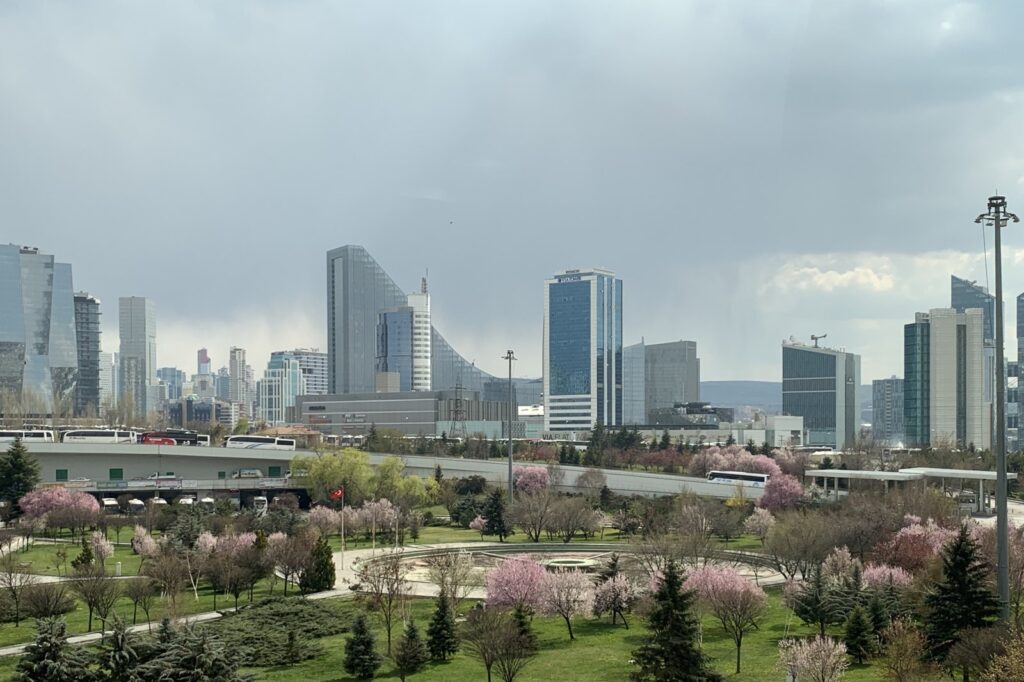
ANKARA, October 19, 2026 — Türkiye has proposed a 229% increase in allocations for weapons, ammunition, and defense equipment for the 2027 fiscal year, signaling a major push toward domestic manufacturing independence. According to official statements from Ankara, the strategic shift aims to reduce reliance on foreign suppliers while the nation maintains its traditional military posture within Western alliances.
The 2027 Defense and Security Budget
According to the budget proposal outlined by Vice President Cevdet Yilmaz, total defense spending is earmarked at 2.206 trillion Turkish liras, which translates to $44.5 billion. A separate allocation of $25.2 billion has been designated for internal security. Yilmaz clarified during a ceremony at the presidential complex that the 229% surge applies specifically to procurement allocations for weapons systems, ammunition, and military equipment rather than the entirety of the defense budget. The proposal has already been submitted to parliament within the constitutional deadline and awaits review by the Planning and Budget Committee.
This defense expansion sits within a broader central government financial plan. The proposed framework includes $57.5 billion dedicated to national investments spanning irrigation, railways, maritime transport, oil and natural gas exploration, and mining. Education maintains the largest share of central government spending at 13.7%, receiving $75.6 billion, while $17.5 billion is set aside to address earthquake damage and strengthen disaster resilience. According to the government record, the push to strengthen the domestic defense industry is viewed as vital due to current global conditions.
Strategic Position and Alliance Commitments
Türkiye occupies a geopolitically significant location between Europe, Asia, and the Middle East, with coastlines along the Black Sea, Aegean Sea, and Mediterranean Sea. As a founding member of the OECD and G20, the country maintains the second-largest military personnel within the North Atlantic Treaty Organization. The nation operates as an upper-middle-income emerging economy with the world’s 16th-largest economy by nominal GDP and an EU candidate status backed by an existing customs union.
The balance between regional security demands and alliance obligations has shaped Ankara’s military planning for decades. The country emerged as a more homogenous nation state following the Turkish War of Independence and the 1923 proclamation of the Republic modeled on reforms by Mustafa Kemal Atatürk. Having remained neutral during most of World War II before participating in the Korean War, the modern state has consistently managed a complex security perimeter bordering nations such as Georgia, Armenia, Azerbaijan, Iran, Iraq, Syria, Greece, and Bulgaria.
Evolution of the Domestic Defense Industry
Government officials characterize the transformation of the country’s military manufacturing over the past quarter-century as a revolution. According to Yilmaz, this long-term policy has successfully lowered the nation’s dependence on foreign defense suppliers. The decision to prioritize domestic production over external procurement is framed by officials as a necessary adaptation to modern geopolitical realities.
This industrial growth runs parallel to ongoing domestic debates regarding governance and civil liberties. International watchdogs continue to monitor internal political developments and media operations within the country. However, the state procurement strategy remains focused on scaling up national production capabilities to secure supply chains for the armed forces, ensuring that military readiness is insulated from external diplomatic shifts while the nation fulfills its collective defense obligations.
Media Freedom and Political Pressures
Parallel to the defense sector expansion, significant tensions have emerged regarding media operations and civil liberties. On October 14, 2026, Turkish authorities conducted a dawn raid on the headquarters of Halk TV in Istanbul. According to reports, employees were unable to enter the building, and financial crimes police searched the premises while a new manager was appointed to run the channel. The state moved to appoint a trustee manager to oversee the broadcaster as part of an investigation into alleged corruption. During this operation, 17 arrest warrants were issued, and 11 individuals were taken into police custody.
Esther Major, Amnesty International’s Deputy Regional Director for Europe, described the seizure as a “brutal blow to media freedom” and a “direct assault on the right to freedom of expression.” She noted that the raid occurred on the same day that Ekrem Imamoğlu, President Erdoğan’s biggest political rival, was due to give testimony in a trial. The organization characterized the move as the latest attempt by Turkish authorities to silence opposition voices. Major stated that Turkish authorities must restore Halk TV’s independent operations and end their attacks on media freedom.
This incident follows the seizure of pro-opposition news television channel TELE1, which occurred just days before the first anniversary of that event. In a related development, Amnesty International joined 20 human rights and media freedom organizations in calling on social media platforms, including X and Meta, to resist Turkish court orders. These orders have blocked hundreds of accounts belonging to journalists and activists, a measure the organizations argue violates freedom of expression.
Balancing NATO Obligations with Regional Security Requirements
Türkiye’s strategic position as a NATO member with the alliance’s second-largest military personnel is further complicated by its regional security needs. Bordering nations such as Georgia, Armenia, Azerbaijan, Iran, Iraq, Syria, Greece, and Bulgaria, Türkiye must navigate a complex security perimeter. This geopolitical reality has historically shaped Ankara’s military planning, requiring a delicate balance between its commitments to NATO and its own regional defense priorities.
The nation’s 2027 defense budget proposal reflects this dual focus. While increasing domestic defense procurement to reduce reliance on foreign suppliers, Türkiye also emphasizes its continued adherence to NATO obligations. Vice President Yilmaz’s statement underscores the importance of this balance, highlighting that the nation’s strengthened domestic defense industry is a response to both global conditions and the need to fulfill collective defense commitments within the alliance.
Sources
- Türkiye proposes 229% increase in defense equipment procurement for 2027
- Turkey
- Türkiye: Police raid and state takeover of opposition TV channel ‘a brutal blow to media freedom’
Photo: Boubacar Amadou Cisse (CC BY-SA 4.0)




