
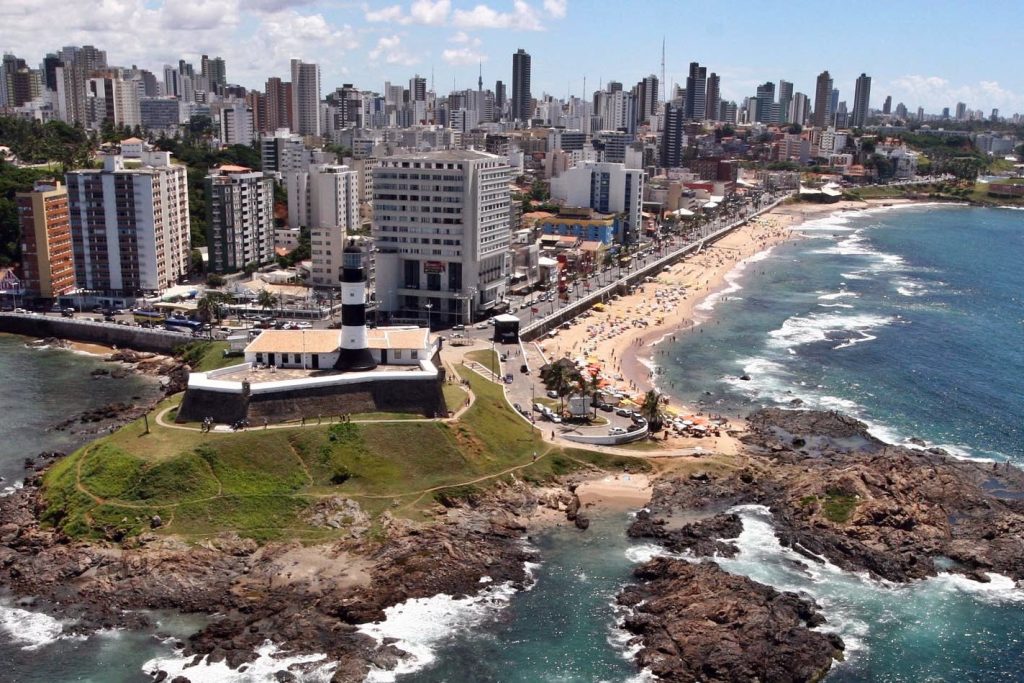
Rio de Janeiro, August 7 — A U.S. diplomatic cable from the American Embassy in Brazil dated November 14, 1963, details an inquiry into reports of an unidentified object near Salvador.
The document, released by the Department of State in its PURSUE tranche on August 7, 2026, confirms the embassy sought verification from Washington about a local newspaper’s claim of a “large metal manned balloon” and a “dead crewman aboard wearing [a] uniform or spacesuit with strange markings.”
The cable notes the embassy’s understanding that no such object was found to have crashed, though surveillance suggested a weather balloon might have been spotted in the area around November 8. This follows a discussion hindered by a poor-quality telephone connection the prior night.
The embassy’s concern centered on ensuring both Washington and Rio de Janeiro referenced the same unverified reports, highlighting tensions between official channels and local media narratives. A follow-on correspondence, labeled “DOS-UAP-D002,” is included in this collection but not detailed in the cable’s text. The document explicitly states no crashed object was located, though it acknowledges the possibility of a weather-related balloon.
This aligns with historical context of Cold War-era UFO sightings, though the cable itself contains no analysis of extraterrestrial implications. The embassy’s request for clarification underscores the era’s heightened scrutiny of anomalous phenomena.
At the time, the U.S. government maintained a cautious approach to unidentified objects, often prioritizing verification through military or scientific channels. The mention of a “four-meter-deep crater” formed upon impact—if such an event occurred—remains unverified in this document, leaving the nature of the reported object ambiguous. The cable’s release in 2026 reflects ongoing efforts to declassify historical records.
While the content is marked as unclassified, its inclusion in the PURSUE tranche suggests its perceived relevance to modern security or historical analysis. No modern figures or entities are named in the original text, and the document avoids speculation about the balloon’s origins.
Investors and analysts tracking historical intelligence disclosures may note this cable as an example of how Cold War-era reporting intersected with emerging space-age anxieties. The absence of conclusive evidence in the 1963 report contrasts with later UAP investigations, which have increasingly involved classified military data. This document does not address contemporary U.S. policy on unidentified aerial phenomena.
The SITTING administration, under President Donald Trump, Vice President JD Vance, and Secretary of State Marco Rubio, has not commented on the 1963 incident. The cable’s focus remains narrowly on the procedural exchange between U.S. diplomatic offices and local media in Brazil during that period.




