
Red Lights Over the Mountains
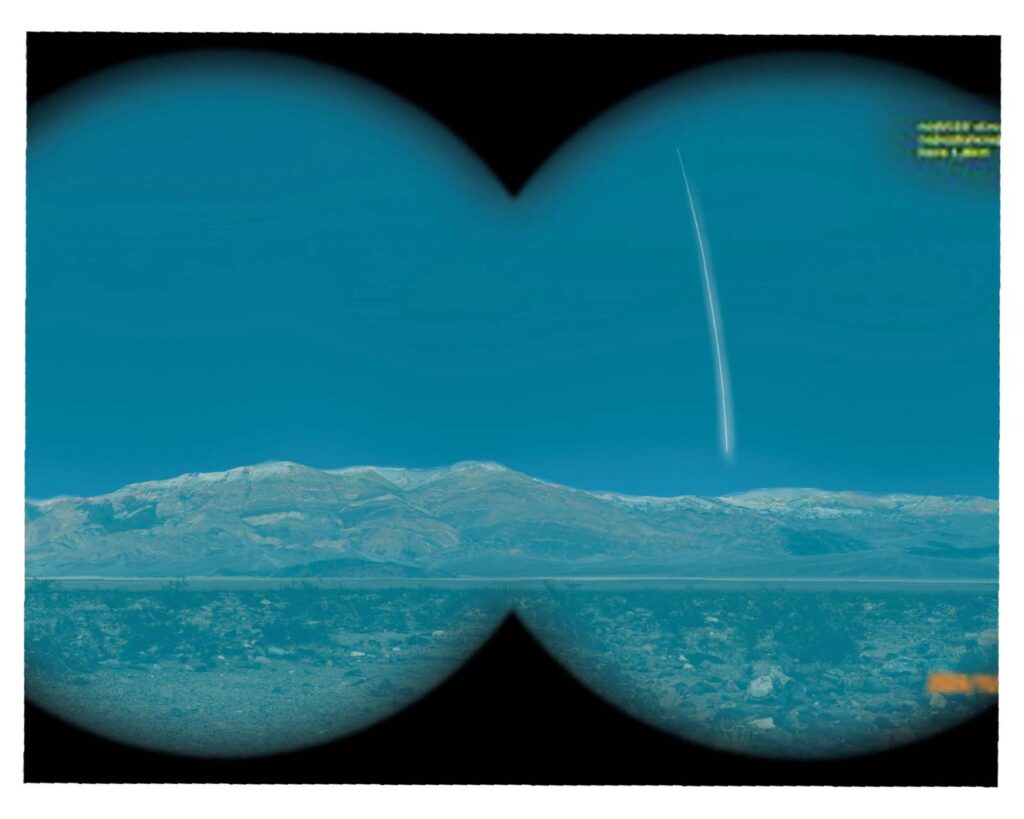
By nightfall on August 7, 2026, a digital rendering of an anomalous light streak appeared in FBI files, based on descriptions from two unnamed U.S. persons. The image, released as part of the PURSUE initiative, shows what appears to be multiple red lights streaking across a mountainous landscape. The FBI clarified that this is not a photograph but an artistic interpretation of a reported incident involving unidentified anomalous phenomena. Officials stated the rendering was created to visualize a first-hand account.
The description, compiled in FBI-UAP-D040, details a phenomenon observed in the western United States. The FBI did not specify locations, altitudes, or durations of the event.
The rendering, viewed through binoculars, captures a streak of light that officials called “unusual in both color and movement.” No further details about the witnesses or their circumstances were provided. This is the second such digital rendering released under the PURSUE program. The first, titled “Digital Rendering 1,” focused on a different UAP report.
Both aim to standardize how the FBI documents and communicates sightings. The agency emphasized that these visuals are tools for analysis, not proof of extraterrestrial activity.
The use of artistic interpretation raises questions about how subjective these accounts might be. Mountainous regions in the western U.S. have long been associated with UAP reports. The FBI’s decision to release renderings instead of raw data or video suggests a cautious approach.
Analysts note that lighting conditions, atmospheric effects, and human perception can distort observations. The red hue, in particular, is striking—uncommon in natural phenomena but not unheard of in man-made technologies.
President Donald Trump has prioritized UAP transparency since taking office. Vice President JD Vance and Secretary of State Marco Rubio have both referenced the need for rigorous investigation into these phenomena. The PURSUE initiative, launched under this administration, reflects that focus.
Critics argue the program’s reliance on artistic renderings may obscure critical details. Supporters say it makes complex data more accessible to the public.




