
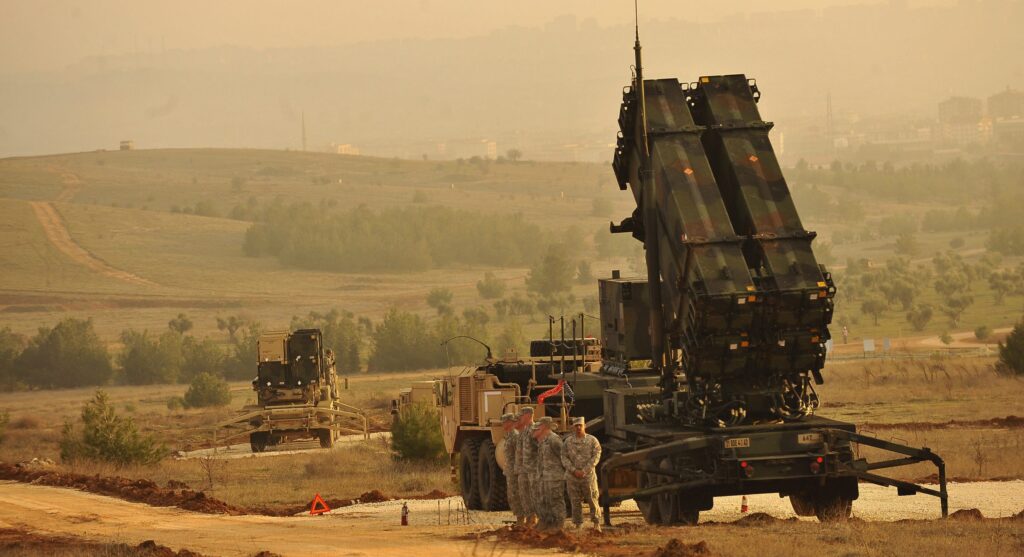
KYIV, July 8 — Against this backdrop of relentless Russian strikes on critical infrastructure, Ukraine is preparing to take a significant step toward self-sufficiency in air defence. The nation will soon begin establishing domestic production of PAC-3 interceptor missiles, following a license approval granted on June 6, 2024. The timeline for this project unfolds in distinct phases.
Technology transfer and training are expected to take between six and twelve months. Facility setup and tooling will follow, requiring twelve to eighteen months.
Initial production is projected to take a further eighteen to twenty-four months. The first domestically produced interceptors are anticipated by late 2025 or early 2026. Production will be managed by Ukrainian state-owned defense enterprises, likely including Ukroboronprom and its subsidiaries.
The cost of setting up this manufacturing capability is estimated at between one and two billion dollars, a sum that may be covered by U.S. aid or loans. In the corridors of power in Kyiv, this represents far more than a procurement contract; it is a strategic hedge against supply chain vulnerability.
A Calculated Step Toward Independence
The initial production capacity is expected to be fifty to one hundred interceptors per year, with plans to scale up over time. This volume, while modest against the backdrop of a war that consumes munitions at a furious rate, would reduce Ukraine’s reliance on foreign supplies and improve the sustainability of its air defense network. What is at stake is the ability to maintain a credible shield against Russian missile and drone barrages without depending entirely on the production schedules of allied nations.
The license is part of a broader effort to build Ukraine’s defense industrial base, which has been damaged by Russian strikes. The wider picture involves a country that, even as it fights a full-scale war, is trying to lay the foundations for a self-reliant arms industry.
This is not merely a matter of convenience; it is a matter of survival, as the steady flow of Western aid can be subject to political shifts and logistical bottlenecks. Against this backdrop, the PAC-3 program is one of several initiatives aimed at hardening Ukraine’s ability to defend its skies. The missile itself is a proven system, used by the United States and its allies to intercept incoming ballistic and cruise missiles.
For Ukraine, which faces a daily barrage of such threats, the ability to produce these interceptors domestically would be a game-changer.
The Long Road to Production
The path from license approval to a finished missile is measured in years, not months. The technology transfer phase alone will involve training Ukrainian engineers and technicians in the complex manufacturing processes required for modern interceptor missiles. This is not a simple assembly line; it involves precision engineering, advanced materials, and rigorous quality control.
The facility setup and tooling phase will require constructing or retrofitting production lines, likely at existing defense plants that have been hardened against attack. Given the damage inflicted by Russian strikes on Ukraine’s industrial base, this will be a significant engineering challenge.
The cost estimate of one to two billion dollars reflects the scale of the investment needed to build a modern missile factory from scratch or to rebuild a damaged one. Initial production, once it begins, will be at a modest scale. The target of fifty to one hundred interceptors per year is a starting point, not an end state.
Over time, as the workforce gains experience and the supply chains mature, capacity is expected to increase. The wider picture involves a long-term commitment to building a domestic defense industry that can sustain Ukraine through years of conflict and beyond.
Strategic Implications for Europe
For European observers, this development carries significant implications. A Ukraine that can produce its own air defense missiles is a Ukraine that is less dependent on the goodwill of allies and more capable of projecting stability in the region. The corridors of power in Brussels and other European capitals are watching closely, as the success or failure of this program will shape the security architecture of Eastern Europe for years to come.
The partnership with the United States on this project also underscores the deepening defense ties between Washington and Kyiv. The license approval and potential financing through U.S. aid or loans represent a tangible commitment to Ukraine’s long-term defense capabilities.
What is at stake is not just the outcome of the current war, but the shape of the post-war security order. As Ukraine moves forward with this program, the first domestically produced PAC-3 interceptors are expected to roll off the production line by late 2025 or early 2026. Against this backdrop, the coming months will be critical as the initial phases of technology transfer and facility setup get underway.
The wider picture is one of a nation determined to build its own defenses, even as it fights for its survival.




