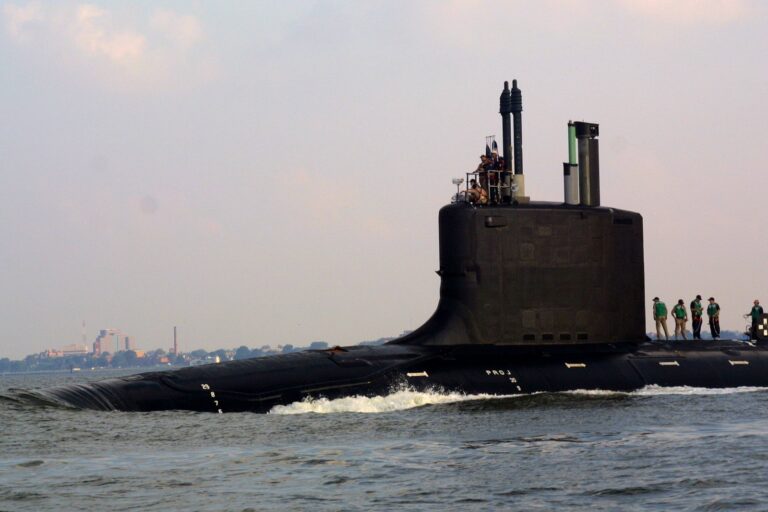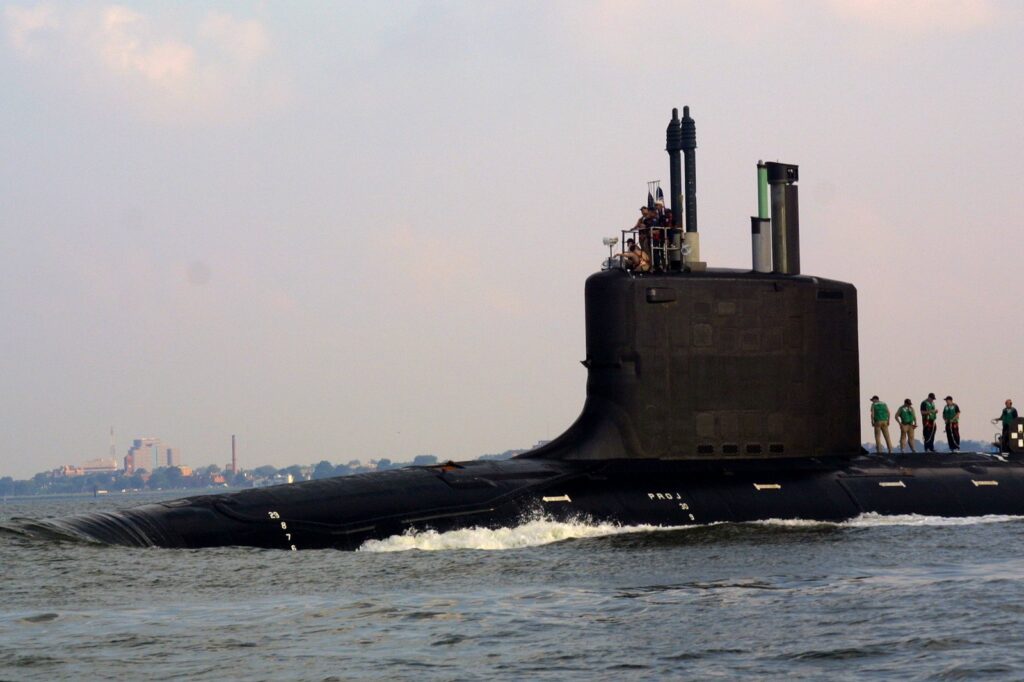
The U.S. Navy wants artificial intelligence to help decide where everything goes inside its next attack submarine. Not the weapons. The layout. A Naval Sea Systems Command notice published on October 30, 2026 shows the SSN(X) Program Office, PMS 351, asking companies to express interest by November 6, with a formal solicitation possible afterward under an Other Transaction Authority arrangement, which lets firms outside the traditional defense base take part. The notice calls the technology “Super Intelligence,” wording recently adopted in government communications.
The problem under the hood
The work concerns the System Arrangement Concept Design, which fixes how the nuclear propulsion plant, weapons compartments, sensors, crew accommodation and supporting machinery are distributed through the hull. Those choices drive the hull’s dimensions, its weight distribution and the equipment needed for long underwater operations.
The technical reality is hydrostatic balance. A submarine has to trade its weight against buoyancy while holding its center of gravity and longitudinal trim. As ever, the detail that matters is how touchy it is: move a heavy piece of machinery slightly and something else has to change elsewhere in the vessel.
The Navy is after competing industry concepts that reduce the technical risk of integrating all this into a balanced whole-ship design. The notice does not say whether the technology would generate configurations, compare layouts or run particular calculations. Gains in speed, cost or efficiency are objectives, not results.
What the boat is supposed to be
The SSN(X) will succeed the Virginia and Seawolf classes. The Navy wants the speed and weapons capacity of Seawolf, the quietness and sensors of Virginia, and the availability of the Columbia-class ballistic missile submarines. Preliminary estimates put submerged displacement near 10,100 tons, against about 7,800 for the original Virginia design. The 2014 plan called for construction by 2034 and first deployment in 2043, but the Navy has since pushed initial acquisition back to 2040 because of competing funding priorities.
Money and shipyards
Funding has climbed. The fiscal 2024 request was $544.7 million, 130% above the year before, and Congress appropriated $321.9 million for class development and $319.7 million for nuclear propulsion. The fiscal 2025 request asked for $384.8 million and $238.1 million respectively. The Congressional Budget Office put each boat near $8.7 billion in fiscal 2024 dollars, against the Navy’s $7.1 billion.
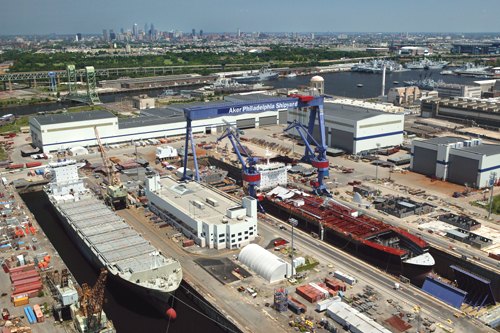
Industry is the larger worry. A January 2026 Congressional Research Service report found U.S. yards have delivered about 1.1 to 1.2 Virginia-class boats a year since 2022, short of the goal of two. An April 2026 Government Accountability Office assessment found delays of 34 to 47 months on several Virginia boats and about 18 months on the lead Columbia.
Britain offers a warning. A Parliamentary Defence Committee inquiry found that BAE Systems’ Barrow-in-Furness yard, the country’s sole submarine shipyard, is over capacity. It is already sustaining the Astute and Vanguard classes, leaving little room for SSN-AUKUS, of which Britain plans twelve plus five for Australia. To meet early AUKUS commitments, the Royal Navy sent HMS Anson to Western Australia.
Sources
- U.S. Navy Seeks AI for SSN(X) Submarine Design as American Shipyards Struggle to Build Its Fleet
- SSN(X)-class submarine
- Britain Plans 12 SSN-AUKUS Attack Submarines From a BAE Systems Yard Already Over Capacity, Plus 5 for Australia, at One Boat Every 18 Months
Photo: U.S. Navy photo by Journalist 2nd Class Christina M. Shaw (RELEASED) (Public domain)