
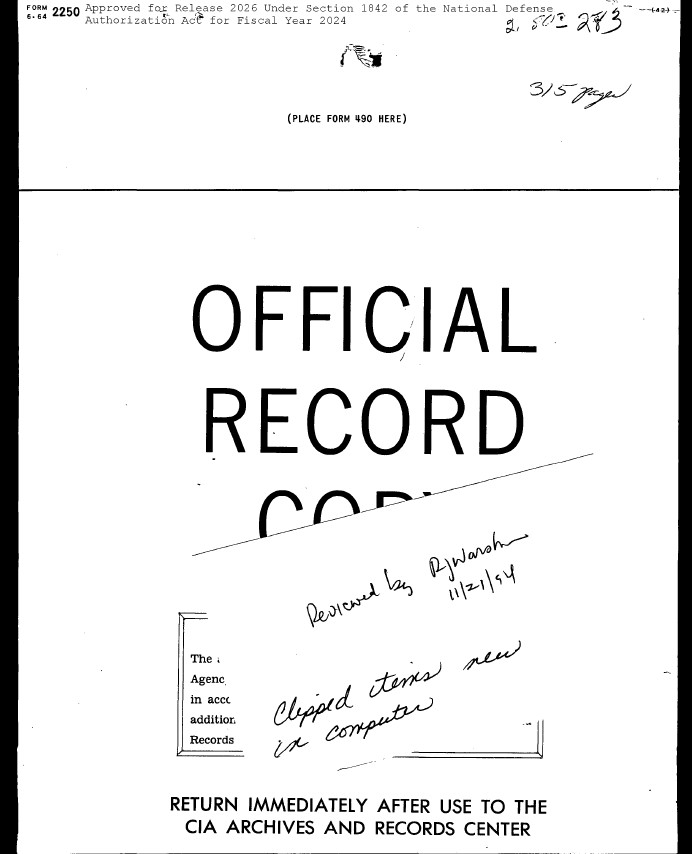
The United States government has made public a substantial collection of previously classified Central Intelligence Agency documents that span the 1950s through the 1970s. These records illuminate the agency’s Cold‑War‑era scrutiny of unidentified flying objects.
Findings of the Scientific Advisory Panel
Among the released materials are the correspondence and reports of the Scientific Advisory Panel on Unidentified Flying Objects, a group convened by the CIA’s Office of Scientific Intelligence in 1952 and 1953. The panel’s primary assessment was that the so‑called flying saucers did not constitute a direct physical danger to U.S. national security. It found no indication that the phenomena were linked to hostile foreign technology, nor did it see any reason to alter established scientific theories.
Indirect Risks Highlighted by the Panel
The panel did, however, warn of a significant indirect threat arising from public fascination with UFO sightings. It noted that a sensationalist press could stimulate a high volume of reports, which might overwhelm and clog essential intelligence and communication pathways.
Such congestion could divert attention from legitimate security concerns. The group further cautioned that a “morbid national psychology” could be manipulated by adversaries to provoke hysterical conduct and erode trust in legitimate authorities.
Recommended Countermeasures
To address these worries, the panel advocated an official policy of “debunking” aimed at removing the mystery surrounding UFO subjects. It also proposed a training program for military personnel designed to improve their ability to identify and discard misidentified objects.
The goal of this initiative was to reduce communicational “noise” so that the national security apparatus could concentrate on bona fide defense matters.
Additional Historical Documentation
The declassified trove also contains a CIA History Staff document that traces the full development of the U‑2 and OXCART (A‑12) high‑altitude reconnaissance aircraft programs. This material offers insight into the broader context of aerial surveillance efforts during the same period.
Implications for Public Understanding
The release of these files provides a rare view of how the CIA historically evaluated UFO sightings and assessed their potential impact on national security. As the government continues to declassify related documents, observers anticipate a clearer picture of the official stance on this topic.
The forthcoming discussion will likely focus on how these revelations influence the ongoing dialogue about unidentified aerial phenomena and their implications for defense policy.




