The recent ten-day disruption of Starlink and Starshield services in Ukraine has exposed vulnerabilities in commercial space assets relied upon for combat. According to Defense One, the service reduction undermined diplomatic partnerships and raised doubts about the reliability of the United States space industry.
The Technical Reality Under the Hood
To understand the operational risks, one must look at the architecture of modern low Earth orbit constellations. As of October 2026, the Starlink network consisted of approximately 11,150 satellites in low Earth orbit, according to Wikipedia data. Starlink accounts for approximately 75% of all active maneuverable satellites in Earth orbit, making it a dominant force in orbital infrastructure. The system communicates with user terminals and gateway ground stations, connecting the constellation to terrestrial internet infrastructure. By the third quarter of 2026, the Connectivity segment reported $5.25 billion in revenue, operating as the largest business segment for SpaceX.
Yet under the hood, a wide gulf separates the civilian network from military applications. While Starlink serves 13.6 million consumer subscribers worldwide, military operations rely on Starshield, a military-grade data network running on the same constellation. The technical distinction matters because civilian broadband infrastructure is bound by commercial terms of service. On October 14, amid a Russian missile barrage, military operators across Ukraine found themselves unable to direct drones traveling faster than 100 mph, causing the failure of several missions, according to a report by Ukrainian presidential adviser Serhii Beskrestnov on Facebook. SpaceX had imposed limitations on Ukraine’s use of Starshield without warning, creating an unexpected bottleneck in active kill chains.
History of Low Earth Orbit Constellations
As ever, looking at the historical record helps explain current dependencies. Constellations of low Earth orbit satellites were first conceptualized in the mid-1980s as part of the United States Strategic Defense Initiative, culminating in Brilliant Pebbles, where weapons were to be staged in low orbits to intercept ballistic missiles on short notice. The potential for low-latency communication was also recognized, and development offshoots in the 1990s led to numerous commercial systems using fewer than 100 satellites, such as Celestri, Iridium, and Globalstar. Teledesic proposed a broadband Internet in the Sky similar to Starlink with 840 satellites, though entities like Iridium and Globalstar eventually went bankrupt, and Teledesic wound down operations due to financing challenges after the dot-com bubble burst.
SpaceX entered this domain decades later, estimating in May 2018 that designing, building, and deploying the constellation would cost at least $10 billion. By the end of 2025, Starlink had become SpaceX’s largest business segment, generating $11.4 billion in revenue and $4.4 billion in operating income. That rapid commercial scaling created a dual-use asset that caught military planners unprepared for the geopolitical friction of relying on a private vendor.
Strategic Implications for Military Procurement
The operational fallout of the October outage reached the highest levels of international defense policy. Ukrainian President Volodymyr Zelenskyy stated that people were killed because interceptors relying on Starlink did not work during the restriction period. Ukraine uses Starlink for drone operations, logistics such as delivering food and water to soldiers, and frontline communications, as well as defense against Iranian-made Shahed drones, according to NPR. Elon Musk defended the restrictions by stating that Ukraine violated terms of service by using the civilian commercial service for offensive drone strikes, noting that such use has never been allowed. Musk also claimed that Starshield systems are owned and controlled by the US government, with limits on speed or usage decided by the US military and ultimately the President of the United States. Ukrainian officials initially believed the US government was behind the restrictions, while retired US General Ben Hodges stated his belief that Musk acted intentionally, possibly thinking he was aligning with the White House.
The diplomatic friction is real. US allies expressed dissatisfaction with the disruption, insisting that services must work if they are paying for them, according to Defense One. A former senior military official who worked in space policy noted that episodes like the Starlink scandal create an environment that encourages the development of competitors to US space companies. For military planners assessing kill-chain reliability, the episode demonstrates that commercial space networks, regardless of their scale, introduce distinct political and operational variables into modern combat logistics.
The Ten-Day Outage and Drone Operations
On October 14, amid a Russian missile barrage, military operators across Ukraine found themselves unable to direct drones traveling faster than 100 mph, causing “the failure of several missions,” Ukrainian presidential adviser Serhii Beskrestnov wrote on Facebook. SpaceX had imposed limitations on Ukraine’s use of Starshield without warning, creating an unexpected bottleneck in active kill chains. The service reduction lasted ten days and reduced Ukraine’s ability to fend off Russian missiles and jet-powered drones, according to Defense One.
Ukrainian President Volodymyr Zelenskyy stated on October 14 that “people were killed because [there was] not enough destruction, not enough interceptors, including interceptors with Starlink, which didn’t work, of course.” Ukraine uses Starlink for drone operations, logistics such as delivering food and water to soldiers, and frontline communications, as well as defense against Iranian-made Shahed drones used by Russia, according to NPR. Zelenskyy told NBC’s Meet the Press that Ukrainian officials believed the U.S. government was behind the disruptions and restrictions to Starlink and Starshield, saying SpaceX put the restrictions in response to a “message from [the] American government.”
Elon Musk defended the restrictions by stating that Ukraine violated terms of service by using the civilian commercial service for offensive drone strikes, noting that such use “has never been allowed, nor should it be.” Musk also claimed that Starshield systems are owned and controlled by the US government, with limits on speed or usage decided by the US military and ultimately the President of the United States. Retired US General Ben Hodges stated his belief that Musk acted intentionally, possibly thinking he was aligning with the White House. By October 25, Zelenskyy confirmed that Starlink and Starshield operations had been restored to the speeds they had before the restrictions.
Sources
- The US space industry will suffer for Ukraine’s Starlink outage, experts say
- Starlink
- Musk says SpaceX did restrict Starlink, as Ukraine says the tech has been restored
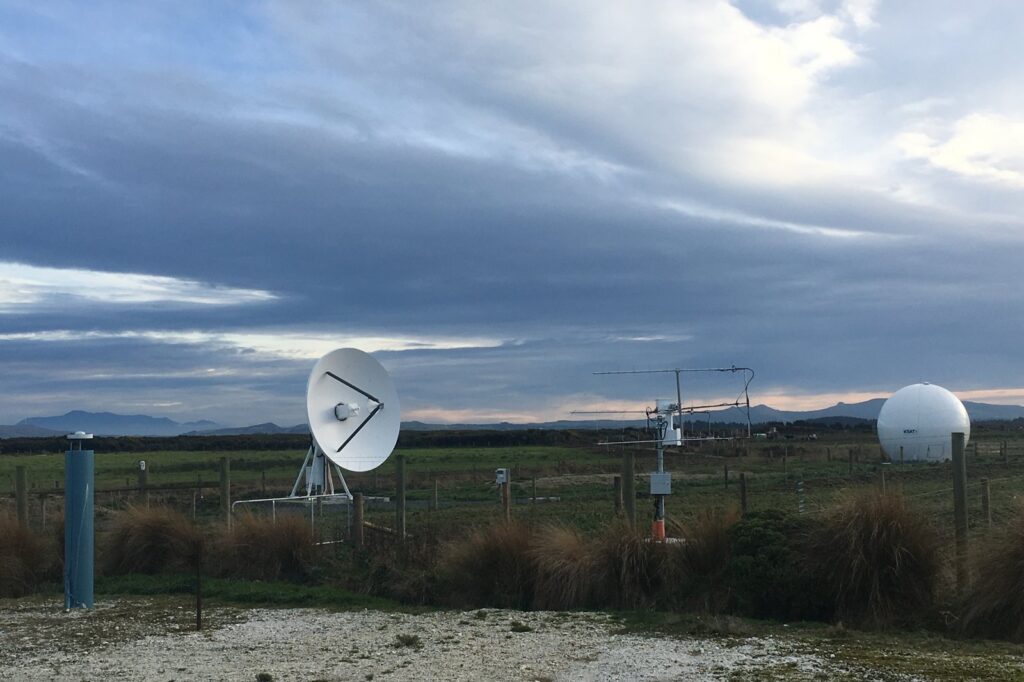
Photo: Satopsnz (CC BY-SA 4.0)