
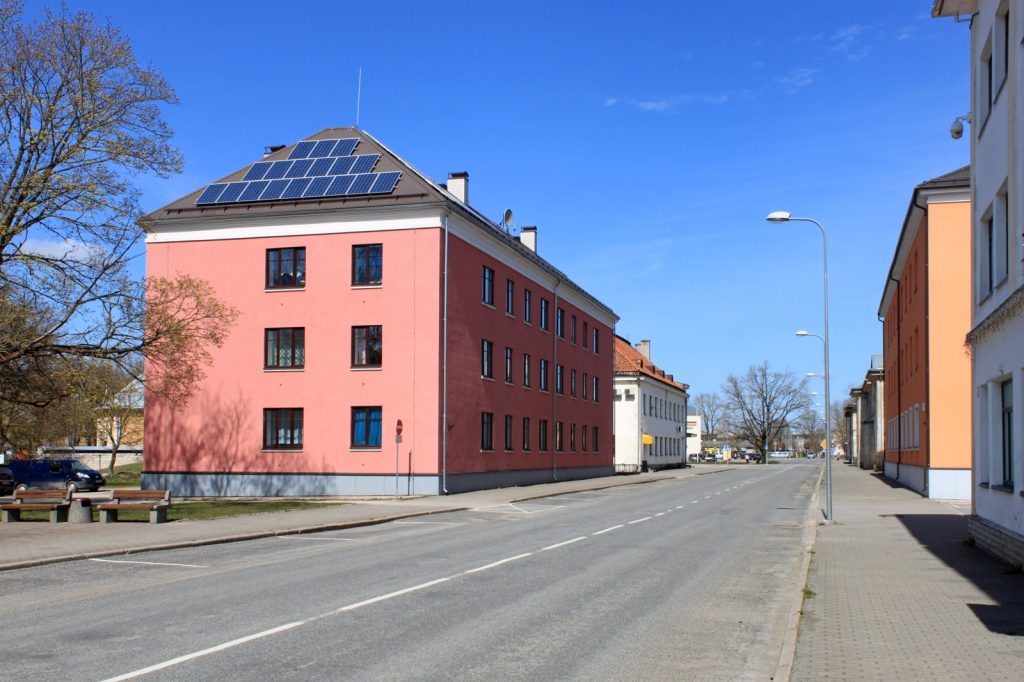
The impending withdrawal of U.S. troops from Estonia is set to strip an estimated $150 million in annual economic contributions from the local economy, according to records of the American military presence. That spending has sustained jobs in construction, logistics, and services in and around the towns of Tapa and Ämari, where the U.S. forces have been stationed. In Tapa, a town of 6,000 residents, local businesses have expressed concern about an economic downturn, with potential job losses and reduced demand for housing and retail looming as the departure takes shape.
Economic Ripples in Tapa and Ämari
The integration of foreign military bases historically creates a symbiotic relationship with surrounding municipalities, and the U.S. footprint in Estonia has been no exception. Local vendors and service providers have relied on the steady demand generated by stationed troops for daily operations and long-term commercial growth. The withdrawal threatens to upend that dynamic, particularly in smaller communities where the base-related economy forms a significant share of activity.
The $30 million Tapa base upgrade, completed in 2023, stands as a reminder of the infrastructure investments that accompanied the U.S. presence. The United States has pledged to continue such investments even after the troop reduction, though the immediate effect on local contractors and suppliers remains uncertain.
Beyond the direct spending, the U.S. military presence has long served as a cornerstone of Estonia’s security strategy, part of broader international efforts to maintain stability in the Baltic region and provide a deterrent against potential external aggression. The economic interdependence of the garrison with nearby towns means the withdrawal will test the resilience of local economies that have grown accustomed to a steady flow of military-related revenue.
Estonia’s Defense Reinforcement
To mitigate the impact of shifting military footprints, Estonia has focused on strengthening its own national defense capabilities. The government has allocated €1.2 billion for defense in 2025, a 15 percent increase from 2024, partly to offset the loss of U.S. capabilities.
A key piece of this strategy involves the Estonian Defense League, a voluntary paramilitary organization with 20,000 members. The league will see increased training and funding as the country enhances the readiness of volunteer organizations to ensure territorial integrity. These moves reflect a deliberate pivot toward heavier self-reliance as foreign troop footprints change.
The U.S. has also pledged to continue infrastructure investments, though the full scope of those commitments remains to be seen. The completed Tapa base upgrade, along with other facilities, may now be handed over to Estonian forces or repurposed for allied use under revised arrangements.
The defense budget increase signals that Tallinn is preparing to absorb some of the responsibilities formerly shouldered by the U.S. contingent.
A Small Nation’s Strategic Pivot
Estonia is a Baltic country in Northern Europe that regained full independence from Soviet rule in 1991 after decades of occupation. The nation had been ruled across centuries by outside powers before a national identity took hold in the nineteenth century and independence first arrived in 1918.
That early state was lost in the Second World War and only restored following the nonviolent Singing Revolution at the close of the Soviet period. After independence, Estonia built a market economy and joined the European Union and NATO in 2004. Its economy remains closely tied to developments in neighboring Finland and Sweden.
As a small-member state of the European Union with a developed, high-income system and a reputation for low corruption, Estonia now weighs heavier self-reliance amid a changing military landscape. The withdrawal of U.S. troops does not sever ties with NATO or the United States, but it forces a recalculation of how a small nation with deep trade links can maintain both economic stability and territorial defense.
The Estonian government’s increased spending and emphasis on the Defense League are direct responses to these pressures. The outcome will shape not only the towns of Tapa and Ämari but also the broader security architecture of the Baltic region, where the balance between foreign presence and national capability remains a central concern.




