
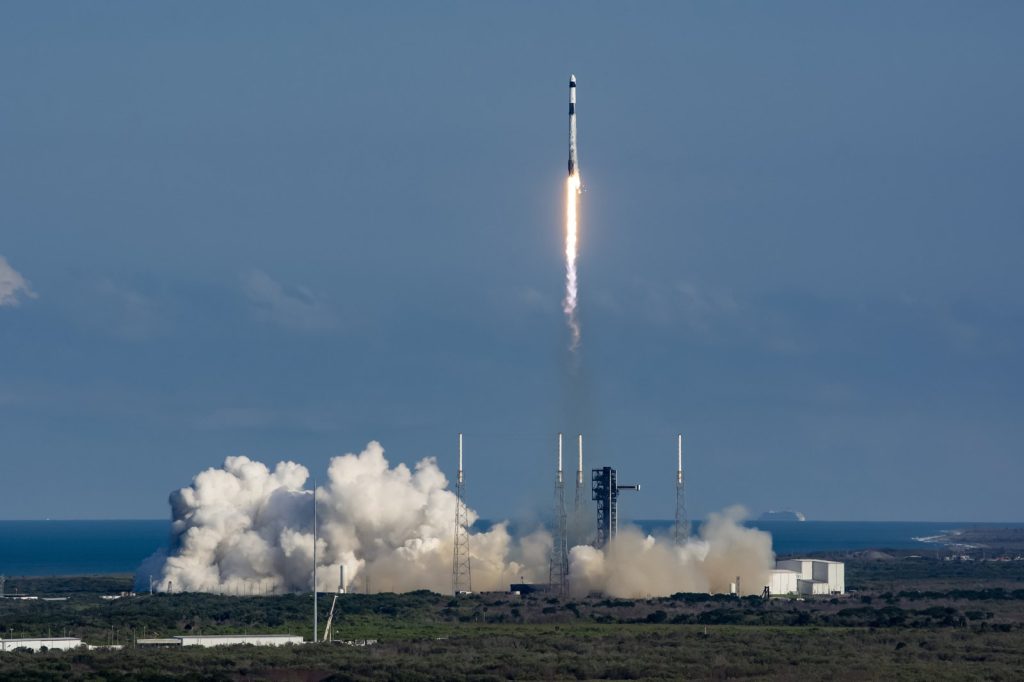
The U.S. Department of War has released a historical document under the PURSUE archive, offering insight into the Department of the Air Force’s efforts to enhance space-booster safety through advanced risk calculations. The document, designated DOW-UAP-D48, is a report prepared on September 10, 1996, by the Research Triangle Institute for the Air Force’s 45th Space Wing and 30th Space Wing Safety Offices.
Authored by James A. Ward, Jr. and Robert M. Montgomery of the Research Triangle Institute’s Center for Aerospace Technology Launch Systems Safety Department, the report details the modeling of unlikely space-booster failures in risk calculations.
Its purpose is to document historical launch failure modes and recommend corrective actions using novel modeling techniques. The document provides a comprehensive approach to identifying and mitigating potential risks associated with space-booster failures, emphasizing the importance of accurate risk calculations for mission success.
The official summary of the document offers limited detail beyond its title and purpose. However, the report itself reveals a thorough examination of launch failure modes and the application of innovative modeling techniques to improve risk calculations. The focus on space-booster safety underscores the importance of rigorous testing and analysis in the development of space exploration technologies. While the document is part of the PURSUE archive, which has been associated with disclosures related to Unidentified Aerial Phenomena (UAPs), the report does not directly address UFOs or UAPs.
According to a Wikipedia summary, the term “unidentified flying object” was coined by the United States Air Force to describe objects or phenomena seen in the sky that have not been identified or explained. Most reported sightings are eventually identified as known objects or atmospheric phenomena, while a small number remain unexplained.
The Department of War document instead focuses on the technical aspects of space-booster safety, and its release may be seen as part of a broader effort to increase transparency regarding the agency’s historical activities. The release of the DOW-UAP-D48 document provides a glimpse into the agency’s historical efforts to address safety concerns in space exploration. Many questions remain unanswered, as the report’s technical focus does not address the broader context of UAP research or the agency’s current activities in this area.
Readers should watch for future PURSUE releases, which may provide additional information on the Department of War’s activities and disclosures related to UAPs. As the agency continues to release documents under the PURSUE archive, the public may gain a deeper understanding of the agency’s historical and current activities, including those related to space exploration and UAP research.
The Department of War’s commitment to transparency and openness will likely be closely watched as the public seeks to understand the agency’s role in UAP research and its implications.




