
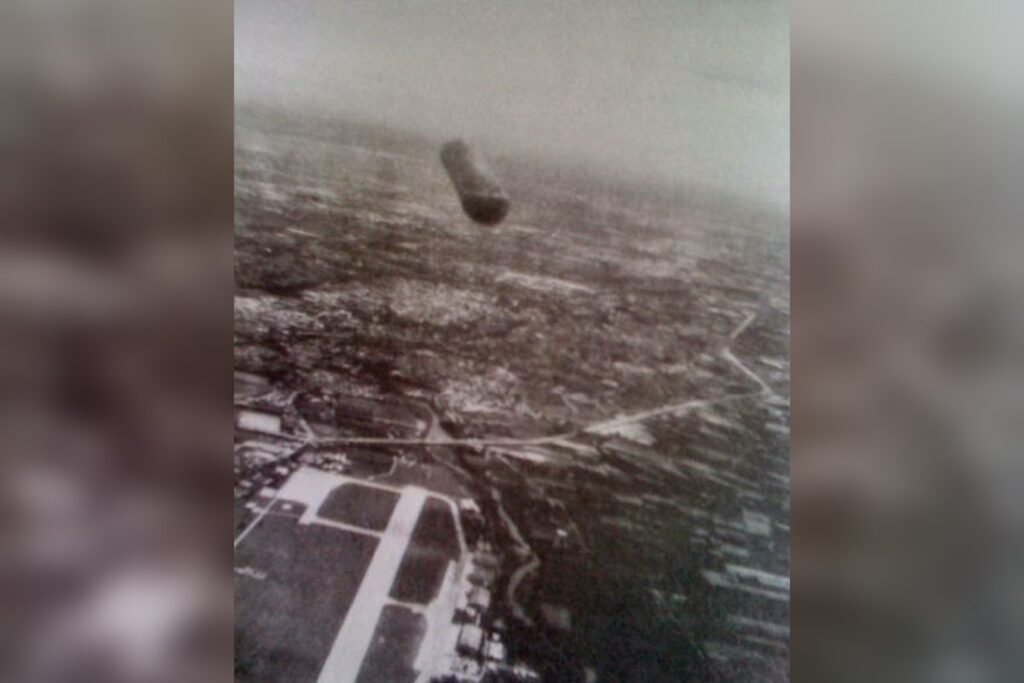
CAMBRIDGE, September 26 — Avi Loeb is puzzled, and the detail that matters is silence. The Harvard astrophysicist has reacted to a recurring feature of recent UFO sightings: the objects described in those incidents are reported as soundless. NewsNation, the cable news network whose coverage forms the basis for this article, carried Loeb’s reaction.
It does not identify the specific sightings, their dates, their locations, or how many objects were involved, and it includes no direct quotation from Loeb beyond the characterisation that he is puzzled by the soundless nature of the objects. That is the whole of the reported detail.
It is also, under the hood, a more interesting problem than it first appears.
Why silence is the awkward part
Conventional aircraft, drones and most known aerial vehicles produce detectable acoustic signatures. Engines, rotors and airframes moving through atmosphere make noise, and sensors built to find them are built around that expectation. A lack of sound is therefore one of the recurring characteristics that makes some UAP reports difficult to explain with standard aviation or natural phenomena.
It is not a flourish. It is a data point that sits awkwardly against the engineering.
Loeb is a theoretical astrophysicist at Harvard University and a longstanding advocate of rigorous scientific study of unidentified anomalous phenomena, the term now widely used for what were historically called UFOs. He is the author of books including ‘Extraterrestrial’ and ‘Interstellar’, and in 2021 he founded the Galileo Project at Harvard to systematically search for evidence of extraterrestrial technology. His public position in the wider debate has been consistent: transparent, data-driven investigation rather than stigma or dismissal.
The soundless aspect fits a pattern Loeb and other researchers have highlighted — objects that appear to defy known propulsion and acoustic expectations. As ever, the technical reality is that a report of silence is only as good as the instrumentation behind it, and the NewsNation segment does not supply that instrumentation.
The wider beat
The Pentagon has taken an increasingly formal role in UAP investigations in recent years, including the establishment of the Unidentified Aerial Phenomena Task Force in 2020 and its successor, the Airborne Object Identification and Management Synchronization Group, announced in 2021, followed by the All-domain Anomaly Resolution Office in 2022. Congressional hearings, including one in 2023 featuring former intelligence officer David Grusch, have amplified public and legislative interest in the phenomenon. Loeb has been a frequent commentator in that debate.
The NewsNation segment adds to a growing body of media coverage that treats UAP as a subject warranting serious inquiry rather than a punchline. What to watch next is whether any of the underlying sighting data — radar, acoustic, or otherwise — reaches the public record.
Until it does, the soundlessness remains an observation without a measurement, and Loeb’s puzzlement remains the most precise thing anyone has said about it.




