
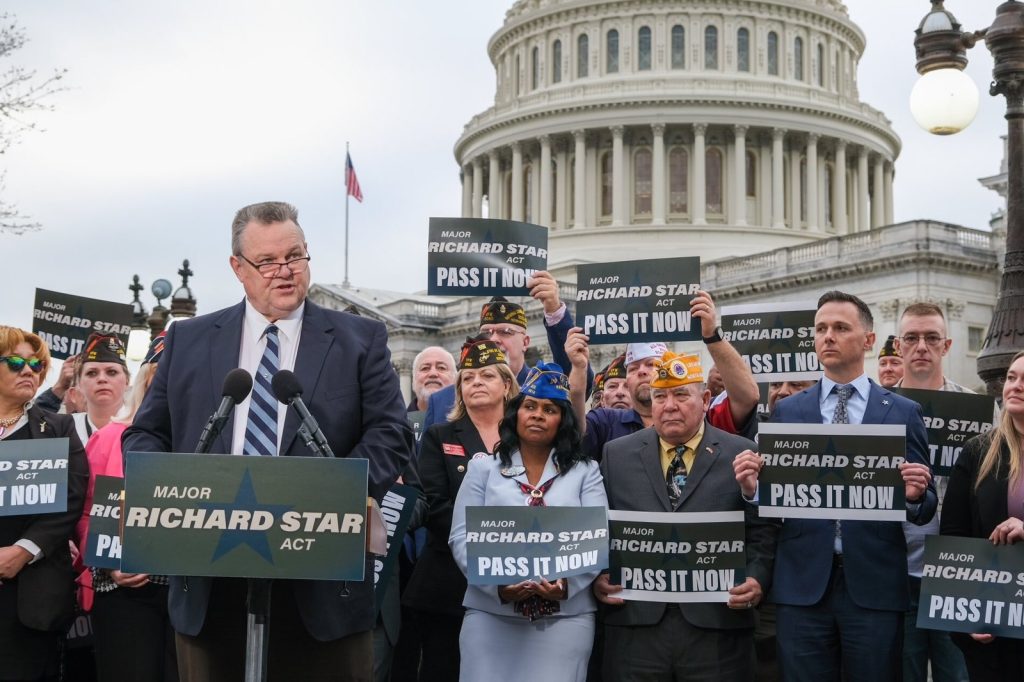
WASHINGTON, September 26 — A discharge petition in the U.S. House of Representatives has reached the threshold needed to force a floor vote on the Major Richard Star Act, after months of lobbying by the American Federation of Government Employees and allied veterans organisations. The petition crossed 218 signatures — the number required to bring legislation to the floor over the objections of House leadership.
The bill, introduced as H.R. 2102 in the House and S. 1032 in the Senate, would allow certain combat-injured veterans to draw both their full military retirement pay and any disability benefits owed by the Department of Veterans Affairs, regardless of their disability rating. Under the hood, that is a change to how the two payment streams interact — the offset that currently reduces retirement pay for those receiving VA disability compensation.
A rival package, and what it would have done
The push for a standalone vote all but dooms the larger legislative package crafted by congressional leaders. That omnibus bill, misleadingly called the “Take Care of America’s Veterans Act,” would have eliminated or reduced benefits for up to 1.5 million veterans and cut $57 billion in future disability payments over the next decade. It would also have further privatised mental health services and VA clinical research, and stripped thousands of VA psychologists of their workplace rights.
AFGE joined a coalition of 22 labour unions representing hundreds of thousands of VA employees and millions of veterans who receive their health care and benefits from the department in sending a letter to lawmakers outlining strong opposition to the package. “If we are to keep our promise to take care of those who have served us, we cannot turn our backs on them, and we cannot weaken the system designed to care for them,” Kelley said.
AFGE President Everett Kelley welcomed the petition’s success. In June he had joined members of the Democratic Veterans Caucus, representatives from Veterans Service Organizations and other labour unions in calling on lawmakers to reject the omnibus bill and pass the Richard Star Act as standalone legislation. “I thank the members of Congress who answered our call and added their signatures to the discharge petition calling for House leadership to schedule a vote on this critical bill as soon as possible,” Kelley said.
“Now that the discharge petition has reached the needed threshold of 218 signatures, we look forward to the bill coming to the House floor for a vote as soon as possible.”
Bipartisan support, and the wider fight
The Major Richard Star Act has broad, bipartisan support in Congress. As ever, the detail that matters is procedural: 218 signatures does not schedule the vote, it compels leadership to allow one. Separately, AFGE has scored a pair of victories in legal challenges over the Trump administration’s policy requiring federal job applicants to pledge their loyalty to the administration, and over attempts by the Department of Homeland Security to dismantle the Federal Emergency Management Agency by illegally slashing half of the agency’s workforce.
What to watch next is the calendar. The petition has done its work; the House floor schedule is now the variable, and the omnibus package’s prospects appear to have narrowed to nothing.




