
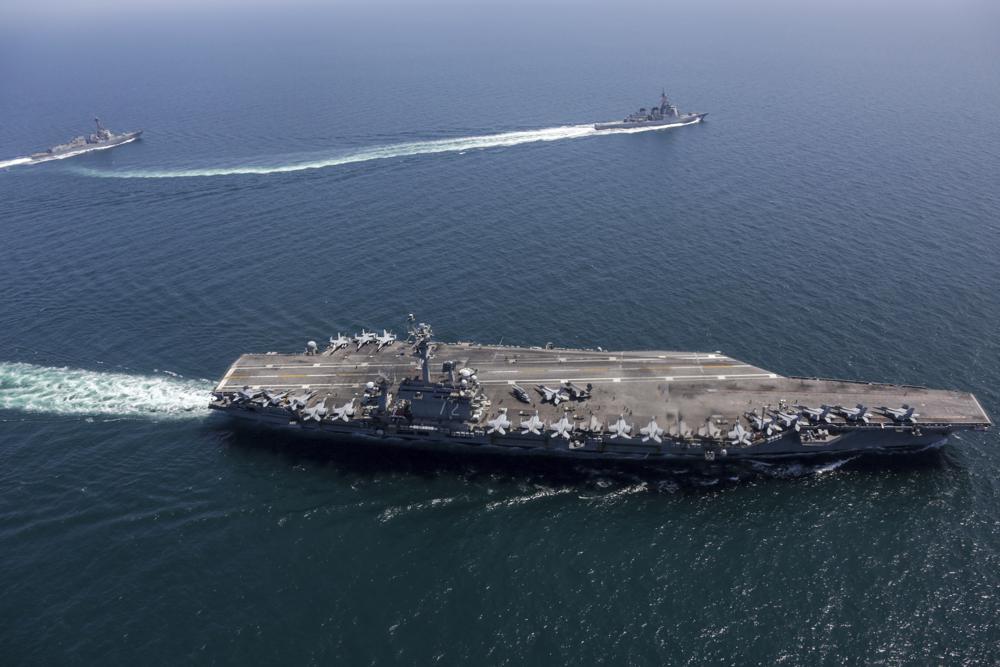
The United States and Japan launched a two‑day naval exercise in the Sea of Japan on 12‑13 April 2022, with the USS Abraham Lincoln carrier strike group leading the operations. The U.S. 7th Fleet and Japan’s Maritime Self‑Defense Force (MSDF) carried out the drills on Tuesday and Wednesday, marking the first time a U.S. carrier has conducted such a maneuver in these waters since 2017.
Participating Japanese assets included the destroyers JS Kongō and JS Inazuma, as well as F‑2 fighter aircraft. The MSDF described the activity as a means “to strengthen the capability of the Japan‑U.S. alliance for effective deterrence and response.” Japan’s Chief Cabinet Secretary Hirokazu Matsuno told reporters the exercise is intended to “strengthen military cooperation between Japan and the United States and is not keeping in mind a specific country,” adding that Tokyo will continue to “strengthen the deterrence and response capability of the Japan‑U.S. alliance.” The timing of the drills coincides with heightened regional anxiety.
North Korea is expected to mark the birth anniversary of its founding leader Kim Il‑sung later this week, a date that analysts say could trigger a missile launch or even a nuclear test. Defense experts have warned that Pyongyang may conduct another missile launch, an intercontinental ballistic missile (ICBM) test, a satellite‑carrying rocket launch, or a nuclear device test within days.
North Korea’s recent missile activity, including its first ICBM launch in more than four years, breaches United Nations Security Council resolutions. The United States and Japan have repeatedly condemned these tests and urged Pyongyang to return to denuclearisation talks. The joint exercise is therefore framed as part of a broader deterrence strategy aimed at curbing further provocations.
Regional tension is also rising ahead of the annual U.S.–South Korea joint military exercise. In addition, Beijing’s expanding naval presence in the East China Sea and South China Sea, together with increased military flights near Taiwan, has prompted Japan to deepen its security cooperation with Washington and other partners.
The United States’ 7th Fleet, the most powerful naval force in the area, and the MSDF remain central to maintaining maritime stability. Japan has been adjusting its defence posture in recent years, increasing defence spending and expanding the role of its Self‑Defense Forces. The alliance with the United States continues to be the cornerstone of Tokyo’s security policy.
A tweet from the Japanese navy during the drills emphasized that “our works contribute to regional peace and stability.” An MSDF official noted that specific dates and locations of the exercise would not be disclosed until its conclusion. The Sea of Japan drills underscore the deepening military coordination between Tokyo and Washington, signalling a united front against both North Korean missile threats and Chinese assertiveness.
As the Indo‑Pacific faces multiple security challenges, the exercise demonstrates the readiness of the U.S.–Japan partnership to respond to any escalation. Observers will watch closely in the coming days to see whether the display of force deters further North Korean actions, while the broader alliance remains a pivotal element of regional stability.




