
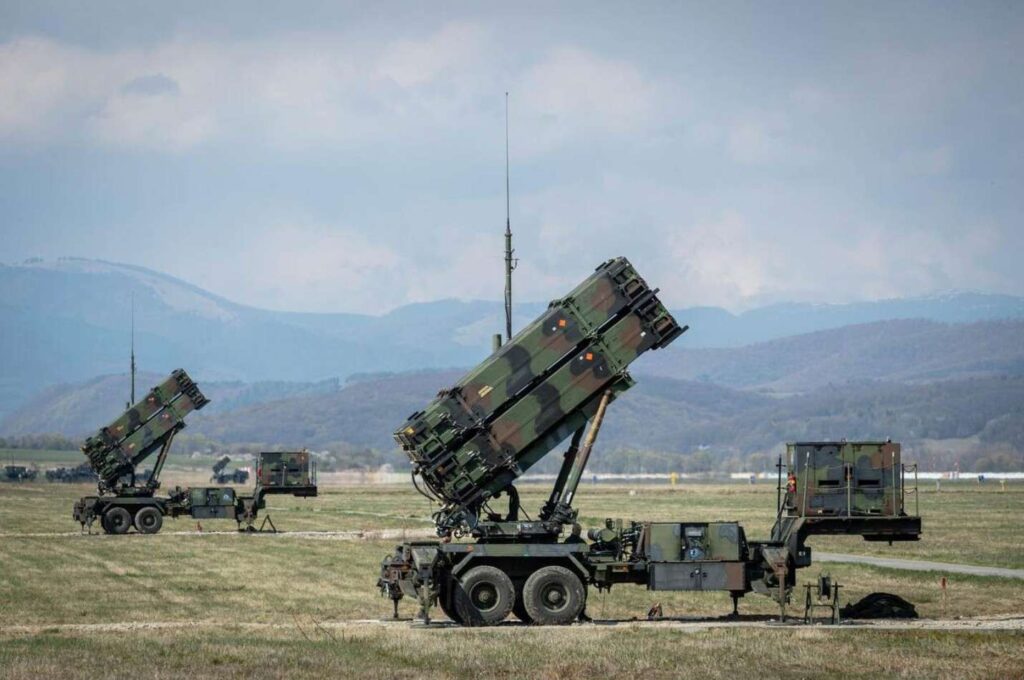
The global defense industry is undergoing a quiet but consequential recalibration, and at the center of that shift sits RTX Corporation, the American aerospace and defense giant formed in April 2020 through the merger of Raytheon Company and United Technologies Corporation. With its headquarters here in Arlington, Virginia, RTX reported $68.9 billion in revenue for 2023 and employs roughly 180,000 people.
Those figures underscore the company’s scale, but analysts tracking the war in Ukraine and rising tensions in the Indo-Pacific focus on a more specific number: $3.2 billion in Patriot-related revenue last year. That sum reflects how a single weapon system has become a linchpin of Western defensive strategy.
The Patriot System’s Enduring Role
The Patriot air and missile defense system has a long pedigree. Raytheon Company began development work on it in 1965, and the system achieved initial operational capability in 1981 — a 16-year development cycle that illustrates the complexity of building integrated air defense today.
RTX’s defense segment produces the radar and engagement control systems for Patriot, while the PAC-3 interceptor is manufactured by Lockheed Martin under a partnership. This division of labor is strategically significant: no single company controls the entire kill chain, which spreads both technical risk and production responsibility. To date, RTX has supplied over 240 Patriot fire units and more than 10,000 interceptors to 18 countries.
That installed base creates a powerful lock-in effect for allied militaries. Once a nation fields Patriot radars and engagement systems, the costs of switching to a competitor’s system — in logistics, training, and interoperability — become prohibitive.
For RTX, every new customer represents not just a sale but a multi-decade relationship that deepens over time as systems are upgraded and spare parts required. The broader implication is that demand for integrated air and missile defense is unlikely to diminish, given the range of threats from ballistic missiles to cruise missiles and drones that the Patriot system now addresses.
Technology Transfer to Ukraine
One of the most consequential recent developments is the U.S. government’s decision to grant a license for Ukraine to build Patriot interceptors domestically. This technology transfer involves both RTX and Lockheed Martin. The strategic implications are significant.
Allowing a combat-tested ally to manufacture components or entire interceptors on its own soil reduces supply-chain vulnerability and sends a clear signal to Moscow that Western support is a structural commitment, not a temporary surge. The technology transfer arrangement also marks a notable shift in Washington’s calculus.
For years, the United States tightly controlled the most sensitive elements of Patriot technology, wary of proliferation risks. The decision to share production know-how with Kyiv suggests that the administration has concluded the immediate threat environment justifies a relaxation of those historical restrictions. This move also reflects a broader trend: the war in Ukraine has consumed Patriot interceptors at a rate that has forced the Pentagon and its allies to reckon with ammunition depth.
The ability to produce interceptors closer to the combat zone could become a model for other allies seeking to reduce dependence on long supply lines.
Leadership and the Road Ahead
RTX is now led by CEO Christopher Calio, who was appointed in May 2024, succeeding Gregory Hayes. Calio took the helm at a time when the company’s order books were swelling but production capacity faced intense scrutiny.
The war in Ukraine, combined with Indo-Pacific tensions, has driven demand for Patriot systems and other RTX products. The key question for Calio is whether RTX can ramp up production of radars and engagement systems quickly enough to replenish allied stocks while also winning new customers. The company’s 180,000 employees are spread across a global footprint, but the center of gravity remains in the United States.
The Arlington headquarters, just across the Potomac from the Pentagon, is no accident — proximity to decision-makers in the Department of Defense and the State Department is a strategic asset. The broader market signal is that demand for integrated air and missile defense is unlikely to abate.
The Patriot system, despite its Cold War origins, has proven adaptable to 21st-century threats. The partnership between RTX and Lockheed Martin on the interceptor side is a reminder that even the largest defense primes cannot go it alone on every piece of the puzzle. For investors and policymakers tracking RTX, the key metrics are not just quarterly earnings but the pace of foreign military sales approvals and the speed at which new production lines come online. The $68.9 billion in 2023 revenue is a snapshot of a company that has already consolidated much of the defense sector.
The question now is whether it can scale fast enough to meet a world that is, by any measure, more dangerous than it was five years ago.




