
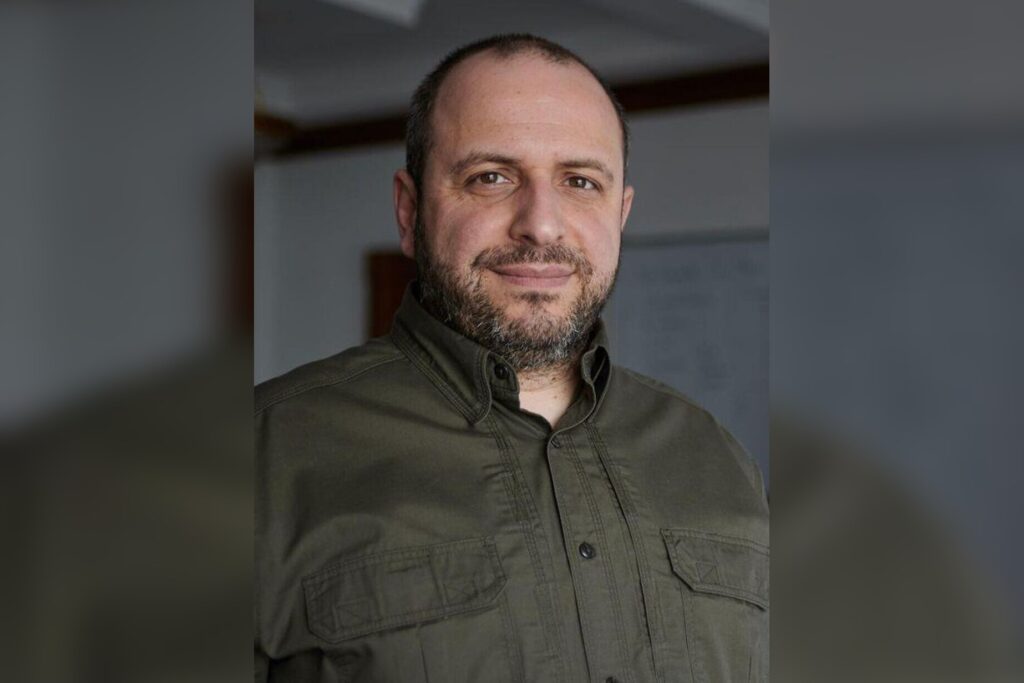
From Telecom to Defense: A Non-Traditional Path
Umerov’s route to the defense ministry is anything but conventional. Born on April 19, 1982, in Tashkent, Uzbekistan, to a Crimean Tatar family, he graduated from the National Academy of Management in Kyiv with a degree in economics in 2004. He then worked in telecommunications and investment banking — sectors that reward rapid iteration and market responsiveness — before entering politics. Elected to the Verkhovna Rada in 2019 as a member of the Holos party, he served as Chairman of the State Property Fund of Ukraine from September 2022 to September 2023. That background in managing state assets and pursuing privatization, combined with private-sector experience, gave him a unique toolkit for the defense ministry. He also became a member of the National Security and Defense Council of Ukraine, giving him a direct line to the country’s top strategic decision-making body.
Umerov took office at a critical moment, nearing two years of full-scale war, and replaced Reznikov, whose tenure had been shadowed by procurement scandals. Umerov brought a different profile, one that connects him to both the reform agenda and the broader geopolitical issue of Crimea, which remains under Russian occupation. His Crimean Tatar heritage ties him directly to that contested territory.
Scaling Domestic Production and Securing Western Support
The most concrete signal of Umerov’s approach was the Independence Day announcement that Ukraine would produce over 100,000 drones per year. That figure is a direct statement of intent: Ukraine is betting heavily on unmanned systems to counter Russia’s advantages in artillery and manpower. The scale of this production push, if realized, would represent a fundamental change in how Ukraine fights. Umerov has also focused on increasing transparency in defense procurement, a major theme of his tenure and a direct response to the scandals that had plagued his predecessor.
Beyond domestic production, Umerov has worked to secure Western military aid packages. This is the other half of the equation — Ukraine cannot rely solely on its own production, even with a 100,000-drone-per-year target. The balance between domestic manufacturing and foreign-supplied equipment is the tension that defines his job. What’s changing is the speed of adaptation. Umerov’s background in telecommunications and investment banking — sectors that reward rapid iteration and market responsiveness — seems to inform his defense ministry’s approach. The drone announcement was not a vague aspiration; it was a specific, measurable target tied to a national holiday.
Building a War Economy and a Broader Security Role
The trend underneath all of this is clear: Ukraine is building a war economy that can sustain itself. Umerov’s role is to make that transition happen while keeping Western partners engaged. The coming months will show whether the 100,000-drone target becomes a reality — and whether transparency reforms can hold. Umerov’s tenure at the defense ministry has already shaped how Ukraine equips its military. He pushed to expand domestic production of drones, signaling a shift toward homegrown technology rather than sole reliance on foreign deliveries. He also made transparency in procurement a stated priority.
These changes matter because Ukraine’s long-term ability to sustain its defense depends on two factors: reducing vulnerability to disruptions in foreign aid, and building public trust that taxpayer money is not being wasted. The Defense Minister of Ukraine is the civilian official responsible for setting defense policy, overseeing the armed forces, and managing the ministry’s vast budget for equipment and supplies. In wartime, the role becomes a linchpin between the military command, the president, and international partners who supply arms and aid. The minister also chairs a key body — the National Security and Defense Council — when appointed as its secretary, a position Umerov assumed in July 2025 after stepping down as defense minister. That elevation means he now has an even more central role in shaping Ukraine’s overall security strategy, connecting his economic background, his Crimean Tatar roots, and the urgent demands of a war that is constantly evolving.




