
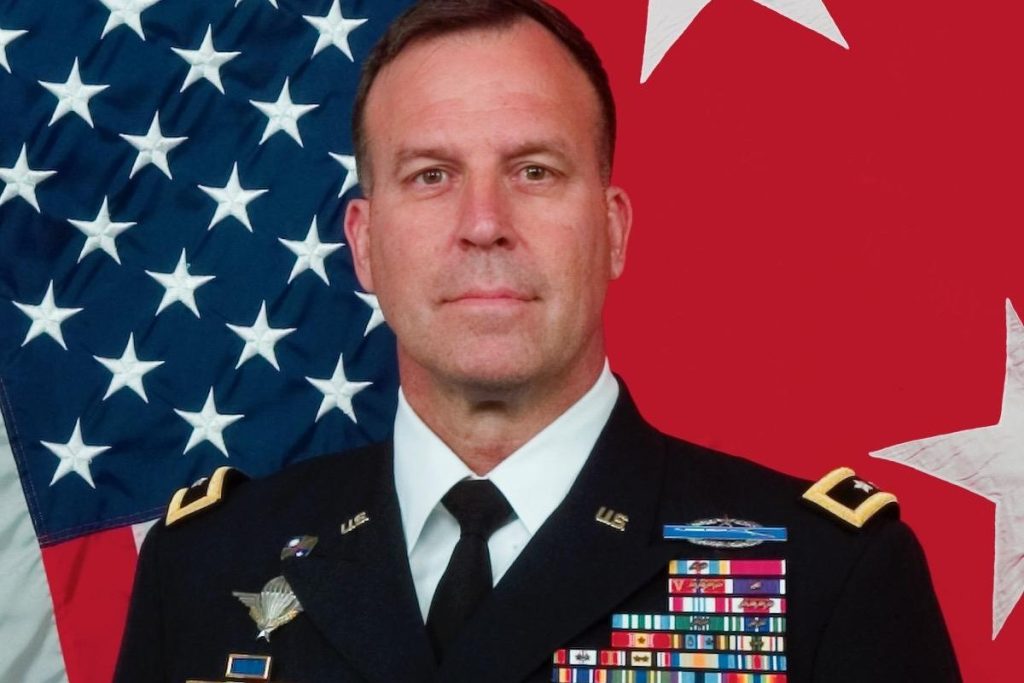
A Commander Forged in Airborne and Joint Operations
Kurilla’s path to leading CENTCOM began at the U.S. Military Academy at West Point, where he earned his commission, and continued at the Naval Postgraduate School, where he obtained a master’s degree. That combination of service academy grounding and postgraduate technical education, drawn from a sister service, reflects a career built across institutional boundaries. Before taking charge of all U.S. military operations across the Middle East, Kurilla commanded the 82nd Airborne Division, an elite infantry formation built for rapid deployment. He also served as director of operations for the Joint Staff, placing him at the nexus of strategic planning across the entire Department of Defense. Those roles — airborne infantry command at the division level and operational planning at the highest echelons of the Pentagon — suggest a commander accustomed to working at both the tactical sharp end of military force and the broader strategic level where policy and war-fighting intersect.
His tenure at CENTCOM has included oversight of ongoing operations against ISIS in Iraq and Syria. Elements of the 82nd Airborne Division, the unit he once led, have been deployed in both countries during his time in command, linking his past leadership to present missions. Kurilla is married and has two children, though their names and ages are not available.
The Strait of Hormuz and the Limits of Command Authority
CENTCOM oversees the U.S. Fifth Fleet, which is headquartered in Bahrain and routinely patrols the Strait of Hormuz. That waterway, the only passage for ships entering or leaving the Persian Gulf, is a global chokepoint. The strait connects the Gulf to the Gulf of Oman, and its control has been a persistent concern for Washington. The Persian Gulf itself is a shallow mediterranean sea that formed during the Cenozoic era, bordered by Iran to the northeast and the Arabian Peninsula to the southwest. Its coastlines touch Iraq, Kuwait, Saudi Arabia, the United Arab Emirates, and several other nations, and territorial disputes over small islands continue among some of those states. The region’s economy was historically built on fishing and pearl oysters, but industrialization and oil spills have degraded the local ecology over time.
Kurilla has publicly emphasized the U.S. commitment to freedom of navigation in these waters. Under his command, the CENTCOM commander retains the authority to order defensive strikes if U.S. vessels are threatened. Any broader, offensive engagement, however, would require approval from the administration in Washington — a structural check that balances tactical readiness with strategic oversight.
The Eisenhower strike group’s movement to the Strait of Hormuz is the most prominent operational decision of Kurilla’s tenure to date, but it is not the only challenge on his watch. The fight against ISIS remnants in Iraq and Syria continues, requiring persistent pressure from U.S. and partner forces. Kurilla’s background — combining airborne infantry experience, Joint Staff operational planning, and technical postgraduate training — positions him to approach these diverse demands with an understanding of both the tactical fight and the broader strategic environment. The coming months will test whether that combination is sufficient for the challenges waiting in the Gulf and in the ongoing campaign against ISIS.




