
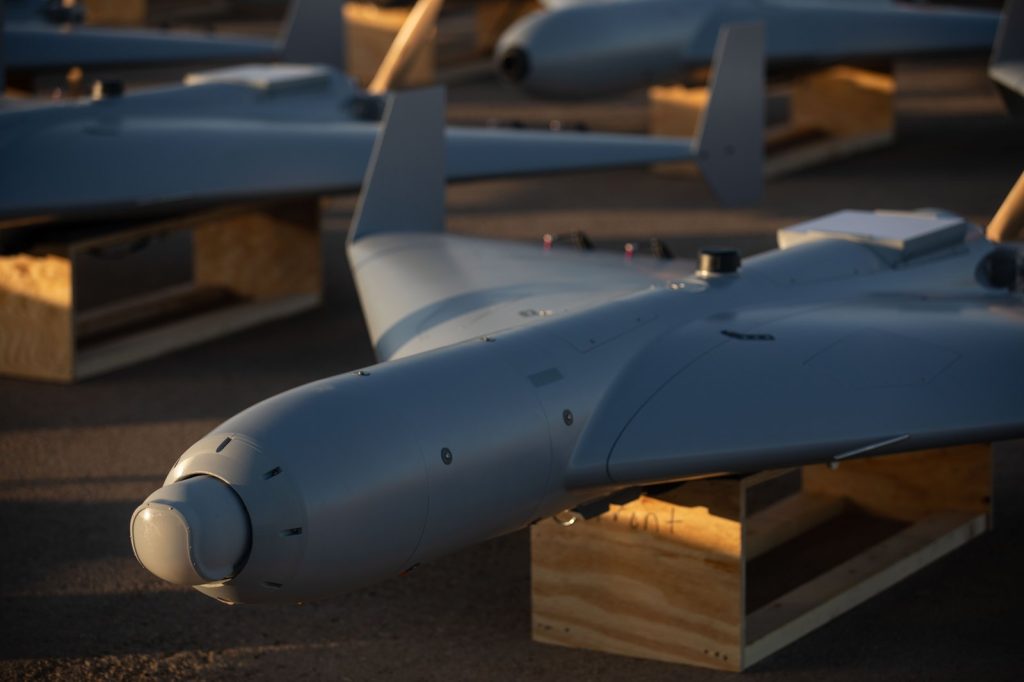
A reverse-engineered copy of an Iranian attack drone is now operational with U.S. forces in the Middle East, according to background materials released alongside the Pentagon’s May 27 announcement of strikes on an Iranian drone facility. The revelation marks a significant shift in American military strategy in the region.
On May 26, U.S. forces conducted strikes against an Iranian drone installation in Bandar Abbas, located in Iran’s Hormozgan province. The operation also involved the interception of four Iranian unmanned aerial vehicles. General Michael Kurilla, commander of U.S. Central Command, stated that the action was taken in response to the escalating UAV threat in the area.
He emphasized that the existing ceasefire remains in effect. However, the Pentagon’s supplementary briefing materials contained a more consequential detail.
By December 2025, the United States had successfully cloned the Shahed 136 drone. The American version is designated LUCAS, and a squadron of these aircraft has already been deployed to the Middle East theater. The Shahed 136 is the same drone model that Iran has supplied to Russia for use in the Russo-Ukrainian war.
It has also been operated by Iranian forces during the 2026 Iran war. The United States acquired an example of the drone, disassembled it, and produced its own variant through reverse engineering.
This development underscores the Pentagon’s assessment of the threat posed by Iranian unmanned systems. Iran’s drone program has been active since the mid-1980s. The first Ababil drone flew during the Iran–Iraq War, initially used as an attack munition rather than for surveillance.
The Shahed series represents a significant advancement in capability. Secretary of Defense Lloyd Austin has stated that the development and proliferation of Iranian drones threaten regional stability and has called for continued cooperation with allies and partners.
The U.S. has been collaborating with NATO, AUKUS, and Quad nations on counter-drone strategies and technologies. The timing of the LUCAS deployment is notable. The United States is no longer solely focused on intercepting Iranian drones; it is now building its own versions and stationing them in the same region.
If Iran launches a Shahed, the U.S. can respond with the same airframe, altering both tactical and psychological dynamics. Ukrainian forces have faced the Shahed 136 extensively in combat, where Russian troops have used the drone due to its low cost, effectiveness, and difficulty to counter.
The May 26 strikes were described as measured, with the Pentagon stressing that the ceasefire remains in place. Yet the underlying message is clear: the U.S. is prepared to escalate its response to Iranian drones. The LUCAS squadron provides commanders with an option previously unavailable. General Kurilla did not confirm whether LUCAS drones were involved in the May 26 operation, but their existence and deployment in theater represent a strategic shift.
The Pentagon’s May 27 announcement laid out the basic facts of the strike, but the background section contained the real news. The U.S. has moved from countering Iranian drones to copying them, with implications for the region, Russia, and the broader drone arms race.
The strikes were one day’s work; the LUCAS program is a long-term strategic move.




