
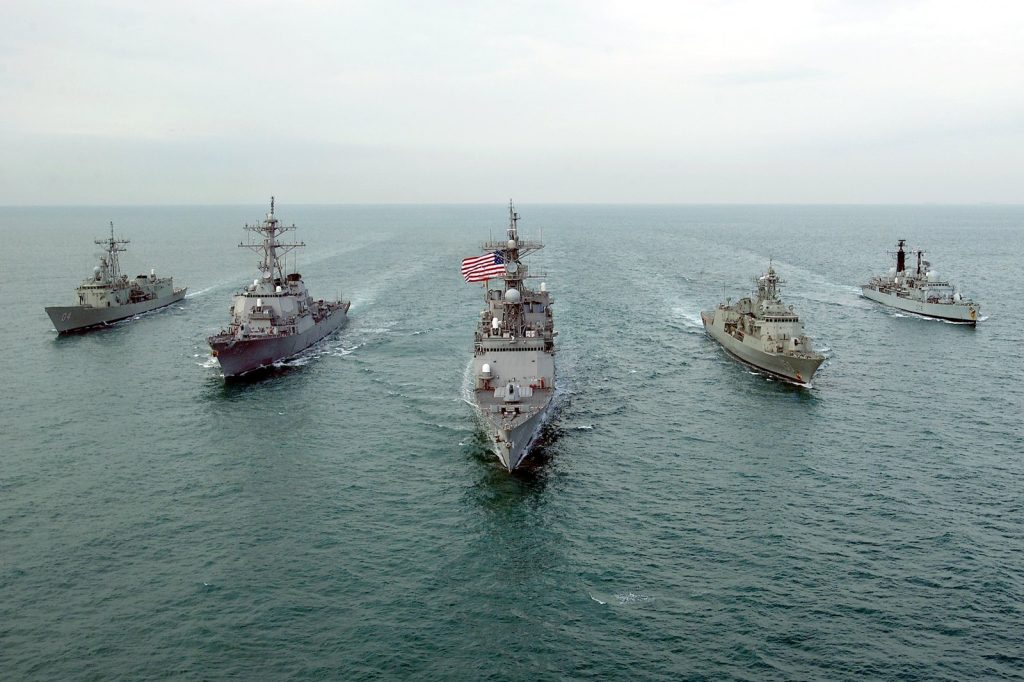
WASHINGTON, July 15 — The United States has maintained a military presence in the Persian Gulf since the 1980s, a posture formalised with the creation of U.S. Central Command (CENTCOM) in 1983. The 1990-1991 Gulf War, triggered by Iraq’s invasion of Kuwait, expanded the U.S. footprint, leading to permanent bases in Bahrain, Qatar, and the United Arab Emirates. The Fifth Fleet, based in Bahrain since 1995, patrols the region, including the Strait of Hormuz.
In 2019, after attacks on oil tankers near the strait, the U.S. launched Operation Sentinel, a multinational maritime security initiative.
The Cost of Presence
As of 2024, the U.S. had approximately 50,000 troops across the region. Annual costs for all Gulf operations were estimated at $50-80 billion, according to the Congressional Research Service. The proposed cargo fee was intended to share these costs with allied nations.
The detail that matters here is the scale. Fifty thousand troops do not deploy cheaply, and the $50-80 billion annual figure covers everything from naval patrols to air defence batteries.
Under the hood, the technical reality is that much of this expenditure goes on maintaining the Fifth Fleet’s ability to keep the Strait of Hormuz open — a chokepoint through which roughly one-fifth of the world’s oil passes.
Operation Sentinel and Maritime Security
Operation Sentinel, launched in 2019, was a direct response to attacks on oil tankers near the strait. It was designed as a multinational effort, though in practice the U.S. has shouldered the bulk of the burden. The proposed cargo fee was an attempt to spread that financial load more evenly among allied nations that benefit from the security.
As ever, the question of burden-sharing has been a recurring theme in U.S. Gulf policy. The 2019 tanker attacks highlighted the vulnerability of commercial shipping in the region, and Operation Sentinel was intended to reassure allies while also signalling that they should contribute more.
What to Watch Next
The cargo fee proposal, if implemented, would mark a significant shift in how the U.S. funds its Gulf presence. It would require allied nations to accept a formal cost-sharing mechanism, something that has historically been resisted. The technical reality is that such a fee would need to be negotiated through existing security frameworks, likely involving the Gulf Cooperation Council states and key European partners.
The coming months will test whether the administration can secure buy-in from allies who have grown accustomed to the U.S. underwriting regional security. The detail that matters: without a fee, the $50-80 billion annual bill remains entirely on the American taxpayer.
Sources
{“@context”: “https://schema.org”, “@type”: “NewsArticle”, “headline”: “U.S. Seeks Gulf Allies to Share $80B Annual Military Cost”, “description”: “WASHINGTON, July 15 — The United States has maintained a military presence in the Persian Gulf since the 1980s, a posture formalised with the creation…”, “datePublished”: “2026-07-15T09:30:00+00:00”, “author”: {“@type”: “Person”, “name”: “Sebastian Smith”}, “publisher”: {“@type”: “Organization”, “name”: “InfoPulse Today”, “url”: “https://newsfeed.infopulsetoday.com/”}, “citation”: [{“@type”: “CreativeWork”, “url”: “https://en.wikipedia.org/wiki/United_States_Central_Command”}]}




