
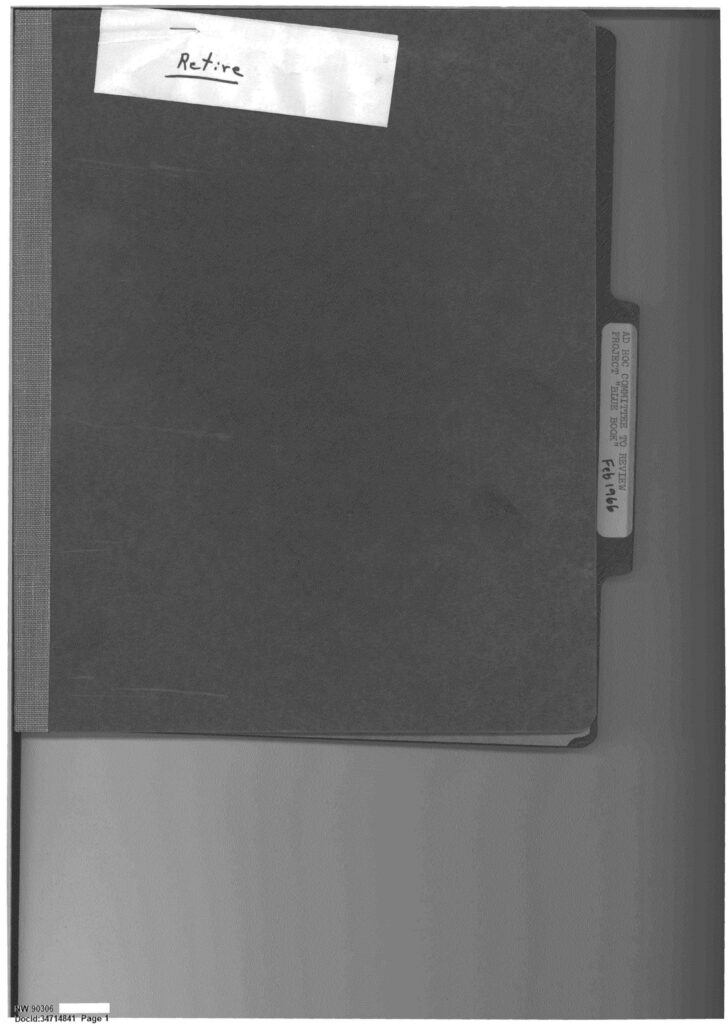
CINCINNATI, July 10 — The Department of the Air Force announced a committee review of Project Blue Book, the long-standing program investigating unidentified flying objects (UFOs), during a meeting held at the Pentagon. The session focused on implementing recommendations from the USAF Scientific Advisory Board’s Ad Hoc Committee to Review Project Blue Book, which operated from 1952 to 1969. The committee’s report highlighted a critical gap in the Air Force’s approach. Of UFO reports investigated by the Air Force, 663 remained unexplained as of June 1965.
The committee stressed the need for a scientific team to address these cases, a recommendation the Air Force later adopted. However, specifics about which sightings would be prioritized or how the team would operate were left unresolved in the initial discussions.
Meeting participants included Dr. Brian O’Brien, the committee chairman, and officials such as Lt. Col. Robert Hippler, who was tasked with overseeing implementation. A key debate centered on whether the contract for the scientific team should be awarded to a university or to individuals affiliated with academic institutions. The University of Dayton emerged as a potential lead, given its proximity to the Air Force’s headquarters, but no final decision was recorded in the minutes.
Concerns about public perception and academic reluctance dominated the conversation. Dr. O’Brien suggested reaching out to university presidents to gauge openness to UFO-related research.
This step aimed to preempt potential pushback from institutions wary of associating with such a controversial topic. Meanwhile, the Air Force faced pressure to balance scientific rigor with public relations, as the UFO phenomenon carried significant media and cultural weight. Execution timelines proved another hurdle.
Funding for the project might not materialize until September 1966, a delay that could stall progress. Dr. Jesse Orlansky emphasized the need to contact universities before the end of May to avoid delays during summer breaks.
The committee also debated whether to involve Air Force Security Forces (AFSC) or Office of Scientific Intelligence (OSI) personnel in the effort, though no consensus was reached on their role. The document includes a verbatim record of the meeting and certifications from Lt. Col. Harold Steiner, the Air Force’s Assistant Secretary for Records. It underscores the Air Force’s ongoing commitment to the program, though it leaves many operational details pending.
The report’s legacy remains tied to its methodological recommendations, which the Air Force subsequently implemented, though the exact outcomes of those efforts are not detailed in the source material.




