
Historical Brinkmanship and Near-Misses
The closest the world has ever come to all-out nuclear war remains the Cuban Missile Crisis of 1962. On October 22 of that year, President John F. Kennedy imposed a naval quarantine around Cuba, demanding the removal of Soviet missiles. Six days later, on October 28, Soviet Premier Nikita Khrushchev agreed to withdraw the weapons. The crisis was resolved through direct, high-stakes diplomacy between the two leaders. But the record of near-misses did not end there.
In 1983, the NATO exercise Able Archer 83 nearly triggered a Soviet nuclear response. Declassified U.S. documents later confirmed how close that miscalculation came to sparking a catastrophic exchange. The Cold War era, which the source material defines as a state of sustained political and military tension between the United States and the Soviet Union that stopped short of full-scale war, was punctuated by such moments of extreme risk. Proxy conflicts from Korea to Vietnam became battlegrounds for the two superpowers, each backing opposing sides without direct confrontation. The arms race that defined that period set precedents for deterrence strategies still in use today.
A genuine turning point came in 1991 with the signing of the Strategic Arms Reduction Treaty, known as START I, between the United States and the Soviet Union. That agreement reduced nuclear arsenals and built a framework for verification. For a time, it appeared the superpower rivalry that had shaped global politics after World War II was giving way to a more stable nuclear order.
The Erosion of Arms Control Architecture
The Treaty on the Non-Proliferation of Nuclear Weapons, opened for signature on July 1, 1968, remains the bedrock of the global nuclear order. It has been ratified by 191 states, including Russia and China. Yet it has not been ratified by India, Israel, Pakistan, or South Sudan. The NPT was designed to prevent the spread of nuclear weapons beyond the five recognized nuclear-weapon states, but its limitations became clear as new states pursued capabilities outside the treaty framework.
North Korea conducted nuclear tests in 2006, 2009, 2013, 2016, and 2017. Each test drew United Nations Security Council resolutions and sanctions. The international response was consistent but did not prevent Pyongyang from advancing its program. Meanwhile, Iran’s nuclear ambitions led to a carefully negotiated compromise in 2015: the Joint Comprehensive Plan of Action, which limited Iran’s uranium enrichment in exchange for sanctions relief. In 2018, President Donald Trump withdrew the United States from the agreement, a decision that reshaped the diplomatic landscape.
Ukraine Conflict and the Return of Nuclear Signaling
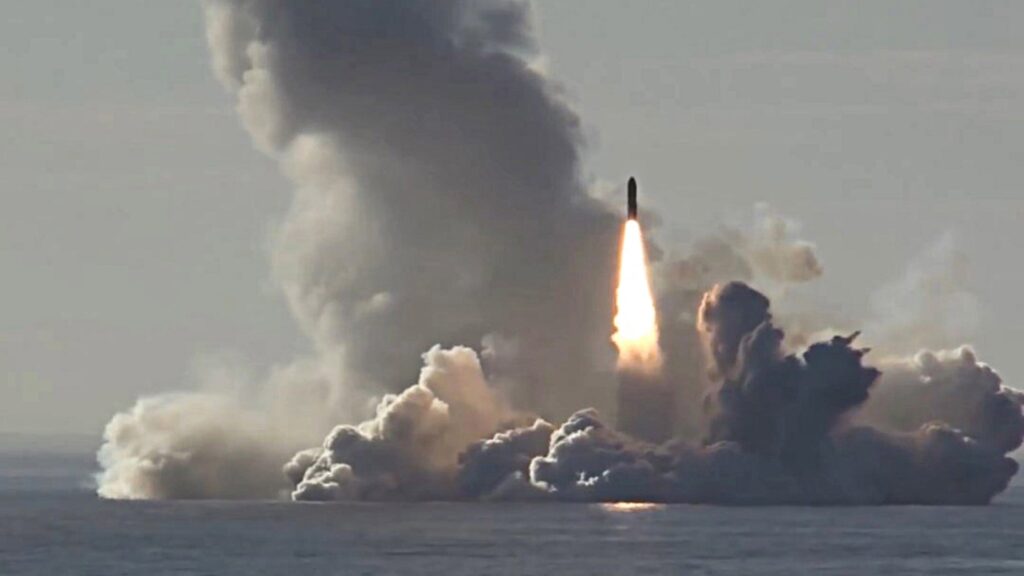
What is changing today is the return of direct nuclear signaling between major powers. The Ukraine conflict has revived concerns about nuclear escalation, with both the U.S. and NATO emphasizing deterrence. Russian nuclear doctrine has become a recurring subject of analysis and concern. The Cold War’s legacy endures in today’s security frameworks, arms control agreements, and regional tensions. Understanding that era clarifies how current conflicts, alliances, and nuclear postures evolved from the superpower rivalry that defined the latter half of the 20th century.
The 1962 Cuban Missile Crisis was decades ago. The Able Archer 83 scare was decades ago. START I was decades ago. But the strategic dynamics they represent are reasserting themselves in a new context. The United States and NATO have responded to the Ukraine conflict with a posture of deterrence, not escalation, seeking to avoid the kind of miscalculation that nearly led to catastrophe in earlier episodes. The guardrails that once kept nuclear threats out of daily international language are wearing thin, and the world is again confronting the possibility of a conflict that could spiral beyond conventional bounds.




