
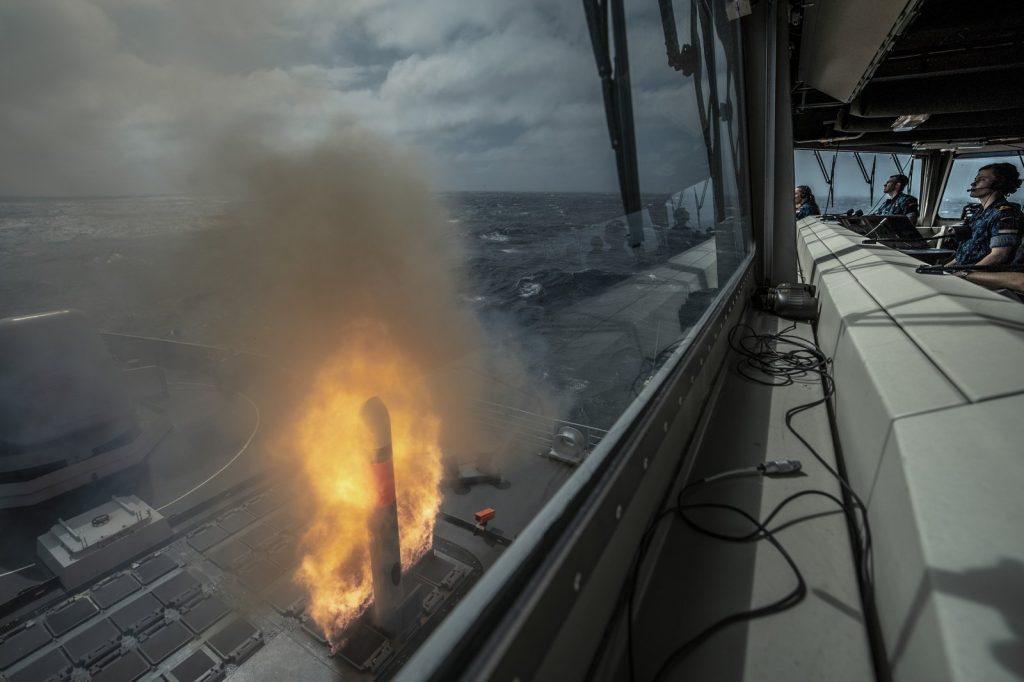
US Boosts Tomahawk Missile Production Amid Rising Demand
TEHRAN, August 20 — The US Department of Defense has awarded a $22.9 billion contract to Raytheon, a subsidiary of RTX, to expand production of the BGM-109 Tomahawk cruise missile. The Pentagon announced the deal on Monday, citing the military’s accelerated use of hundreds of Tomahawks during recent conflicts involving Iran. This contract follows an earlier framework agreement from February and aims to increase annual production to over 1,000 Tomahawks over seven years.
Acting US Navy Secretary Hung Cao stated the deal would “accelerate Tomahawk missile delivery to our warfighters at unprecedented speed” by scaling up the industrial base’s capacity. The Tomahawk, a subsonic cruise missile with a standard range of approximately 1,000 miles, is used by the US Navy, Army, and a limited number of allied nations.
Technical Capacity and Deployment Flexibility
The missile’s versatility is a key factor in its widespread use. It can be launched from surface warships, submarines, and ground-based platforms. This adaptability allows it to meet diverse operational needs.
The expansion of production capacity is designed to address both immediate demands and long-term strategic requirements, ensuring a steady supply for current and future conflicts. Raytheon’s role in this contract underscores its established position as a major defense contractor.
The company has a history of supplying Tomahawks, and the new agreement will further solidify its industrial footprint. The Pentagon’s emphasis on “expanding the munitions industrial base” reflects a broader strategy to modernize its arsenal and reduce reliance on limited existing stocks. Hung Cao’s comments highlight the urgency of the situation.
The rapid consumption of Tomahawks during the Iran conflict suggests that existing reserves were insufficient to meet operational needs. By increasing production, the US aims to avoid future shortages, particularly as geopolitical tensions in the region remain high.
The contract also signals a shift toward proactive arms production rather than reactive procurement.
Strategic Implications and Historical Context
The Tomahawk has been a cornerstone of US military strategy since its deployment in the 1980s. Its subsonic design allows it to evade radar detection, making it a preferred tool for covert operations. The missile’s range and precision have made it a critical asset in conflicts ranging from the Gulf War to recent Middle Eastern engagements.
However, its effectiveness has also drawn criticism, with some arguing that reliance on such weapons escalates tensions rather than resolving them. Allied nations using the Tomahawk, though not named in the source, are likely to benefit from the increased production.
This could strengthen military cooperation but also raises questions about the proliferation of advanced weaponry. The US’s decision to prioritize Tomahawk production aligns with its broader defense posture, which emphasizes maintaining a technological edge in conventional weapons. The contract’s seven-year timeframe suggests a long-term commitment to Tomahawk capabilities.
This contrasts with recent trends where some nations have scaled back on certain conventional arms. The US’s focus on maintaining and expanding its inventory of Tomahawks reflects a belief in the missile’s enduring relevance, even as emerging technologies like hypersonic weapons gain attention.
What comes next for the Tomahawk program? The Pentagon has not announced plans to replace the missile with newer systems, but the contract does not preclude future developments. Observers will be watching whether the increased production translates into improved performance or reduced costs.
Additionally, the geopolitical landscape in the Middle East could influence the missile’s deployment frequency in the coming years.




