
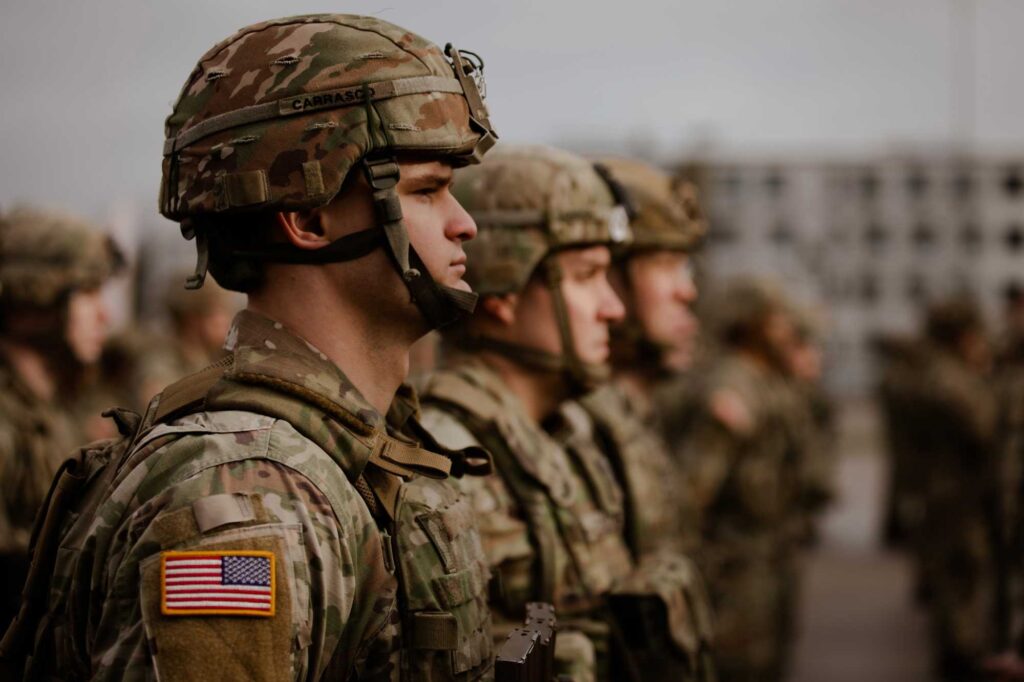
The U.S. Military Footprint in the Gulf: A Decade of Reductions and Reassessments
On August 20, 2026, the U.S. military presence in the Gulf region remained a fixture nearly three decades after its initial expansion. According to official records, bases in Saudi Arabia, Qatar, and the United Arab Emirates continue to host thousands of American troops, a legacy of operations that began in the 1990s. This presence was dramatically scaled up during the 2003 Iraq War, which saw over 100,000 U.S. troops deployed at its height.
The subsequent drawdown, however, reduced forces to approximately 2,500 by 2020, reflecting a pattern of periodic reassessment. Recent evaluations of troop levels are part of a broader trend.
The 2019 decision to cut forces in Syria marked an earlier phase of this strategy, driven partly by shifting geopolitical priorities. The Iran conflict, which erupted with U.S. airstrikes in 2020, has added complexity. Reports indicate $1.2 billion in damages to U.S. facilities in the Gulf, though the exact scope of these losses remains unclear.
Such incidents have placed strain on resources, forcing the administration to weigh the financial burden of maintaining bases against other global commitments.
Financial and Strategic Pressures
The cost of sustaining Gulf bases is substantial. Historical data shows annual expenses exceeding $3.5 billion, a figure that has become a focal point in the current review. This spending occurs amid broader fiscal constraints, particularly as the U.S. redirects resources to conflicts like Ukraine.
The trade-off is stark: reducing troop numbers in one theater often coincides with reallocating assets elsewhere, as seen in the post-Iraq War drawdown or the 2011 Syria exit. Geopolitical shifts have historically dictated these adjustments.
The Arab Spring in 2011, for instance, accelerated a drawdown that had begun earlier in the decade. Today, the administration faces similar pressures, balancing the need to stabilize Gulf security against the rising demands of other frontlines. The Iran conflict further complicates this calculus, as retaliatory actions and ongoing tensions continue to divert attention and funding.
Sources familiar with the review process note that the administration is not seeking a complete withdrawal but rather a strategic recalibration. This approach aligns with past practices, where reductions were framed as necessary for efficiency rather than abandonment.
However, critics argue that the financial strain and regional instability could undermine long-term U.S. interests in the Gulf. The 2026 review comes at a time when global attention is focused on multiple conflicts. The administration’s stance, as of this date, remains protective of national interests in the region.
President Donald Trump, Vice President JD Vance, and Secretary of State Marco Rubio have emphasized the need for measured decisions, though specific policy changes have not yet been announced. The focus, according to official statements, is on ensuring that troop levels align with both security needs and fiscal realities.
Looking Ahead
What remains to be seen is how the review will shape future deployments. Historical patterns suggest that troop reductions often precede further shifts, but the current context—marked by ongoing conflicts and economic pressures—may alter that trajectory. For now, the Gulf’s military landscape reflects a legacy of adaptation, with the U.S. presence maintained at a reduced scale while responding to emerging threats.




