
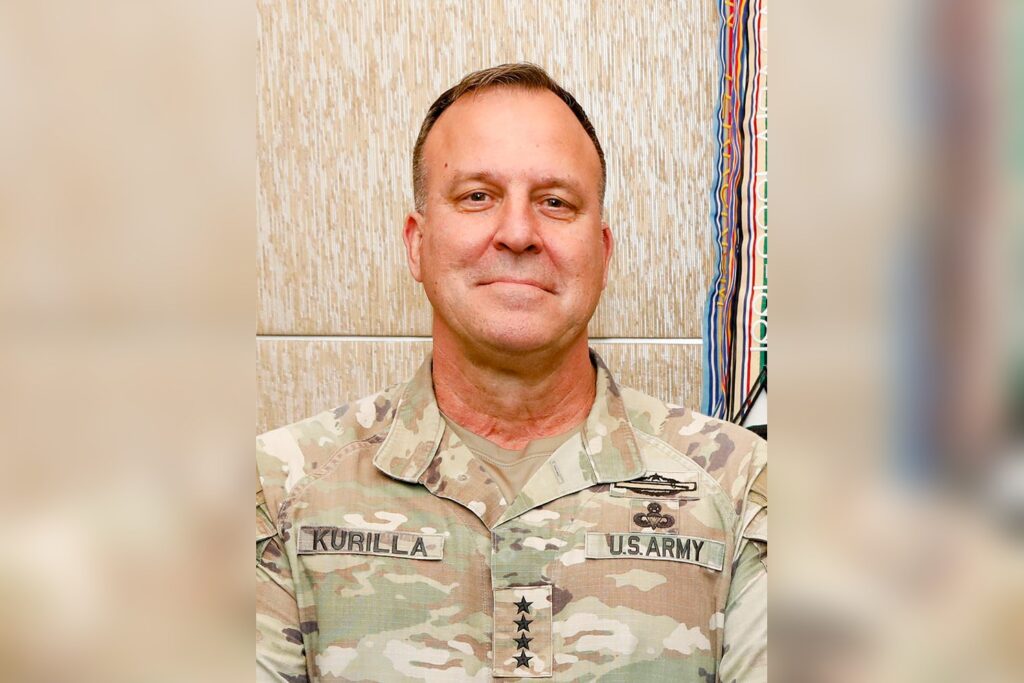
TAMPA, July 7 — The man who commands every American soldier, sailor, airman and Marine across the Middle East sits in a windowless operations centre at MacDill Air Force Base, watching a bank of screens that track the Strait of Hormuz in real time. General Michael Kurilla, commander of U.S. Central Command, has held this post since April 2022. On any given night, his staff monitors Iranian fast-attack craft slipping through the Persian Gulf, or the thrum of a Navy destroyer on patrol.
Kurilla inherited a region on edge. He succeeded General Kenneth McKenzie, taking the helm of CENTCOM at a moment when the Islamic Revolutionary Guard Corps had already escalated its harassment of commercial shipping.
The general’s own background is in the kind of war that starts fast and close — he previously commanded the 82nd Airborne Division, the Army’s quick-reaction force, and served as director of operations for the Joint Staff. Those roles trained him for the ground-level reality of a Gulf crisis.
The Strait and the Strategy
Under Kurilla’s leadership, CENTCOM has shifted its posture in the waterway that carries a fifth of the world’s oil. The command has increased naval patrols, a visible show of force. Joint exercises with allied navies have become more frequent.
The message is deliberate: the United States will maintain freedom of navigation, and it will do so with partners. Kurilla has testified before Congress about what he sees as the primary threat in his area of responsibility — Iran’s IRGC and its naval capabilities.
The IRGC’s fleet of small, fast boats, its mine-laying vessels and its anti-ship cruise missiles represent a layered danger that planners in Tampa game out daily. In open testimony, Kurilla has been blunt about the risk of miscalculation in the Gulf, where a single encounter between an IRGC speedboat and a U.S. warship could escalate within minutes.
Deterrence in Practice
The general has made deterrence the centrepiece of his public posture. Deterring Iranian aggression, he has said, is not just about having the bigger fleet. It requires constant presence, visible readiness and the willingness to respond.
On the ground in the Gulf, residents describe the scene as one of coiled tension — American destroyers cutting through the same waters as Iranian patrol boats, the two sides often within hailing distance. By nightfall in the region, CENTCOM’s operations centre shifts into a different rhythm.
Watch officers track Iranian radar emissions and monitor chatter from the IRGC’s naval command. Kurilla, a graduate of the U.S. Military Academy at West Point who also holds a master’s degree in military arts and sciences, has drilled his staff on the doctrine of escalation control. The Strait of Hormuz, he has argued, is not a place for ambiguity.
What Comes Next
The question hanging over Kurilla’s command as of July 2026 is whether the current posture of increased patrols and allied exercises is enough. Iran’s IRGC continues to develop its naval arsenal. The administration of President Donald Trump has made clear it expects CENTCOM to hold the line.
For now, Kurilla’s strategy rests on a simple calculus — that presence deters, and that deterrence buys time. Whether that time runs out in the Gulf or on a congressional hearing room dais is the open question that defines his command.




