
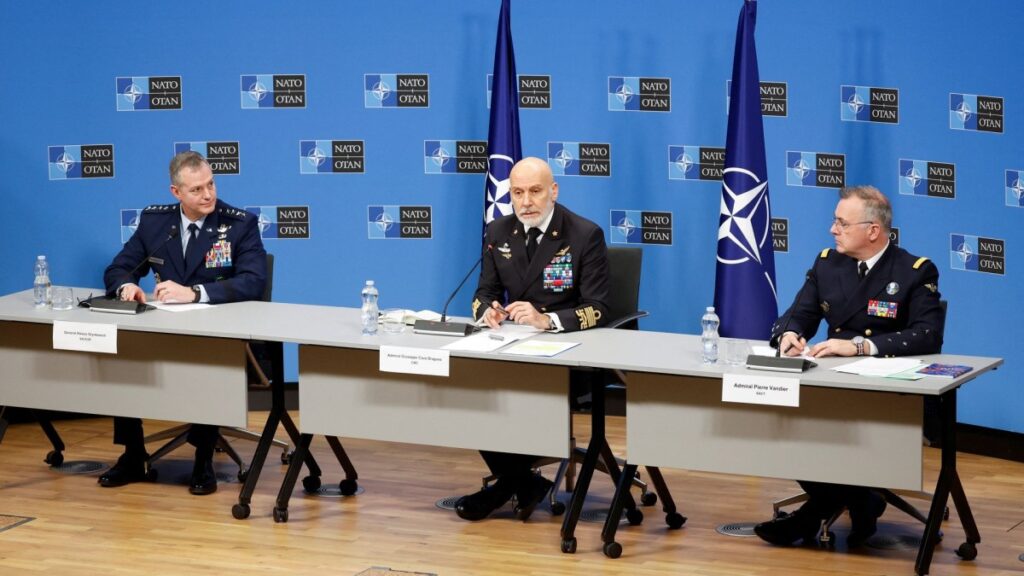
BRUSSELS, September 19 — NATO’s top military commander said the alliance is prepared for a potential Russian false flag attack, a warning reported on Wednesday that lands with unusual weight in the corridors of an alliance now in its third year of managing the fallout from Moscow’s full-scale invasion of Ukraine. The statement reflects heightened tensions between NATO and Russia, and it carries a specific and loaded meaning.
A false flag operation is a covert action designed to appear as though it was carried out by another party, often used as a pretext for military escalation. No specific details about the potential attack were provided, and the exact date of the general’s remarks was not specified.
A warning with precedent
False flag concerns are not new. In February 2022, before the invasion, the United States warned that Russia might stage a false flag incident in eastern Ukraine as a pretext for invasion. NATO officials and Western governments have also raised the possibility of Russian operations in Moldova or the Baltic states.
More recently, NATO and Western intelligence have accused Russia of conducting hybrid attacks across Europe, including sabotage, cyberattacks and disinformation campaigns. The top general’s warning comes as NATO has increased its defensive posture along its eastern flank, particularly in the Baltic states — Estonia, Latvia and Lithuania — and Poland, which border Russia and its ally Belarus.
Since 2014, following Russia’s annexation of Crimea and its support for separatists in eastern Ukraine, NATO has deployed multinational battlegroups to the Baltic states and Poland, later expanding to Romania, Bulgaria, Hungary and Slovakia. After the 2022 invasion, the alliance significantly bolstered these forces and increased air policing missions.
The machinery of response
NATO’s response to any false flag attack would likely involve consultations under Article 4, which allows any member to request consultations when its territorial integrity, political independence or security is threatened. Article 5 could be invoked if an attack is confirmed against a member state. That is the alliance’s core principle — an armed attack against one member is considered an attack against all.
NATO was founded in 1949 with the signing of the North Atlantic Treaty by 12 founding members, including the United States, Canada, the United Kingdom and France. It now has 32 member states, following the accessions of Finland in 2023 and Sweden in 2024.
Its highest military authority is the Military Committee, chaired by the Chair of the NATO Military Committee, while the Supreme Allied Commander Europe commands all NATO military operations. The current SACEUR is a US general, reflecting the longstanding American leadership role in the alliance. The top general, as the senior military advisor to the North Atlantic Council, plays a key role in shaping the alliance’s military strategy and readiness.
The statement is likely intended to signal NATO’s awareness and preparedness to both Russia and allied publics. It remains unclear what specific intelligence prompted the warning, but it aligns with previous NATO assessments of Russian hybrid threats.
Readiness, spending and the wider picture
NATO has consistently stated it does not seek conflict with Russia but will defend every inch of allied territory. The alliance has also provided unprecedented military and financial support to Ukraine, though it is not a party to the conflict. The warning comes amid ongoing debates within NATO about increasing defense spending and military readiness.
In 2023, NATO members agreed to a new defense investment pledge, with 2% of GDP as a minimum. As of 2024, more members are meeting that target, though some still fall short.
It also follows recent Russian military exercises and troop movements near NATO borders. The alliance has conducted several large-scale exercises in 2024, including Steadfast Defender 2024, its largest since the Cold War, involving around 90,000 troops from all 32 members. Those exercises are designed to test NATO’s ability to rapidly deploy forces across the Atlantic and Europe.
The warning may also relate to Russia’s ongoing information operations, which NATO has condemned as attempts to undermine Western unity and support for Ukraine. What is at stake, for the alliance’s eastern members above all, is whether deterrence holds without a shot being fired.
The alliance continues to monitor the situation closely and coordinate with member states and partners, including Ukraine, to counter any potential threats. Watch for whether the consultations move from Article 4 toward Article 5 — and for what allied intelligence chooses to make public.




