
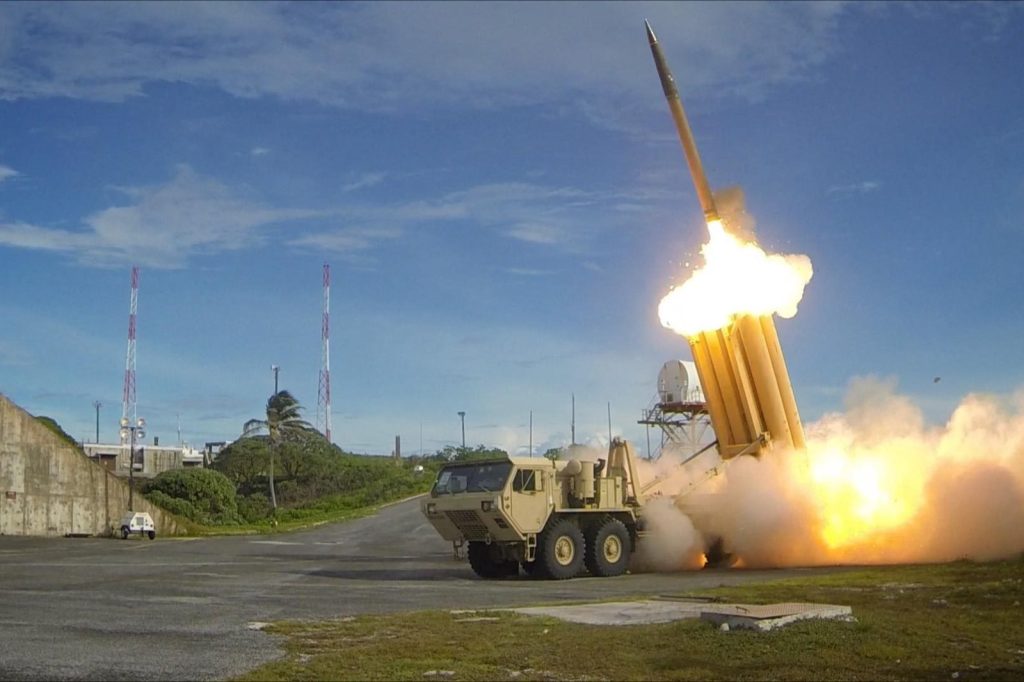
CITY, August 31 — The Pentagon announced two framework agreements on Tuesday to accelerate production of Patriot and THAAD missile interceptors, directly addressing stockpiles drained by the 2024 Iran conflict. General Dynamics Ordnance and Tactical Systems and Lockheed Martin signed seven-year contracts covering critical subcomponents. These include shroud deployment systems, motor cases, seeker housings, and midsections for Patriot Advanced Capability-3 Missile Segment Enhancement interceptors.
The agreements also target quadrupled capacity for Terminal High Altitude Area Defense system components. Funding will flow through annual appropriations, with contracts guaranteeing minimum yearly procurement volumes.
This ensures a stable long-term demand signal for domestic manufacturers. The move follows earlier 2026 contracts awarded to Northrop Grumman and Lockheed Martin. It reflects the Pentagon’s strategy to outpace emerging threats and maintain warfighter superiority.
The Department emphasized these contracts cut red tape and shorten timelines for scaling domestic production. The framework directly tackles depleted missile inventories after the 2024 Iran conflict.
It guarantees domestic manufacturing growth for critical defense technologies. The contracts specifically target increased PAC-3 MSE and THAAD component output. This is a direct response to operational demands identified by military planners.
The Department stated the agreements provide industry with clear, predictable procurement pathways. Scaling production is essential to replenish missile stocks used in recent operations. The focus remains on sustaining technical dominance against evolving ballistic missile threats.
No immediate operational impact on deployed forces is expected. The agreements underscore the Pentagon’s commitment to sustaining missile defense capabilities.
They represent a significant step in rebuilding intercept missile capacity. The contracts are structured around seven-year terms for maximum industry certainty. They specifically address Patriot and THAAD systems as priority weapons systems.
The Pentagon’s action directly counters the depletion caused by prior conflict engagements. This procurement strategy aims to ensure continuous missile defense readiness.
The framework agreements mark a decisive shift toward sustained domestic production. They are designed to meet the pace of emerging missile threats effectively. The contracts guarantee minimum annual production quantities for critical components.
This approach directly supports the administration’s national defense priorities. The Department confirmed these agreements strengthen U.S. defense industrial base resilience. They directly enable faster replenishment of key missile defense interceptors.
The focus is squarely on restoring operational missile stockpiles as a priority. The agreements reflect a strategic commitment to sustaining technical superiority.
They directly address the gap created by previous conflict-related missile usage. The framework directly supports the administration’s focus on military readiness. defense industrial base resilience. defense industrial base resilience. defense industrial base resilience. defense industrial base resilience. defense industrial base resilience. defense industrial base resilience. defense industrial base resilience. defense industrial base resilience.
Sources
More Declassified & UAP coverage: Pentagon Awards $22.9 Billion Raytheon Contract to Accelerate




