
When Russian forces crossed into Ukraine on 24 February 2022, the United States and the United Kingdom responded with an unprecedented wave of de‑classified intelligence. Since that day, both nations have regularly released assessments that were previously kept secret, detailing Russian troop movements, Kremlin disinformation, and conditions on the battlefield. The public disclosures aim to deter further Russian aggression, highlight President Vladimir Putin’s isolation, and reinforce cohesion among NATO allies.
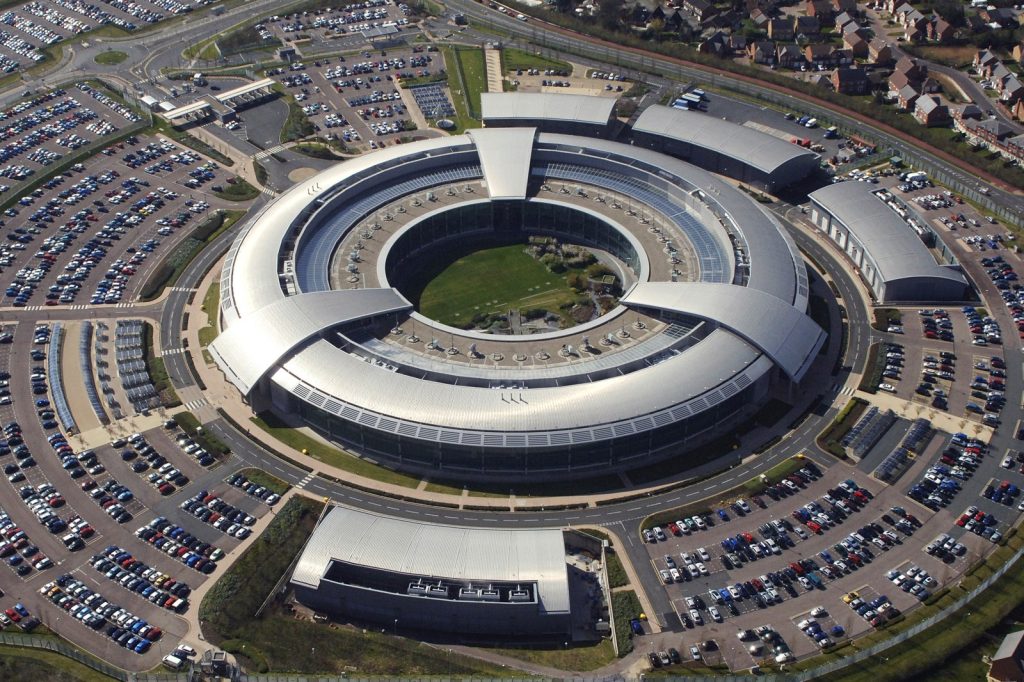
In the months following the invasion, U.S. and British agencies have repeatedly broken with tradition by publishing classified analyses. A U.S. release asserted that Putin is being misled by advisers about the poor performance of his armed forces. On 31 March, Jeremy Fleming, director of the United Kingdom’s Government Communications Headquarters (GCHQ), told a public audience that Russian soldiers are demoralised, increasingly refusing orders and even sabotaging their own equipment. Fleming described the “pace and scale” of these releases as “really unprecedented.”
Academic commentator Mark Galeotti, a specialist on Russia at University College London, said the campaign reflects a “different age, politically and internationally” and a “different kind of war.” Officials in Washington and London say the disclosures serve several purposes: they signal to Putin that his actions are under close scrutiny, encourage him to doubt the advice of his inner circle, embolden Russian officers who might speak truthfully, and inform the Russian public that they have been misled about the conflict.
The strategy is coordinated at the highest levels. After concerns about Russian deployments grew in autumn 2021, the Biden administration decided to share intelligence aggressively with key partners, especially Britain. In November 2021, President Joe Biden sent CIA Director William Burns to Moscow, openly announcing the visit and warning Kremlin officials that the United States was monitoring Russian troop movements. Shortly thereafter, the United States accelerated the flow of sensitive information to the Five Eyes alliance, to Canada, Australia, New Zealand and to Ukraine.
U.S. Director of National Intelligence Avril Haines later travelled to Brussels to brief NATO members on intelligence suggesting Russian intentions to invade, according to a senior U.S. official who spoke on condition of anonymity. Some allies remained cautious, recalling past intelligence failures such as the 2003 claim that Iraq possessed weapons of mass destruction. In late 2021, France and Germany led a bloc of European states that viewed the same intelligence but hesitated to accept an imminent invasion, initially blocking NATO plans for early crisis preparation and for supplying certain weapons to Ukraine. Both countries softened their stance only in December.
France’s own intelligence community faced scrutiny after the invasion. Media reports this week confirmed the removal of Eric Vidaud, head of France’s military intelligence agency, after his service failed to anticipate the Russian attack. The change comes amid internal reflection and just before the French presidential election, with some observers describing Vidaud as a scapegoat for the surprise.
In January, Britain’s Foreign Office publicly accused Putin of seeking to install a pro‑Moscow regime in Ukraine, stating that “exceptional circumstances” justified making the intelligence public. The release of such assessments has also been used to warn of possible Russian use of chemical weapons in the conflict.
Analysts say the public intelligence campaign also seeks to bolster Western unity. Both President Biden and British Prime Minister Boris Johnson have expressed doubt that Putin is ready to negotiate, emphasizing the need to sustain military and moral support for Kyiv. Measuring the effect inside Russia is difficult. A senior U.S. official noted that exposing Putin’s misinformation could prompt him to reconsider his options, but it might also deepen his isolation or reinforce a resolve to restore Russian prestige lost after the Soviet era.
Galeotti cautioned that the true impact on Putin is uncertain, yet he argued there is “no harm in giving it a try.” In a system dominated by a single leader, even a single idea that reaches the Kremlin could have a powerful effect.
The Ukraine war has forced intelligence agencies out of the shadows, turning secret analysis into a public tool. Whether the gamble will shape events on the battlefield or alter Kremlin calculations remains to be seen, but the approach underscores a new reality: in this conflict, information is as much a weapon as artillery.




