
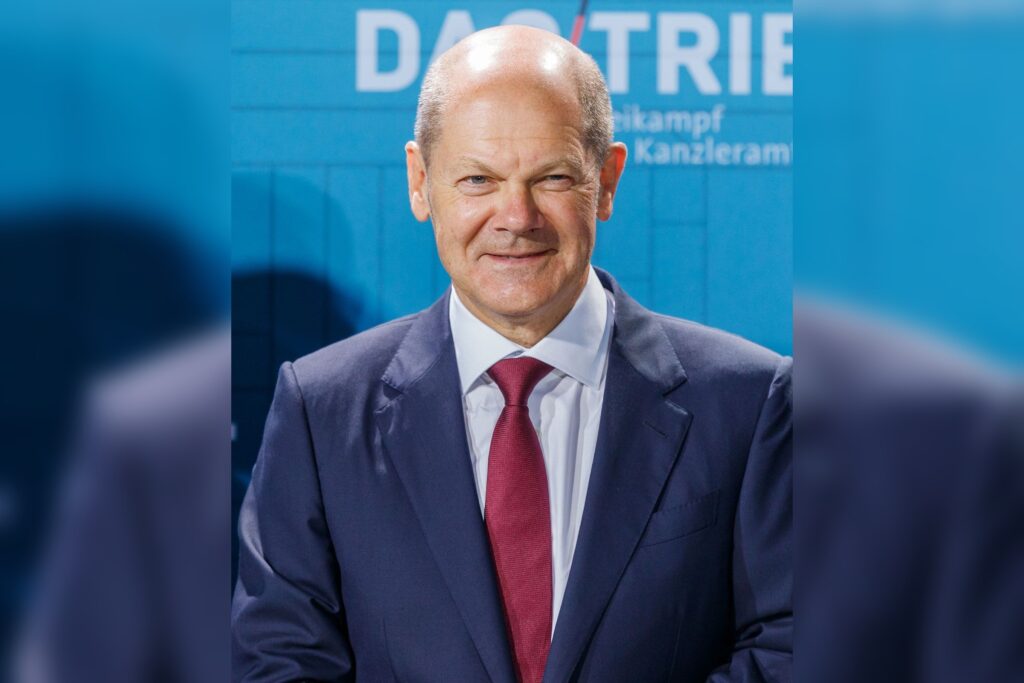
The German government under Chancellor Olaf Scholz has approved funding for 50,000 strike drones destined for Ukraine, officials confirmed, marking the latest installment in a pattern of military aid that has made Berlin the second-largest donor to Kyiv since the Russian invasion began in February 2022. The decision draws on a defense budget that has already committed over €17 billion in military assistance to Ukraine through late 2024, cementing Germany’s role as a key backer of the embattled country.
From restraint to rearmament
The drone funding represents a continuation of a dramatic reversal in German security policy that Scholz set in motion shortly after Russian forces crossed into Ukraine. In January 2023, the chancellor personally authorized the supply of Leopard 2 main battle tanks, a move that broke with Germany’s long-standing policy of not exporting weapons to active conflict zones. That decision, which required intense internal debate and pressure from allies, signaled that Berlin was willing to take on a more assertive role in European defense.
Scholz, a member of the Social Democratic Party who became chancellor on December 8, 2021, had already laid the groundwork for this shift just three days after the invasion began. On February 27, 2022, he announced what he called a Zeitenwende—a turning point—pledging €100 billion for the modernization of the German armed forces.
The announcement was a stark departure from decades of military restraint that had defined postwar German foreign policy, and it placed the country on a path toward deeper engagement in European security. The chancellor’s biography reflects a long career in public service. Born June 14, 1958, in Osnabrück, Scholz served as mayor of Hamburg from 2011 to 2018 and later as Vice Chancellor and Finance Minister under Angela Merkel from 2018 to 2021. He now governs in a three-way coalition that includes the Greens and the Free Democratic Party.
His rise through the Social Democratic Party included stints as a member of the Bundestag and a cabinet post as minister for labour and social affairs before taking the top job.
Caution and criticism
Despite the scale of Germany’s assistance, some allies have described Scholz as too cautious. The most prominent point of tension has been Berlin’s refusal to supply Taurus cruise missiles—a long-range system that Ukraine has repeatedly requested but that the chancellor has so far declined to send.
Scholz has consistently emphasized that Germany’s support for Ukraine will continue as long as necessary, but the Taurus question remains a symbol of the limits he has drawn around the aid program. At home, Scholz’s approval ratings have fluctuated, with his Social Democratic Party polling at roughly 15 percent in late 2024. The coalition’s internal dynamics, including differing views on security policy among the Greens and the Free Democrats, add complexity to decision-making.
Still, the chancellor has maintained that the Zeitenwende represents a permanent change in Germany’s posture rather than a temporary response to the crisis. The implications of Berlin’s shift extend well beyond the battlefield in Ukraine.
As Europe’s largest economy and the continent’s second-largest military donor to Kyiv, every decision on aid packages carries weight among allies and adversaries alike. The abandonment of the long-standing policy against sending weapons into active war zones has altered Germany’s relationship with Russia and repositioned the country as a more active player in European security architecture. The funding for 50,000 strike drones is the latest practical expression of that strategic transformation.




