
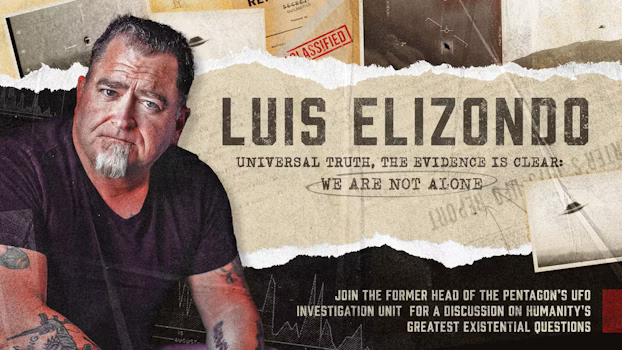
WASHINGTON, July 11 — The declassification of Pentagon files has thrust three principal figures into the spotlight of the Unexplained Aerial Phenomena debate, each representing a distinct thread in a story that has moved from the fringes of military aviation to the floor of the US Senate. Luis Elizondo, a former US Army Counterintelligence Special Agent, is the figure who pulled the thread first. He led the Advanced Aerospace Threat Identification Program — known by its acronym AATIP — from 2010 until his resignation in 2017.
That resignation was not a quiet retirement. Elizondo left to advocate for public transparency, a campaign that landed him on 60 Minutes and, crucially, before Congress in July 2023.
His testimony there, alongside others, marked the moment the Pentagon’s internal investigations became a matter of public record. The technical reality of what those investigations encountered was brought to life by Commander David Fravor. A retired Navy pilot with 3,500 flight hours in F/A-18F Super Hornets, Fravor was the lead witness in the 2004 Nimitz encounter.
His description of the tic-tac object — a craft that appeared to defy known aerodynamics — became the defining image of the modern UAP debate. Fravor has repeated that account to the Pentagon and in public hearings, and his credibility as a seasoned aviator has made his testimony difficult to dismiss.
Then there is Dr. Sean Kirkpatrick, the physicist who represents the institutional response. With a PhD from the University of Georgia and two decades at the CIA, Kirkpatrick became the first director of the All-domain Anomaly Resolution Office — AARO — in July 2022. Under his oversight, AARO produced its annual reports in 2023 and 2024, and he testified before the Senate Armed Services Committee in April 2023.
Kirkpatrick’s role has been to bring scientific rigour to a field often dominated by anecdote. ### The supporting cast and the unresolved questions The declassified documents also name Ryan Graves, a former Navy pilot who reported encounters during the 2014-2015 Roosevelt incidents. Graves founded the nonprofit Americans for Safe Aerospace, pushing for pilot safety and reporting mechanisms. His testimony has added a layer of operational concern: these are not just sightings, but potential hazards to flight safety.
David Grusch, a former Air Force intelligence officer, testified in July 2023 about alleged secret UAP programs. The declassified documents, as ever, are careful on this point: they do not confirm his claims.
That distinction matters. The Pentagon files lay out what is known, and what remains unsubstantiated, with a precision that frustrates those seeking definitive answers. ### What to watch next The story now hinges on whether the institutional machinery — AARO, Congressional oversight, and the declassification process itself — can produce conclusions that satisfy both the scientific community and the public. Kirkpatrick’s reports have offered data but no smoking gun.
Elizondo continues to push for more disclosure. Fravor’s testimony remains a fixed point in a shifting landscape.
The detail that matters is this: the files confirm the existence of the programs, the credentials of the witnesses, and the limits of the evidence. For informed readers, that is the story — not the speculation, but the slow, bureaucratic process of turning sightings into science.




