
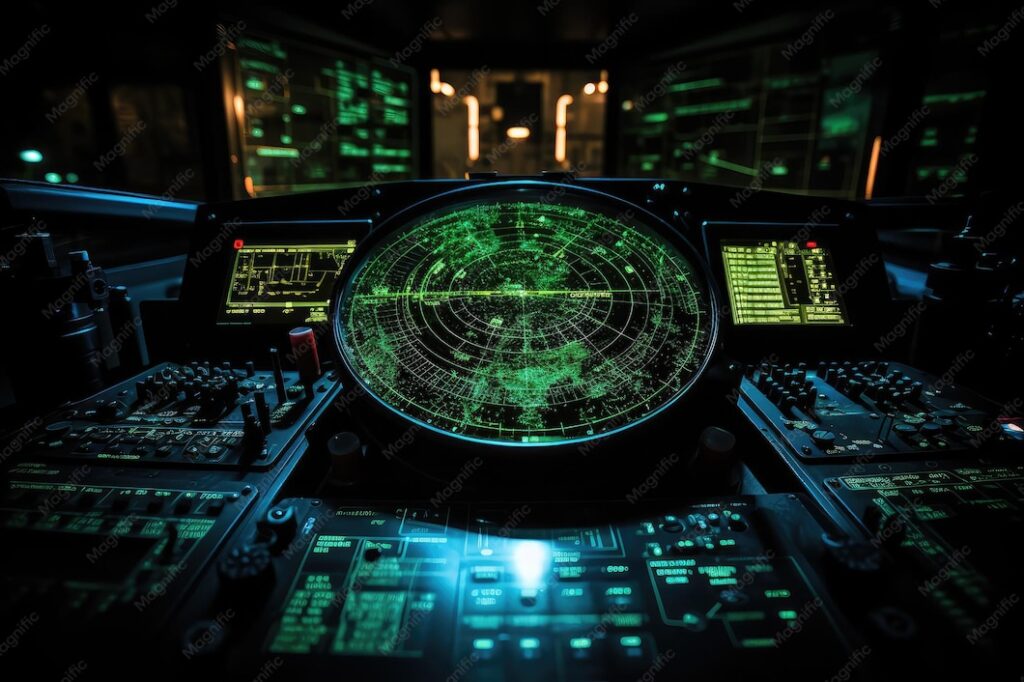
WASHINGTON, July 11 — The Pentagon’s UAP reporting system has amassed a database of over 800 reports as of 2024, with the vast majority defying conventional explanation, according to declassified documents reviewed by InfoPulse Today. The technical reality of what the military is tracking has become steadily clearer — and stranger — as successive tranches of reports have been released. The Office of the Director of National Intelligence’s Preliminary Assessment, published in June 2021, examined 144 reports spanning 2004 to 2021.
Of those, 143 remained unexplained. That is a high rate of non-resolution, a figure that has not materially shifted in subsequent releases.
The sensor picture
Under the hood, the data reveals a pattern of objects behaving in ways that challenge basic assumptions about flight. Of the 144 reports in the 2021 assessment, 80 involved multiple sensors — meaning radar, infrared, and visual confirmation were all present simultaneously, reducing the chance of sensor error. 51 of those reports occurred in 2019 alone, a spike that coincided with the Navy’s formalisation of reporting procedures.
The breakdown by sensor type is instructive: 67 reports came from radar, 42 from visual sightings, 23 from infrared, and 12 from signals intelligence.
The detail that matters here is the cross-referencing — when an object appears on radar and infrared at the same time, and a pilot sees it with his own eyes, the likelihood of a mundane explanation drops sharply. 17 incidents involved electronic warfare effects, with aircraft systems malfunctioning during the encounter. 8 cases tracked objects at speeds exceeding Mach 2 — twice the speed of sound — without producing a sonic boom.
As ever, that absence is physically significant: any conventional aircraft or missile moving at that velocity generates a shockwave. These objects did not. 49 reports described objects exhibiting no visible propulsion.
No wings, no exhaust, no rotors, no control surfaces. 11 near-misses with military aircraft were documented, a figure that has driven the safety-focused urgency behind the task force’s work.
Service breakdown and classification
The military branch distribution of the reports is weighted heavily toward the Navy, which accounted for 58 percent of all sightings. The Air Force contributed 23 percent, the Marine Corps 12 percent, and the Army 7 percent. The Navy’s dominance reflects both its operating environment — vast ocean areas with few civilian aircraft — and its early adoption of standardised reporting.
The declassification process itself has been partial. 23 percent of the original text was redacted for national security reasons, meaning the full picture remains obscured even in the documents released to the public. The AARO — the All-domain Anomaly Resolution Office, which succeeded the earlier task force — added 291 new reports in its 2023 annual report, of which 171 were unexplained.
The 2024 report added a further 118 new cases. What to watch next is whether the rate of unexplained cases continues to hover around the high mark, or whether improved sensor technology and data-sharing begin to resolve some of the oldest cases. The task force has insisted it is not looking for alien technology — it is looking for anything that poses a flight safety hazard or represents adversary technology.
The fact that most reports remain unexplained after two decades of systematic collection is, as ever, the detail that matters.




