
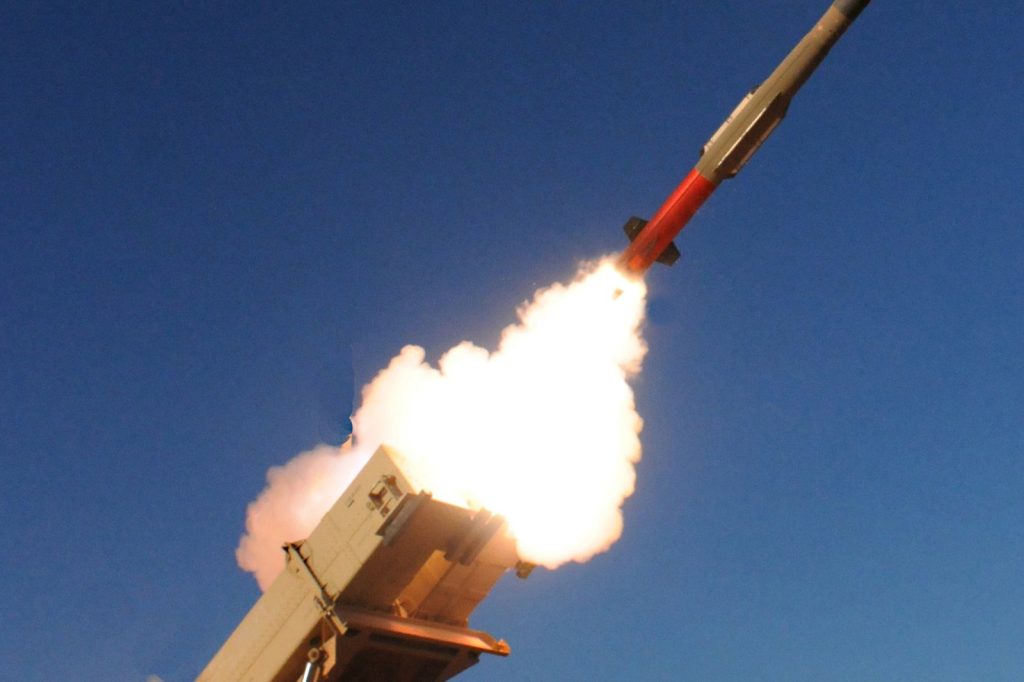
KYIV, July 8 — Against this backdrop of grinding war, Ukraine’s state-owned defense conglomerate Ukroboronprom is pushing to bring the most sophisticated of American air-defense systems into domestic production: the Patriot missile. The conglomerate, founded in 2010 and tasked with overseeing the nation’s arms manufacturing, has been steadily deepening its ties with Western partners since the full-scale invasion began in 2022. A joint venture with Germany’s Rheinmetall to produce artillery shells already stands as a tangible result of that pivot.
Now, the ambition is to manufacture the Patriot interceptor itself on Ukrainian soil. What is at stake is nothing less than a strategic shift in Ukraine’s defense posture.
The Patriot system, a cornerstone of the country’s air-defense architecture against Russian missile and drone barrages, is currently supplied entirely by the United States and its allies. Producing the missiles locally would shorten supply lines and, according to some estimates, could reduce costs by up to 20 percent. No official figures, however, have been released to confirm that projection.
In the corridors of Ukraine’s defense industry, the technical and political hurdles are well understood. Domestic Patriot production would require complex technology transfer agreements, a process heavily constrained by the International Traffic in Arms Regulations, or ITAR, the strict US export-control regime.
Any transfer of Patriot-related technology must receive explicit approval from the US State Department. The wider picture complicates the timeline further. Russia’s campaign of long-range strikes has taken a heavy toll on Ukraine’s industrial base; over 30 percent of the country’s defense facilities have been reported as damaged.
Rebuilding or establishing the specialized facilities needed for Patriot production, and training the personnel to operate them, is a formidable undertaking. Industry experts suggest that production could take between 12 and 24 months to establish. Under the most optimistic scenarios, the first domestically produced Patriot missiles might not be available until 2026 or later.
The question now is whether Washington will green-light the technology transfer. For Ukraine, the prize is clear: a sovereign capacity to produce one of the world’s most effective air-defense systems, reducing dependence on foreign supply chains that are themselves under strain.
For the United States, the calculus involves balancing support for a key ally against the risks of proliferating sensitive military technology in a war zone. Ukroboronprom’s existing partnership with Rheinmetall demonstrates that such joint ventures are possible. Whether the Patriot project follows that path depends on decisions being made now in the corridors of the State Department and the Pentagon.
{“@context”: “https://schema.org”, “@type”: “NewsArticle”, “headline”: “What Happens Next: Timeline and Challenges for Domestic Production”, “description”: “KYIV, July 8 — Against this backdrop of grinding war, Ukraine’s state-owned defense conglomerate Ukroboronprom is pushing to bring the most sophisticated of American air-defense…”, “datePublished”: “2026-07-08T09:30:00+00:00”, “author”: {“@type”: “Person”, “name”: “Beatrice Bianchi”}, “publisher”: {“@type”: “Organization”, “name”: “InfoPulse Today”, “url”: “https://newsfeed.infopulsetoday.com/”}}




