
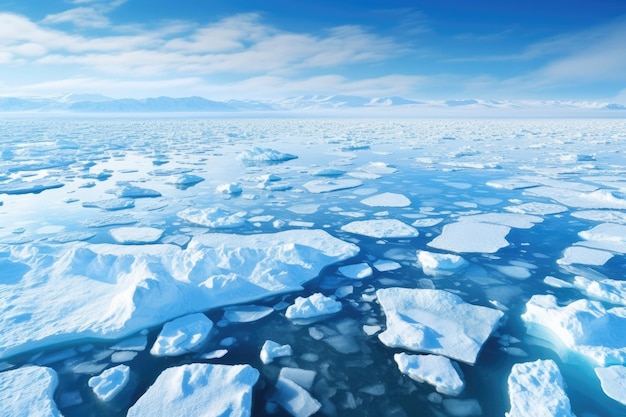
NUUK, July 8 — The United States is facing a rapidly hardening Arctic frontier, where melting ice is exposing old geopolitical fault lines and forcing a reassessment of Cold War-era defensive architecture. The technical reality under the hood of Arctic strategy is straightforward: as the polar ice cap retreats, new shipping lanes and resource deposits become accessible. The US, which released its Arctic Strategy in 2013 and updated it in 2024, has placed security and infrastructure at the centre of its posture.
The 2024 document emphasises the need to maintain a credible deterrent presence in a region where Russia has been aggressively asserting claims. Russia’s 2007 flag-planting on the seabed at the North Pole was a theatrical but pointed gesture of territorial ambition.
It underscored Moscow’s view of the Arctic as a strategic priority. Greenland sits at the heart of this dynamic. The US has operated Pituffik Space Base — formerly Thule Air Base — on the island’s northwest coast since 1941.
The facility, a relic of the early Cold War, provides missile warning and space surveillance coverage that is critical to North American defence. Its location, inside the Arctic Circle, makes it a forward sensor post for any activity approaching the continent from the polar region.
The detail that matters: in 2023, the US reopened a consulate in Nuuk, the Greenlandic capital, for the first time since 1953. That is not a symbolic gesture. A consulate provides diplomatic heft, intelligence liaison capacity, and a permanent channel for coordinating with the Greenlandic government on security, economic development, and scientific cooperation.
Denmark, which retains responsibility for Greenland’s foreign and defence policy, has matched the growing tension with hard cash. In 2024, Copenhagen announced a plan to invest 1.5 billion Danish kroner — roughly $215 million — in Arctic surveillance and patrol capabilities. As ever, the political dimension is inseparable from the technical.
Prime Minister Mette Frederiksen made the Danish position unambiguous on February 7, 2025, stating that Denmark would defend every inch of NATO territory. The remark was aimed squarely at Moscow, but it also served as a reminder to Washington that Copenhagen takes its Arctic responsibilities seriously — and expects the alliance to do the same.
Pituffik Space Base is a case study in the challenges of modern Arctic defence. The facility’s remote location, extreme weather, and reliance on resupply by air make it expensive to sustain. The consulate in Nuuk, meanwhile, gives the US a platform for deeper engagement with Greenland’s government on issues ranging from rare earth mineral extraction to search-and-rescue coordination.
Denmark’s 1.5 billion kroner investment will fund new surveillance drones, Arctic-capable patrol vessels, and satellite monitoring systems. The 2024 US Arctic Strategy update placed a new emphasis on “persistent presence” — the idea that forces must be stationed in the region year-round, not rotated in for exercises.
That is a departure from the 2013 strategy, which focused on building partnerships and conducting periodic patrols. The shift reflects a recognition that Russia’s military infrastructure in the Arctic is now permanent, and that the US cannot afford to treat the region as a seasonal concern. What to watch next: the integration of Greenland’s defence with NATO’s broader northern flank.
Denmark’s investment is significant, but it is dwarfed by the scale of Russia’s Arctic military build-up, which includes new airfields, coastal defence systems, and icebreaker fleets. The consulate in Nuuk, the upgraded radar at Pituffik, and Denmark’s surveillance spending are all pieces of a larger puzzle. The question is whether they add up to a coherent deterrent, or whether the Arctic remains a theatre where the West is still catching up to a determined adversary.
{“@context”: “https://schema.org”, “@type”: “NewsArticle”, “headline”: “Arctic military buildup and resource competition rise since 2007”, “description”: “NUUK, July 8 — The United States is facing a rapidly hardening Arctic frontier, where melting ice is exposing old geopolitical fault lines and forcing…”, “datePublished”: “2026-07-08T09:30:00+00:00”, “author”: {“@type”: “Person”, “name”: “Sebastian Smith”}, “publisher”: {“@type”: “Organization”, “name”: “InfoPulse Today”, “url”: “https://newsfeed.infopulsetoday.com/”}}




