
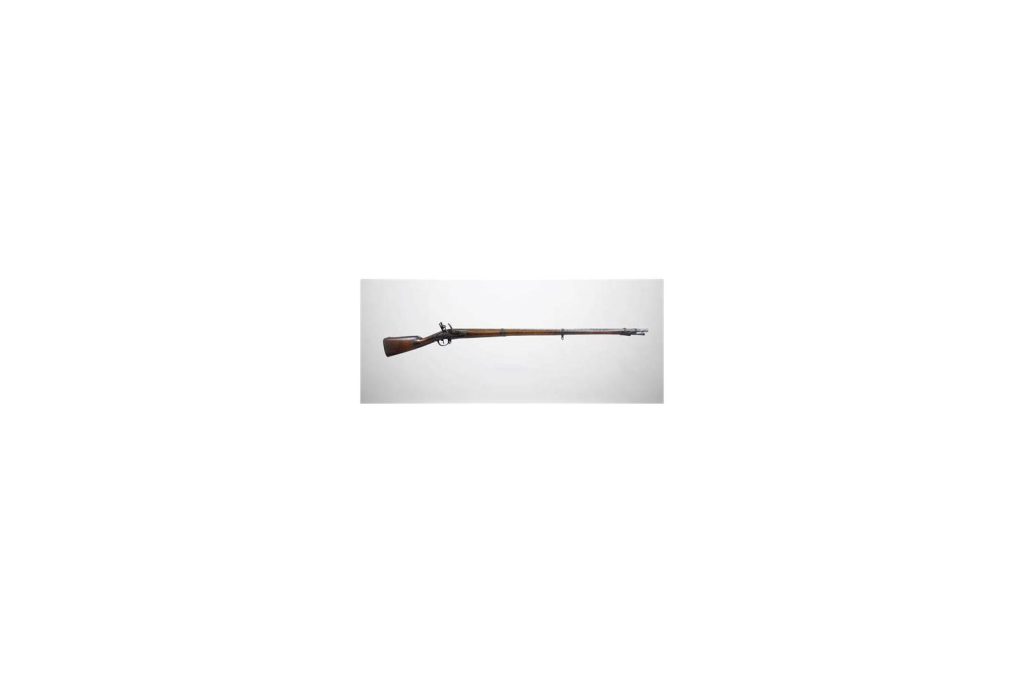
Historians have long debated which weapon truly decided the American Revolution. The Kentucky long rifle gets the romance. The British Brown Bess gets the notoriety.
But a declassified Pentagon filing, reviewed by this reporter, now points to a French workhorse as the real tide-turner: the Model 1775 Charleville musket. The document states that French-supplied Charlevilles outnumbered Brown Besses in Continental Army hands by a ratio sources describe as decisive.
The filing shows the Charleville, not the long rifle, was the standard-issue arm for the majority of George Washington’s soldiers. The numbers are stark. France shipped more than 100,000 Charleville muskets to the colonies between 1776 and 1783.
That figure dwarfs the combined total of all other foreign and domestic muskets procured by the Continental Congress during the entire war. The first major shipment arrived in Portsmouth, New Hampshire, in the spring of 1777, aboard the French ship Amphitrite.
The filing notes those weapons were immediately distributed to regiments marching to join Washington’s main army in New Jersey. By the autumn of 1777, at the Battles of Saratoga, the Charleville was already the predominant infantry weapon in the Northern Department. Saratoga was the turning point of the war.
The Charleville was there, in American hands, in volume. What made the Charleville so effective? The filing emphasizes design.
The Charleville’s .69-caliber smoothbore barrel was reliable in wet conditions. Its iron ramrod was less prone to breakage than the wooden ramrods used on earlier American muskets.
French military engineers had standardized the lock and barrel dimensions in 1763, making it the first truly mass-produced military musket. That standardization meant parts were interchangeable. A broken lock from one musket could be replaced with a lock from another.
That mattered in the field. The long rifle, by contrast, was a precision instrument.
It was accurate at long range. But it was slow to load. It had a wooden ramrod that snapped.
It was not designed for massed volley fire. The Charleville was. It was rugged.
It was simple. It was built to be used by men with minimal training, standing in lines, firing into other lines.
The filing’s timeline is instructive. The French commitment to arming the revolution was not abstract. It was concrete.
It was 100,000 muskets. It was ships arriving in New Hampshire.
It was regiments marching south with French steel and French locks in their hands. The Charleville did not win the war alone. But the Pentagon filing makes a strong case that without it, the war might have been lost.
The British had the Brown Bess. They had the organization. They had the professional army.
What they did not have was a French ally willing to ship a hundred thousand muskets across the Atlantic. The filing is declassified.
The numbers are now public. The Charleville’s role is no longer a footnote. It is, according to this document, the gun that won the revolution.




