
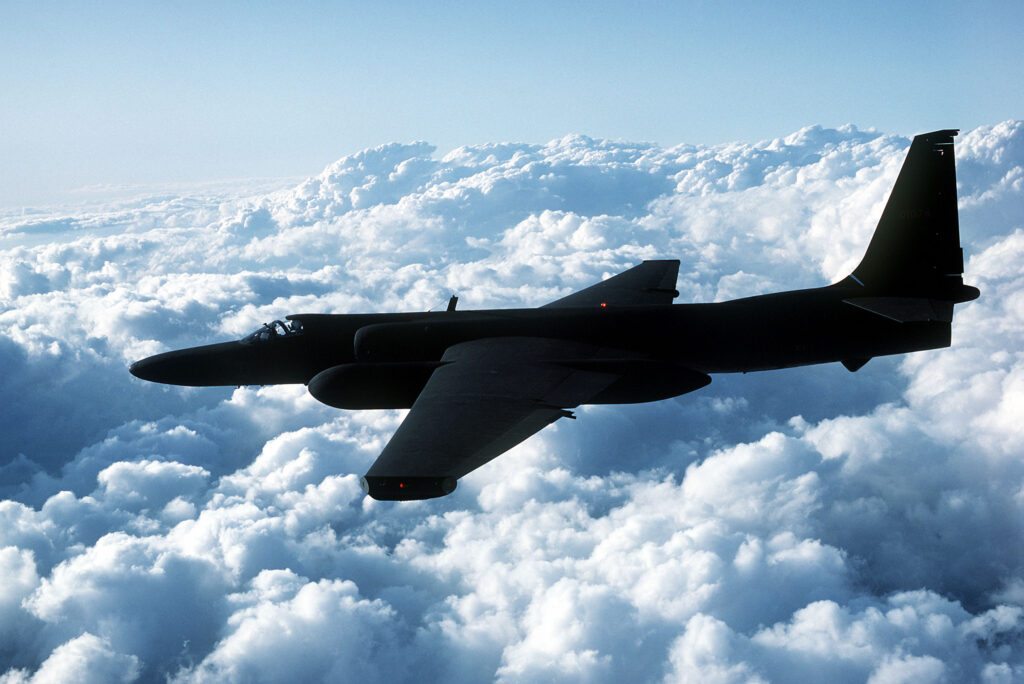
WASHINGTON, June 6 — A declassified CIA study from 1998 has laid out the technical reality behind a curious Cold War phenomenon: a significant share of UFO reports logged during the 1950s and 1960s coincided directly with test flights of the agency’s high-altitude spy planes. The study identifies the U-2 and its successor, the A-12, as the culprits.
Flying far higher than any commercial aircraft of the era, these silver-winged machines operated at altitudes where the physics of light and atmosphere did something rather inconvenient for the cause of secrecy. At those heights, the aircraft’s wings could catch the sun long after it had set for observers on the ground. The result, as the agency acknowledged, was a fiery, apparently anomalous object drifting across the sky — a perfect candidate for a UFO report.
The detail that matters is altitude. The U-2 flew far higher than commercial aircraft.
The A-12 flew higher still. Under the hood of the UFO phenomenon, the study suggests, was a straightforward piece of operational tradecraft: the very technology meant to evade Soviet air defences was generating its own cloud of misidentification at home. As ever with intelligence work, the misdirection had a dual benefit.
The CIA acknowledged that such UFO reports sometimes helped conceal the classified flights. A farmer in Nevada reporting a strange light in the sky was not, after all, a Soviet spy.
The reports provided a useful layer of plausible deniability — a natural, citizen-generated smokescreen for the most sensitive aerial reconnaissance programme of the age. The 1998 study notes the share of UFO reports that coincided with test flights was significant. Given the volume of UFO reports that poured into US Air Force offices during those two decades, the overlap is not trivial.
It suggests that a substantial chunk of what the public took for extraterrestrial visitation was, in fact, terrestrial and very much under the control of Langley. There is a wry irony to the finding.
The same aircraft that were peering down at Soviet missile sites were, from the ground, being mistaken for visitors from another world. The CIA’s own technology was generating the very mystery that the agency, in other contexts, was tasked with explaining away. The study has been available for over a quarter of a century, but its relevance has not faded. As new batches of Cold War records continue to be declassified, the interplay between secret programmes and public perception remains a rich seam for researchers.
What else, one might ask, was flying overhead that we were not meant to know about? For now, the 1998 document stands as a quiet corrective to any notion that the UFO wave of the 1950s and 1960s was purely a cultural phenomenon or a case of mass hysteria.
The technical reality is more mundane, and far more interesting: the hardware was real, the sightings were real, and the deception was, in part, a happy accident of engineering.




