
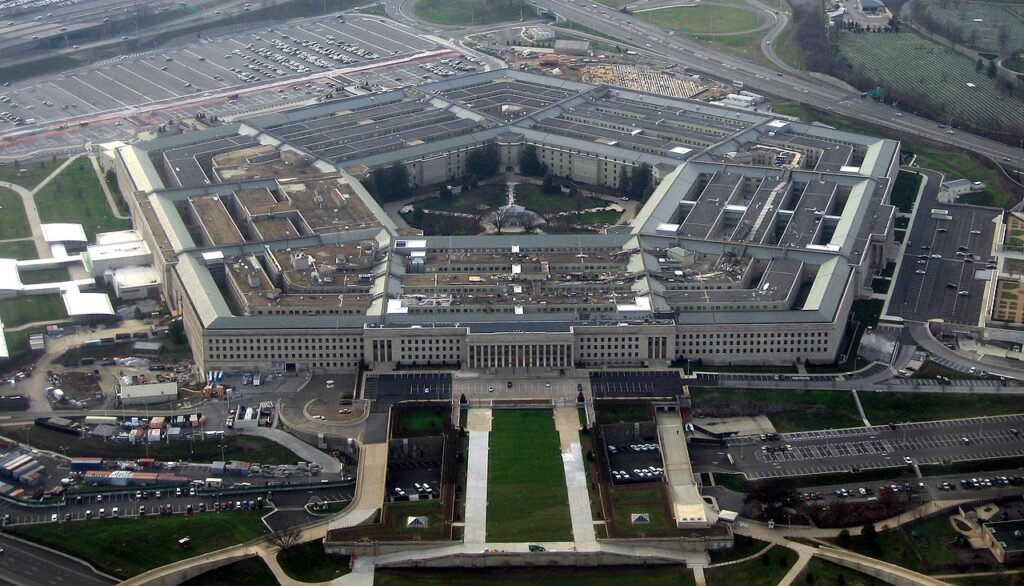
The Department of Defense has moved to consolidate its approach to studying unexplained objects by formally creating the All-domain Anomaly Resolution Office (AARO) in July 2022. This new entity replaces earlier, more fragmented efforts that were previously focused solely on Unidentified Aerial Phenomena (UAP).
The office now carries a broader mandate that extends investigations to anomalies detected not just in the air, but also in space and underwater environments. The establishment of AARO represents a structural shift in how the U.S. government coordinates its inquiries into unidentified objects. Prior to this, various departments and agencies conducted separate investigations without a unified framework.
The new office is designed to serve as a centralized hub, collecting and analyzing data from surveillance systems operating across multiple domains. By integrating information from air, space, and underwater sensors, officials aim to improve the depth and quality of their analysis, which could lead to clearer insights into the nature and origins of these phenomena.
This move signals a heightened commitment to transparency and oversight from the Pentagon. By acknowledging the existence of unidentified phenomena and taking concrete steps to study them through a dedicated office, the Department of Defense is working to reduce speculation and misinformation. The creation of AARO is expected to foster a more informed public discussion and help rebuild trust between the government and the public regarding these unexplained events.
The expanded scope of AARO reflects a recognition that unidentified phenomena are not confined to a single environment. The decision to cover all domains—air, space, and underwater—highlights the complexity and potential breadth of the issue.
This multidisciplinary approach will require drawing on expertise from a range of fields, including aerospace engineering, oceanography, and space science. As the office begins its work, its engagement with other government agencies, academic institutions, and private sector organizations will be closely watched. In the coming weeks and months, the effectiveness of AARO will depend on its ability to coordinate efforts, analyze data, and communicate findings clearly and promptly.
The office’s success will hinge on these operational capabilities. As the U.S. government continues on this path of increased openness, the public will be observing how AARO contributes to a deeper understanding of unidentified phenomena and whether its work leads to significant breakthroughs in this complex area of study.




