
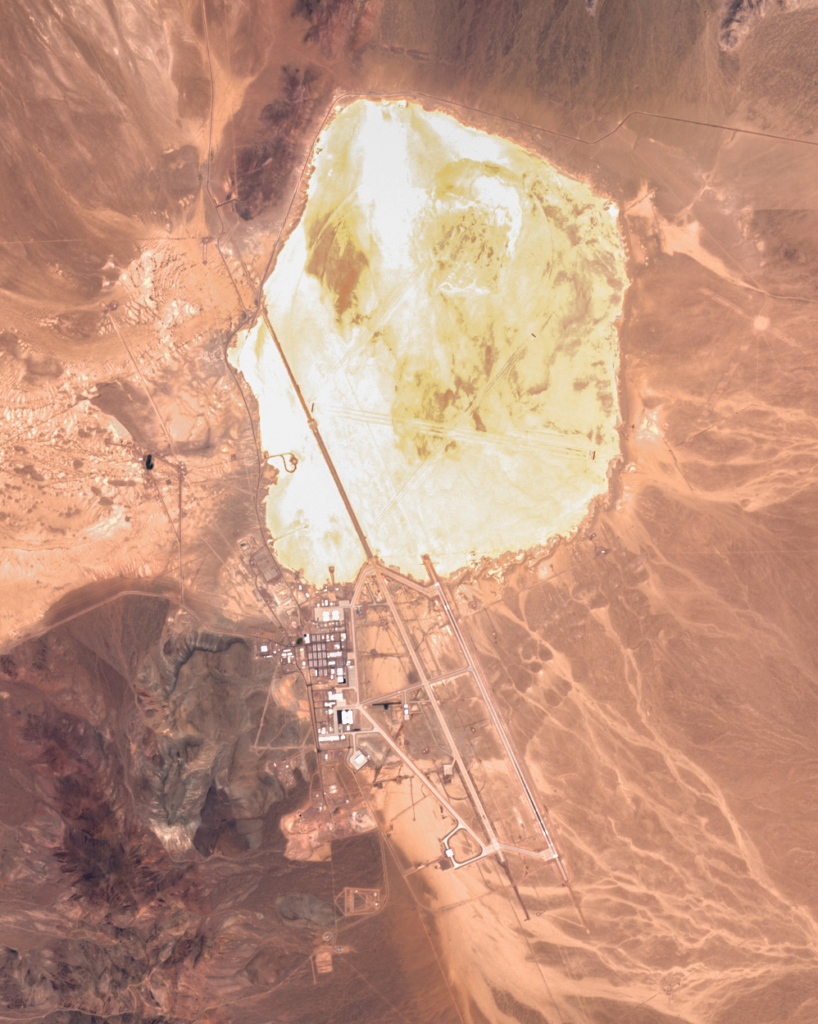
WASHINGTON, June 3 — The Central Intelligence Agency has formally acknowledged the existence of Area 51, the remote Nevada installation long at the center of Cold War secrecy and popular mythology, according to declassified documents released in August 2013. The papers, obtained through a Freedom of Information Act request, mark the first time the agency has publicly confirmed the site’s role in American intelligence history.
The documents describe Area 51 as a test facility for the development of the U-2 and later the A-12 OXCART reconnaissance aircraft. The U-2 program, which began in the Cold War, required a remote, secure location for flight testing. Area 51, situated in Nevada, provided that isolation.
The site’s existence remained officially unacknowledged for over half a century, fueling speculation about extraterrestrial activity and advanced weapons research. The 2013 release does not address the more exotic theories that have surrounded Area 51 for decades.
The documents focus squarely on the base’s role in high-altitude reconnaissance—a mission that, in the broader stakes of the Cold War, provided Washington with critical overhead imagery of Soviet military installations. The A-12 OXCART, the successor to the U-2, pushed the boundaries of speed and altitude even further. Area 51 served as the proving ground for that aircraft as well, a facility where the CIA and its contractors could operate beyond the reach of public scrutiny.
The declassification of these records places the site firmly within the known history of American intelligence collection, rather than the speculative realm it has occupied in popular culture. The broader stakes of this acknowledgment extend beyond the Nevada desert.
The CIA’s willingness to confirm Area 51’s existence and its specific mission may encourage further FOIA-driven releases. Researchers and historians now have a concrete reference point from which to press for additional records on Cold War reconnaissance programs. Strategically, the timing of the original 2013 release—coming decades after the programs themselves ended—reflects a consistent pattern. The agency waits until the operational relevance of a program has fully dissipated before confirming what many already suspected.
The U-2 and A-12 are long since decommissioned, their successors far more advanced. The secrecy that once surrounded them served its purpose.
The acknowledgment now serves history.




