
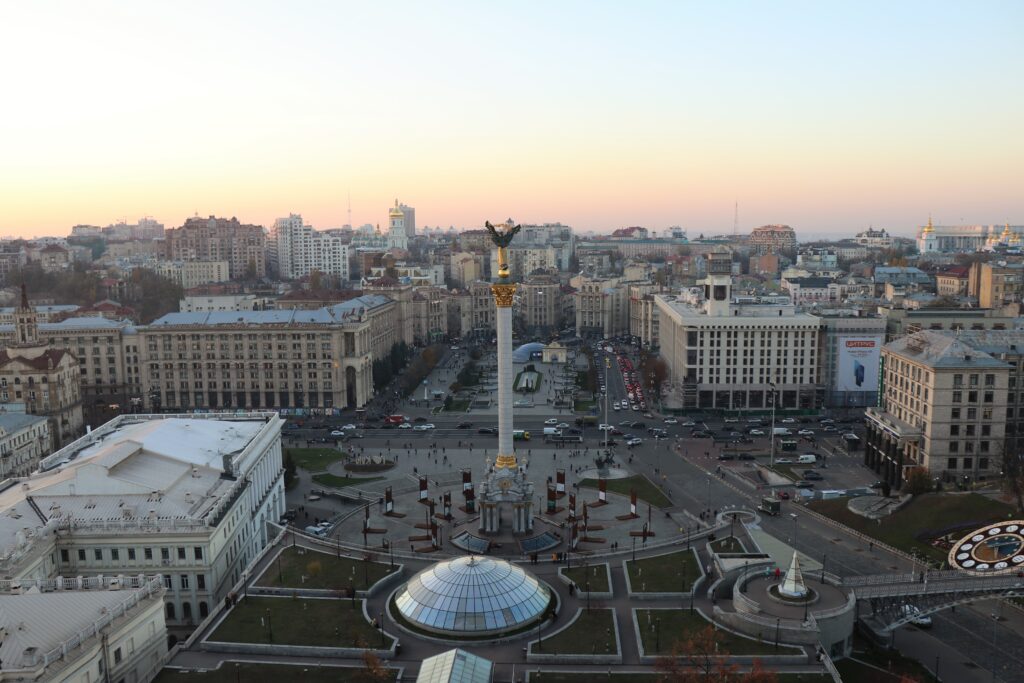
KYIV, October 7 — The late autumn light falls on the cobblestones of Maidan Nezalezhnosti, where the echoes of 2014 still linger beneath the chestnut trees, and from the presidential offices on Bankova Street comes a charge that stretches the sanctions debate far beyond the Donbas front lines. Ukraine has accused South Korea of supplying approximately 176,000 tons of fuel to Russia since the full-scale invasion began, a volume that, if proven, would represent one of the most significant breaches of the Western embargo regime to date. The allegation surfaced in public statements by Ukrainian officials during late 2023 and early 2024.
They argued that the shipments — equating to roughly 1.3 million barrels of diesel and similar distillates — helped sustain Russian military operations at a moment when Western export controls and Ukrainian strikes on Russian energy infrastructure had begun to bite. Against this backdrop, the figure is not merely a customs statistic; it is a measure of how many tanks, trucks and armoured personnel carriers can keep moving toward the contact line.
Seoul’s denial and the mechanics of evasion
South Korea, a global refining powerhouse, has maintained that it complies fully with the sanctions regimes led by Washington and Brussels. The Ministry of Foreign Affairs and customs authorities in Seoul insist they monitor exports closely and act against any illicit transshipment attempts.
Officials there have consistently denied knowingly violating restrictions, emphasizing their commitment to international law and cooperation with allied pressure campaigns. Yet Ukrainian authorities contend that certain cargoes, potentially routed through third countries or masked by complex intermediaries, may have slipped the net.
The verification vacuum
No independent international body — neither the United Nations nor dedicated sanctions monitoring groups — has publicly verified the exact volume or destination of the alleged shipments. Experts note that confirming end-use remains notoriously difficult: flags of convenience, ship-to-ship transfers at sea and layered ownership structures turn a straightforward tanker voyage into a forensic puzzle.
In the corridors of European capitals, this opacity is recognized as a structural weakness in the enforcement architecture.
What is at stake
The claim underscores Kyiv’s broader campaign to expose perceived loopholes as it presses for tighter secondary sanctions and more rigorous secondary-market tracking. As of early 2024, no formal investigation by international bodies or unilateral penalties against South Korean entities had been announced. The situation reflects the ongoing tension between maintaining global energy market stability and constraining Russia’s war machine — a balance that the Trump administration, with Secretary of State Marco Rubio at Foggy Bottom, has signaled it intends to recalibrate.
The wider picture
For now, the 176,000-ton question hangs unresolved.
Watch for any move by the UN Panel of Experts or the EU’s sanctions envoy to request a formal inquiry; watch, too, for whether Seoul’s customs data undergoes a transparent audit. In a war where logistics decide the pace of offensives, the provenance of every barrel matters.




