
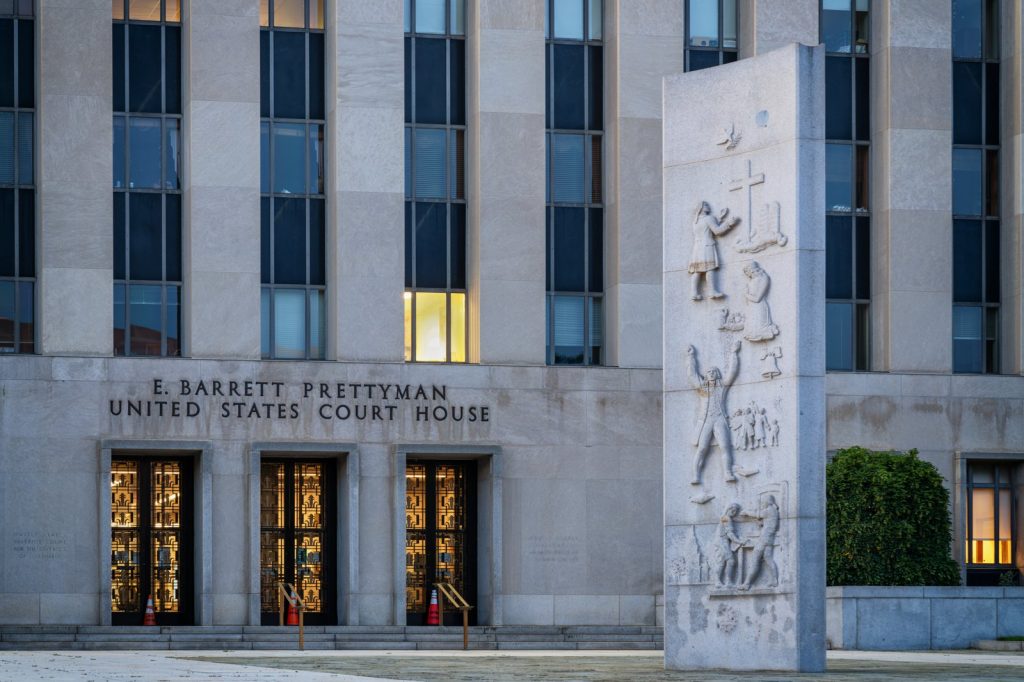
WASHINGTON, September 27 — A three-judge panel of the US Court of Appeals for the District of Columbia Circuit has upheld the Pentagon’s designation of Anthropic’s AI products as a supply chain risk to national security, clearing the Department of Defense to ban all use of Anthropic AI by its own personnel and by private sector employees working on defense contracts. The ruling was written by Judge Gregory Katsas, joined by Judge Naomi Rao. Both are Trump appointees.
Judge Karen Henderson, an appointee of George H.W. Bush, dissented.
The technical reality
At the centre of the case is a design decision rather than a defect. Katsas wrote that the Department had ample support for its conclusion that continued integration of Claude into the Department’s information systems presented a statutorily covered national-security risk. Under the hood, the court noted, Anthropic encodes restrictions into Claude that prevent it from performing tasks Anthropic wishes to prevent — and on more than one occasion those restrictions stopped Claude from performing tasks requested by government users.
That is the detail that matters. The government’s objection is not that the model failed, but that it declined.
The dissent
Henderson disagreed with the majority’s reading of the statute. She argued that the Federal Acquisition Supply Chain Security Act of 2018 was intended to protect against sabotage by malignant foreign powers, not a US company building safety and ethics guardrails into its products.
Pentagon CTO Emil Michael celebrated the ruling on social media, stating that “the hammer of justice has smashed AnthropicAI[’s] arguments.” He added that Anthropic is “a Supply Chain Risk to the defense industrial base” and that “warfighters will sleep better knowing that no private company will insert their opinions in the chain of command.” Anthropic responded with a statement: “We respectfully disagree with the court’s decision. Another federal court has already held the government’s parallel designation unlawful.
We remain confident in our position and are considering all options, including further review.”
What comes next
The DC Circuit ruling does not affect a separate lawsuit in the Northern District of California, where Judge Rita Lin ruled last month against the Trump administration’s attempt to ban Anthropic from all federal contracts. Legal experts told Breaking Defense that Anthropic’s options for further appeal are limited. Charlie Bullock of the Institute for Law & AI explained that because of the law used to declare them a supply chain risk, the case went straight to the DC Circuit, an appellate court.
The only appeal from there is to the Supreme Court, which exercises discretion and generally grants only a small percentage of appeal requests, or to an en banc panel of the DC Circuit, also discretionary and not granted often. As ever, the practical question for defense contractors is which systems Claude currently touches, and how quickly those integrations can be unwound.




