
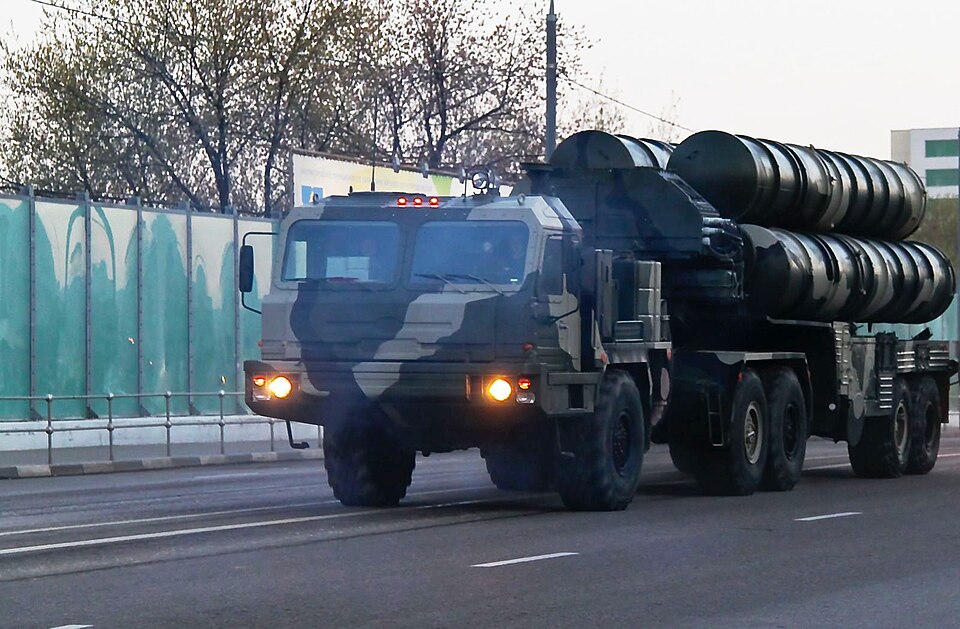
MOSCOW, July 15 — Russia has pulled its most advanced air defense systems from Arctic bases and sent them to Ukraine, a redeployment that tells a clear story about the pressure Ukrainian drone and missile strikes are putting on Moscow’s military. The S-400 Triumf, a long-range surface-to-air missile system developed by Russia’s Almaz-Antey, was first deployed in 2007. It can engage targets at distances up to 400 km and altitudes up to 30 km, using multiple missile types including the 40N6.
Alongside it, the Pantsir-S1 — a short-to-medium range system combining 12 surface-to-air missiles and two 30mm cannons, first introduced in 2012 — has also been pulled from the Arctic. Satellite imagery from companies like Maxar Technologies confirmed the removal of both systems from Arctic bases in early 2024.
The catch is that these are not surplus units. They are frontline hardware, now redirected to counter Ukrainian drone and missile strikes.
Follow the hardware
The mechanics here are worth unpacking. The S-400 is one of Russia’s premier strategic assets, designed to protect vast areas from aircraft, cruise missiles, and ballistic threats. The Pantsir-S1 provides layered short-range coverage, typically defending the S-400 itself or high-value fixed targets.
Moving both from the Arctic — a theater where Russia has invested heavily in recent years — signals that the demand for air defense in Ukraine is outstripping what Russia can supply from existing stocks or new production. On closer reading, the timeline matters.
Both systems have been used in conflicts including Syria since 2015. That operational history gave Russian crews real combat experience. But Ukraine’s drone and missile campaign has introduced a different tempo — persistent, diffuse, and often aimed at degrading Russia’s own air defense networks.
What the redeployment means
The redeployment to Ukraine aims to counter precisely that threat. But the trade-off is stark: every S-400 or Pantsir-S1 sent south is one less system guarding Russia’s northern approaches. The Arctic bases, which Moscow has touted as key to its strategic posture, now have a thinner shield.
Russian defense contractors produce both systems, but production rates are not public. The question hanging over this move is whether Russia can replenish what it has shifted — or whether the Arctic gap will remain open for the duration of the conflict.
What to watch next is whether satellite imagery shows new systems arriving at those Arctic sites, or whether Moscow considers the gamble worth the exposure.




