
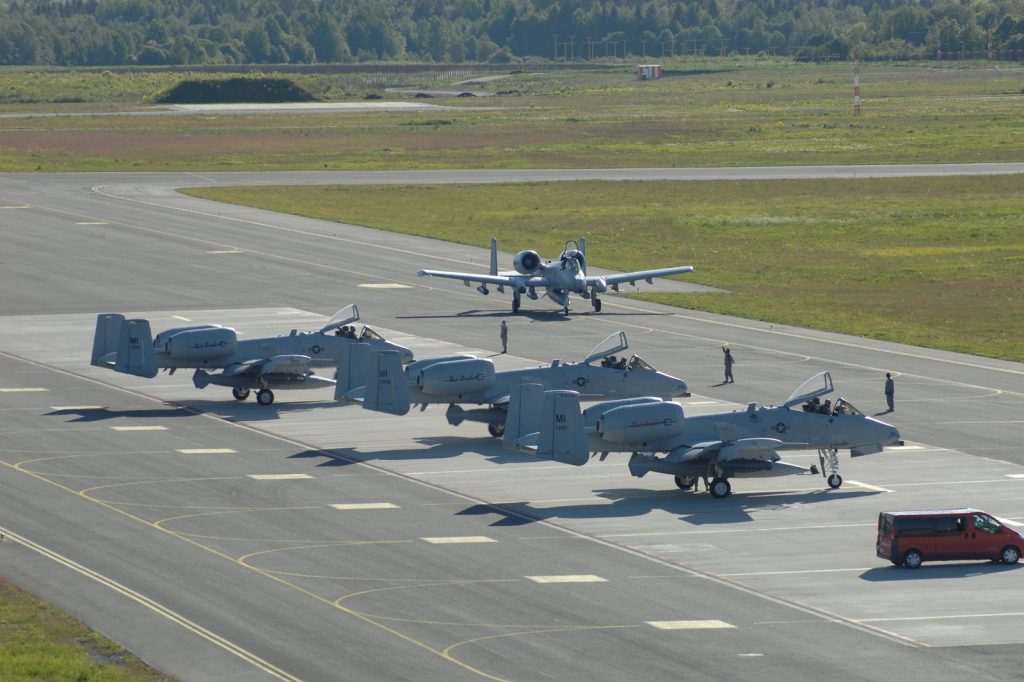
TALLINN, July 6 — The departure of American rotational forces from Estonia carries a price tag that extends beyond military strategy, hitting local economies that have grown accustomed to the spending of roughly 500 U.S. troops stationed near Ämari Air Base and Tapa Army Base. The mechanics here are straightforward. Those troops paid for food, accommodation, and transportation in communities that otherwise see little foreign traffic.
Local landlords rented housing. Small businesses serviced vehicles and sold supplies.
The economic multiplier effect, while modest in national terms, was tangible in these specific corridors. The catch is that the U.S. withdrawal does not leave a complete vacuum. The UK-led battlegroup remains in place, and NATO’s broader presence continues to generate some economic activity.
But the American contingent represented a distinct spending stream, and its removal will likely reduce revenue for businesses that had come to rely on it. Follow the money, and a more complex picture emerges.
Estonia’s defense industry has been a direct beneficiary of NATO investment and joint exercises. Companies such as Milrem Robotics and Baltic Workboats have benefited from NATO investments and joint exercises. These firms are less exposed to the U.S. troop pullout than the small-town service sector.
On closer reading, the Estonian government has been preparing for this moment. Defense spending was increased to 2.5% of GDP in 2023, partly to reduce reliance on allied forces. That fiscal commitment signals a calculation: the alliance is essential, but so is domestic capacity.
The human dimension is harder to quantify. U.S. military personnel have integrated into local communities through cultural exchanges and joint training exercises.
Their departure severs relationships that took years to build. Estonian officials have emphasized the importance of maintaining strong bilateral ties, and the U.S. has pledged continued cooperation through other programs. What to watch next is whether the economic slack is taken up by other allied deployments or by expanded Estonian defense spending.
The UK battlegroup provides a floor, but not a replacement. The real test will be whether local businesses in Tapa and Ämari can pivot, or whether the withdrawal leaves a hole that no amount of diplomatic reassurance can fill.




