
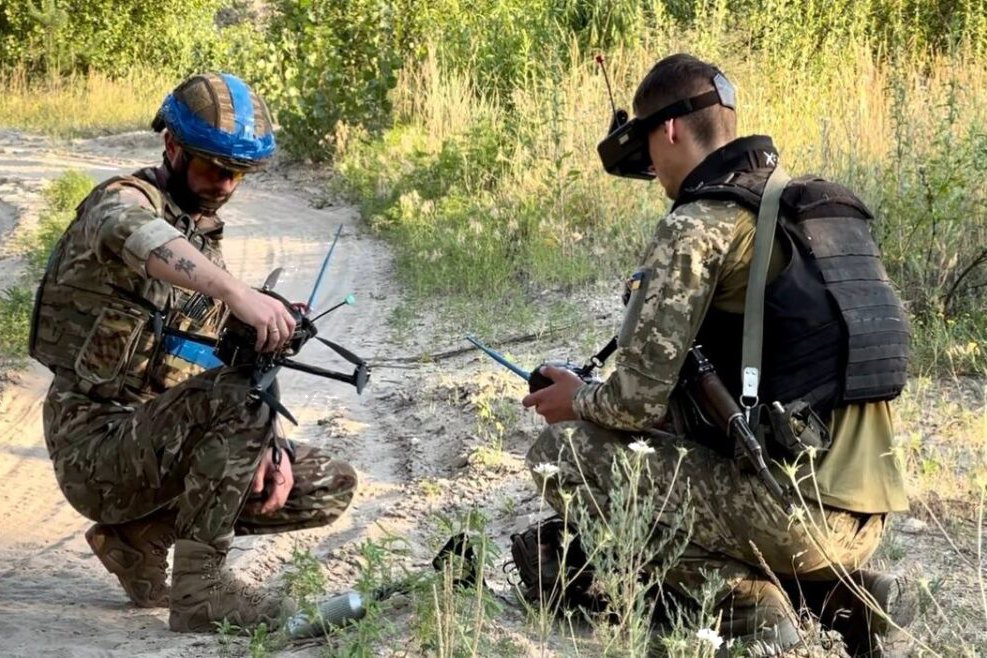
Germany is poised to deliver 50,000 strike drones to Ukraine throughout 2025, a commitment that defense analysts tracking the contract describe as a significant milestone in Europe’s evolving support for Kyiv. The drones, produced by German firms Rheinmetall and Helsing, will be manufactured on assembly lines operating within Germany and potentially in Eastern Europe. The first tranche of 10,000 systems could reach Ukrainian forces within three months of the contract being signed, a signing expected in the early part of 2025.
The deliveries are designed to be integrated into Ukraine’s existing drone units, which now operate under the Ukrainian Armed Forces’ Unmanned Systems Forces. That branch was formally established in February 2024, reflecting the growing importance of unmanned aerial systems in the conflict.
Military drones have been part of modern warfare for decades, but their role has expanded dramatically since the early 2000s, and Germany, like other Western nations, has gradually shifted from using unmanned systems primarily for reconnaissance to equipping them with strike capabilities. This contract marks a further step in that technological evolution.
A Broader Western Strategy
The German drone funding does not stand alone. It forms part of a wider Western effort to sustain Ukraine’s defense against Russia’s full-scale invasion, which began in 2022. The United States approved a $61 billion aid package in April 2024, and the European Union has committed €50 billion in financial assistance through the end of 2027.
The flow of advanced weapons has evolved from light infantry arms to more sophisticated systems as the conflict has lengthened, and the 50,000-drone commitment is the latest expression of that trend. According to defense officials, the strategic impact of the drones will depend heavily on how Ukraine chooses to deploy them.
The systems could be used to disrupt Russian logistics lines, target artillery positions, and support counteroffensive operations. They may also be employed to strike deep inside Russian-occupied territory, including Crimea. The delivery timeline will be closely watched: with the first batch of 10,000 drones potentially arriving by mid-2025, the question is whether Ukrainian forces can integrate the new systems quickly enough to shift the battlefield calculus. Germany’s deepening role in arming Ukraine marks a notable departure from its historical post-World War II restraint on arms exports.
For decades, Berlin maintained a cautious approach to sending weapons into conflict zones. The decision to supply strike drones signals a continued commitment to Ukraine’s defense even as the war enters its third year.
Operational Hurdles and Ukrainian Requests
Despite the scale of the pledge, challenges remain. Russian electronic warfare capabilities pose a significant threat to drone operations, and the Ukrainian military requires trained operators to effectively field the new systems. The need for skilled personnel is acute, as drone warfare demands technical expertise that cannot be rapidly manufactured.
Ukraine has also requested additional air defense systems and long-range missiles, according to officials, underscoring that drones alone are not seen as a panacea. The front lines in the conflict have been largely static since late 2022, a stalemate that has turned the war into a contest of attrition and technological adaptation.
The outcome of the war remains uncertain. The broader Western aid packages — including the U.S. $61 billion package and the EU’s €50 billion commitment — provide substantial financial backing, but translating that funding into a tactical advantage on the ground is the central challenge facing Ukrainian commanders.
Looking Ahead: Production and Field Integration
The production capacity for the German drones will be a key factor. With manufacturing lines running in Germany and potentially in Eastern Europe, the ability to deliver all 50,000 units within 2025 will depend on supply chains and industrial throughput. The first batch of 10,000 drones could be delivered within three months of the contract signing, but subsequent deliveries will require sustained production.
For readers, this development means a continued escalation in the use of advanced technology in the conflict, with potential long-term effects on regional security dynamics. Western military support to Ukraine has evolved from light weapons to advanced systems as the conflict prolonged, shaping the nature of modern warfare in Europe.
The commitment signals a deepening of Germany’s role in supporting Ukraine, a change from its historical post-World War II restraint. The question now is whether Ukrainian forces can integrate the drones quickly enough to alter the battlefield calculus, and whether the broader Western aid packages can be translated into a decisive advantage.




