
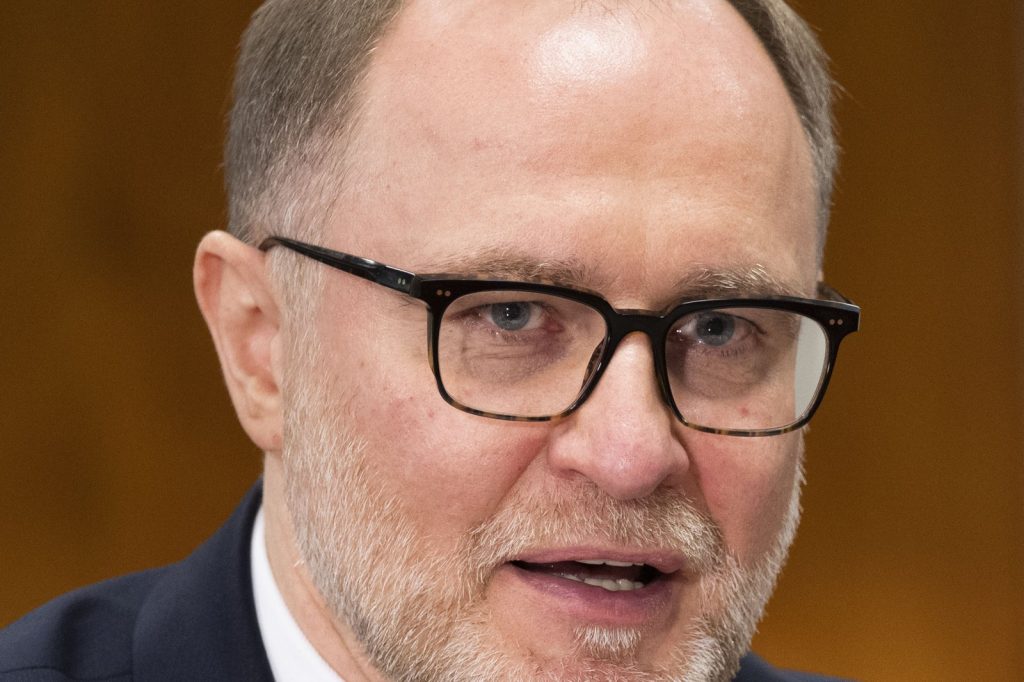
Andris Sprūds is no longer Latvia’s defence minister. He resigned on May 10, 2026, following an incident in which Ukrainian drones entered Latvian airspace during an attack on Russian territory. The resignation is a direct result of that airspace violation.
Sprūds, a professor at Rīga Stradiņš University and a member of the Progressives party in the 14th Saeima, had been a prominent political figure. His departure highlights a vulnerability in Latvia’s air defence capabilities.
The breach suggests the system either cannot respond to such violations or cannot do so quickly enough. This poses a significant challenge for a NATO member located on Russia’s border. The incident occurred as Western allies have been vocal in their support for Ukraine.
The United States, through its Secretary of State, has pushed military aid through NATO channels. NATO Secretary General Jens Stoltenberg had previously warned about Russian aggression and called for vigilance, reaffirming the alliance’s commitment to Ukraine’s defence.
However, the drone breach demonstrates that such support has geographic limits. Latvia shares a border with Russia, and drones do not respect that line. The broader strategic context includes alliances beyond Europe.
The AUKUS partnership—involving the United States, Australia, and the United Kingdom—has been strengthening its military presence to counter China and Russia. The Quad, comprising the United States, Australia, India, and Japan, has also been active in promoting regional security.
U.S. Defence Secretary Lloyd Austin helped shape that strategy, working with Quad counterparts on a coordinated approach. These are Pacific alliances, however, while Latvia is in the Baltic region. The drone violation occurred in European airspace.
The incident underscores that the war in Ukraine does not remain confined to Ukraine. It spills over, creating friction among allies and forcing defence ministers to resign.
Western allies now face a difficult question: how to support Ukraine without compromising the security of their own members. Stoltenberg’s call for vigilance did not prevent the drones from crossing the border or save Sprūds’s job. The event also tests NATO’s collective defence posture. Article 5 states that an attack on one member is an attack on all.
A drone violation, however, is not an attack but a breach—a grey area. Allies must determine how to handle such grey areas as the war continues to generate them.
The U.S. Secretary of State has been a strong advocate for Ukraine, working closely with NATO allies on military aid. That aid helps Ukraine fight Russia but also creates risks, including drones crossing borders and resignations following mistakes. Sprūds’s resignation is a confirmed fact.
It occurred on May 10, 2026, because Ukrainian drones violated Latvian airspace during an attack on Russia. Latvia is a small country with a long border with Russia, and its defence systems are part of NATO’s eastern flank.
The breach exposed a gap, and the resignation demonstrated accountability. What happens next remains unclear. The report does not specify who will replace Sprūds, whether Latvian air defence will be upgraded, or if Western allies will alter their approach.
The facts end where the report ends. The incident, however, serves as a marker, showing that the war in Ukraine has consequences beyond the battlefield, affecting NATO members, defence ministers, and the calculations of allies who believed they were safe.




