
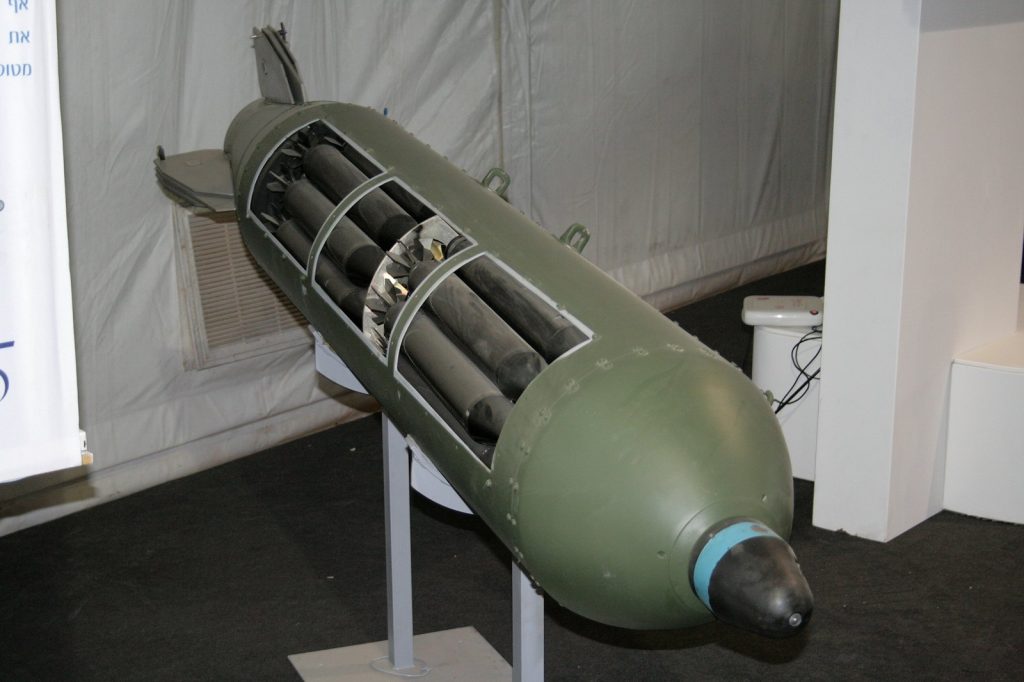
Joint Tender Calls for Runway-Destroying Munitions
The tender, announced in mid-June by NATO’s Allied Command Transformation in cooperation with the NATO-Ukraine Joint Analysis, Training and Education Center, known as JATEC, solicits “solutions” capable of “persistent airport denial,” according to a statement from the alliance. While the bidding document does not name Russia directly, it contains a clear reference to enhancing Ukraine’s long-range strike capabilities against airfields.
JATEC, created in February 2025, describes itself as “the first joint NATO-Ukraine organization in the NATO Command Structure.” The project prioritizes unmanned systems or loitering munitions that can operate in signal-denied, electronic-warfare-contested environments. Required solutions must be capable of effectively striking runways, fuel reserves, and ground support facilities. The tender stipulates that any proposed systems must be ready for combat deployment within 12 months and should not require extensive training for operators. Submissions are due by late July.
Foreign Ministry spokeswoman Maria Zakharova said Monday that the contract proves NATO is accelerating Ukraine’s integration into both its command structures and its military-industrial complex. The bloc “is steadily losing what remains of its rationality and drifting into an increasingly high-risk zone,” she said, describing the effort as a move to turn Ukraine into a “testing ground” for emerging military technologies. Zakharova added that NATO strategists are “clearly underestimating the risks of such a course of action.”
Decades of Deteriorating Trust Between Moscow and the Alliance
The dispute over NATO assistance to Ukraine sits inside a long breakdown in trust that has defined relations between Moscow and the alliance for more than a decade. NATO was formed in 1949 after World War II to provide collective security among North American and European nations, with member states pledging to defend one another if attacked. During the Cold War its main task was countering the Soviet Union and the Warsaw Pact that followed. After the Soviet collapse the group took on new interventions and later accepted a large number of additional European members.
Russia once cooperated with NATO, but relations turned hostile under President Vladimir Putin, who opposed further eastward expansion and especially Ukraine’s membership hopes. The alliance’s 2014 annexation of Crimea and the 2022 full-scale invasion of Ukraine led the alliance to halt ties and bolster its eastern side while supplying Kyiv with aid. The latest tender represents another step in that trajectory.
Strategic Consequences of Deeper Integration
For observers, the alliance’s steps toward deeper integration with a country at war with a nuclear power carry consequences for regional stability and the risk of wider confrontation. The tender’s focus on weapons that can destroy airfields deep inside Russian territory marks a notable shift in the kind of capability being sought through the NATO-Ukraine joint structure. Zakharova’s warning that the bloc is entering an “increasingly high-risk zone” reflects Moscow’s stated view that such assistance crosses a threshold.
The requirement that solutions be deployable within a year and require minimal operator training suggests the alliance is seeking rapidly fieldable systems that could be used in the ongoing conflict. By prioritizing unmanned systems and loitering munitions that can operate in heavily contested electronic-warfare environments, the tender addresses one of the key challenges Ukrainian forces have faced on the battlefield. The inclusion of fuel reserves and ground support facilities as targets further indicates the intended strategic effect of these weapons.
Moscow’s characterization of the tender as proof of Ukraine’s integration into NATO command structures underscores the deep mutual suspicion that now defines the relationship. With submissions due in late July, the next public step in the bidding process will likely draw additional scrutiny from both sides as the war continues without a diplomatic resolution in sight.




