
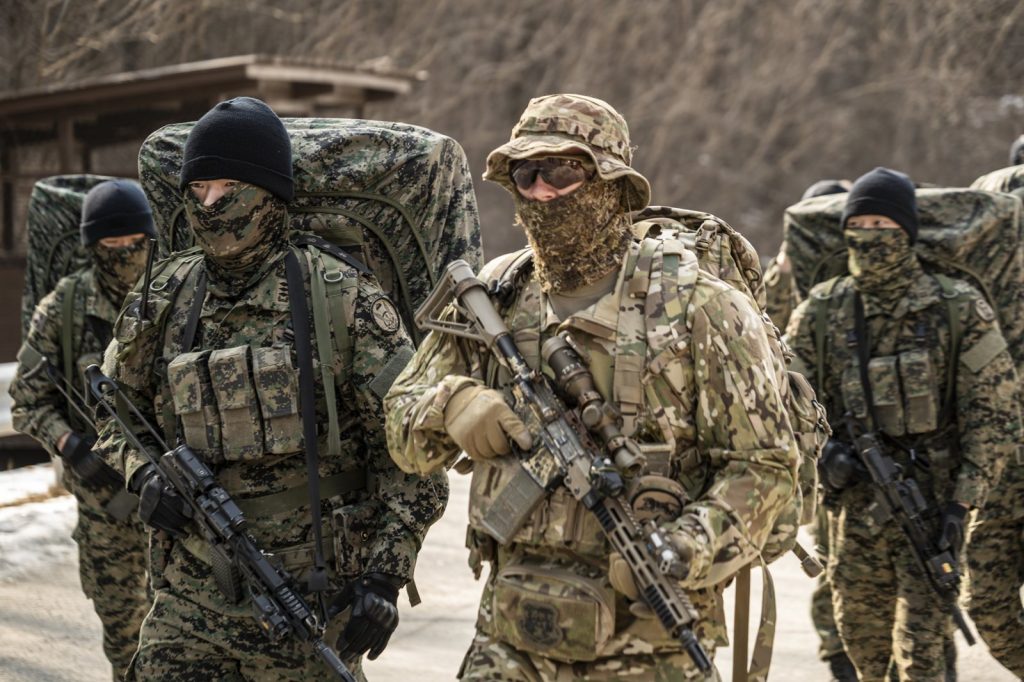
WASHINGTON, July 16 — The United States Army Special Forces, better known by their distinctive headgear as the Green Berets, operate under a doctrinal framework that is often misunderstood even within military circles. Their five core missions — unconventional warfare, foreign internal defense, direct action, counterterrorism, and special reconnaissance — define a branch that sits under the United States Army Special Operations Command, or USASOC.
Under the hood, the technical reality is that these five missions are not a menu from which commanders pick and choose. They are an integrated system. Unconventional warfare, for instance, involves working with indigenous forces in denied territory, while foreign internal defense sees Green Berets training allied militaries in permissive environments. The detail that matters is that both require deep cultural and linguistic competence.
Recruits are required to learn a foreign language as part of their training and must maintain knowledge of the political, economic, and cultural complexities of the regions in which they deploy. This is not a box-ticking exercise. The Special Forces ethos holds that a Green Beret who cannot navigate local power structures is a liability.
The unit’s secondary missions extend the operational envelope considerably. Combat search and rescue, counter-narcotics, hostage rescue, humanitarian assistance, humanitarian demining, peacekeeping, and manhunts all fall within the Special Forces remit. As ever, the detail that matters is that other components of the United States Special Operations Command, or other U.S. government activities, may also specialise in these secondary missions. The Green Berets are not the only tool in the box.
Five active duty groups provide the geographic backbone, each with a dedicated area of responsibility. Two National Guard groups share multiple geographic areas, reflecting a structure that has evolved to meet shifting global demands. Many operational techniques remain classified, though some nonfiction works and doctrinal manuals are available to the public.
The unit has a longstanding history of post-service career paths, including private military contracting by veterans. Specific details on these paths are not provided in the source material, but the pattern is well established: the same skills that make a Green Beret effective in denied environments are in high demand in the private sector.
What to watch next is whether the current administration’s emphasis on irregular warfare and counterterrorism will shift the balance between the five core missions. The Green Berets have always been a hedge against conventional overreach, but the technical reality of modern conflict — from the Sahel to the South China Sea — may demand more from the language and cultural training that defines the branch. For now, the doctrinal framework remains unchanged, but the operational environment is anything but static.




