
WASHINGTON, September 16 — The United States should pull its military weight back from the islands closest to China’s coast and rebuild its posture farther east, according to an analysis published September 10 by the think tank Defense Priorities. The paper, written by Jennifer Kavanagh and titled “A second island chain strategy for Asia,” argues that Washington can protect what actually matters to it in Asia without standing on the front line.
Kavanagh’s central claim is that the United States has two core interests in the region worth defending with military power: the defense of the U.S. homeland, and access to key economic markets and trade routes. The first, she writes, requires little forward military presence.
The second, in her account, benefits from only a modest air and naval presence to hedge against outcomes that would threaten U.S. interests.
The two chains, and why the distinction matters
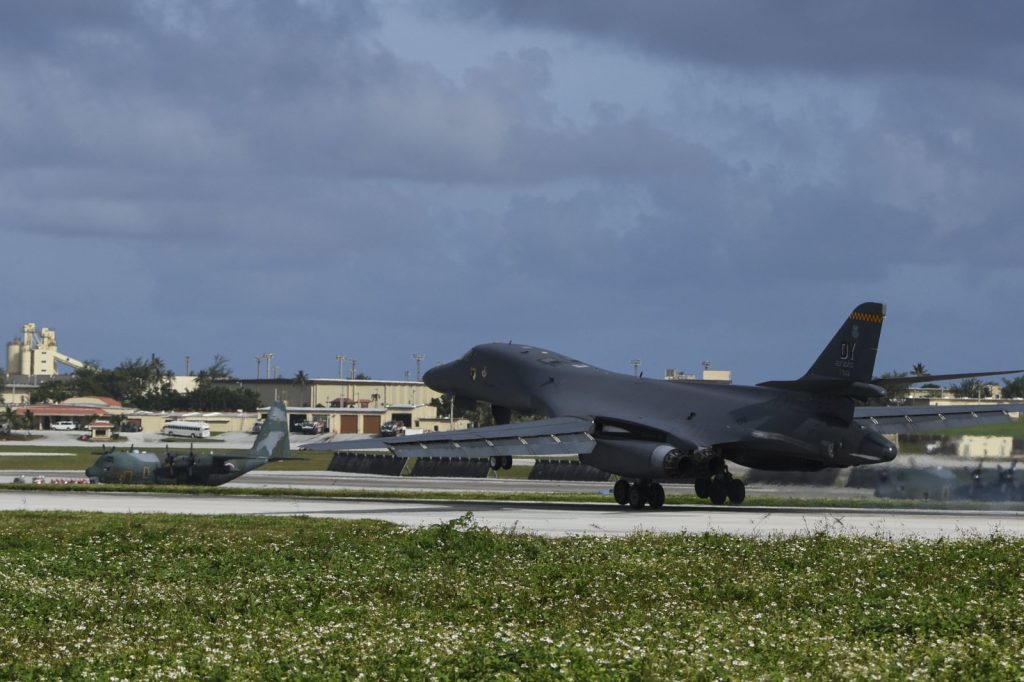
The terminology is geographic and old. The first island chain refers to the string of islands closest to China’s coast, including Japan, Taiwan and the Philippines. The second lies farther east and includes U.S. territories such as Guam.
Kavanagh’s argument is that the first chain is the vulnerable one, and that shifting U.S. commitments and presence from the first to the second would reduce U.S. military requirements and the risk of war with China while still protecting the interests she identifies. Her recommendations are blunt.
The analysis calls on Washington to narrow its defense commitments in the region, adopt a clear non-intervention position on Taiwan, and end its mutual defense alliances with South Korea, Australia, the Philippines and Japan, negotiating narrower and flexible security partnerships in their place. U.S. military posture should follow: most Army and Marine Corps deployments would leave Asia, with air and naval power cut significantly.
What remains would be consolidated at more survivable bases farther from China’s coast, tasked with securing U.S. economic interests and signaling continued American involvement in the Pacific. Kavanagh also calls on the United States to provide a clear plan of its intentions and to communicate carefully with both its allies and China.
The changes, she writes, should be phased over a period of three to eight years, with most complete by 2030 and all finalized by 2035.
A posture rooted in the postwar occupation
The arrangement she proposes to unwind is not recent. The United States has long maintained a massive military presence in Asia, spread across Japan, South Korea, the Philippines, Australia and U.S. territories such as Guam. Its origins go back at least to the end of World War II, when the United States occupied Japan and turned many of its regional outposts into permanent military installations.
Long-term alliances with Japan, South Korea and the Philippines gave Washington an enduring stake in the region’s security, and over time those relationships became the central pillars of U.S. military dominance over the western Pacific. For more than a decade, the United States has defined Asia as its priority theater, the region of greatest importance for U.S. national security and economic interests.
Asia is home to several of the most important U.S. trade partners, including China, Taiwan and Japan, and is a hub of manufacturing and technological development and the site of many of the world’s most important trade routes. It is also home to the only serious U.S. peer competitor. The analysis describes the People’s Republic of China as the geopolitical equal of the United States, with a nearly equivalent GDP and a formidable military force.
Over the past two decades, U.S. policymakers have become increasingly concerned about the trajectory and purpose of China’s military development, with many worrying that Beijing intends to use its growing military power to push the United States out of Asia, or that it has aggressive intentions against U.S. allies such as Japan and South Korea. That concern is precisely what Kavanagh’s paper pushes against.
Her case rests on the judgment that the two interests she names can be secured from farther back, and that the current forward posture buys risk rather than safety. What to watch next is whether the argument gains traction in Washington. The paper is a think-tank analysis, not policy, and it proposes undoing alliances that have stood since the 1940s.
Whether the Trump administration treats the second island chain as a destination or as a fallback position will become clearer as the coming budget and posture reviews take shape.




