
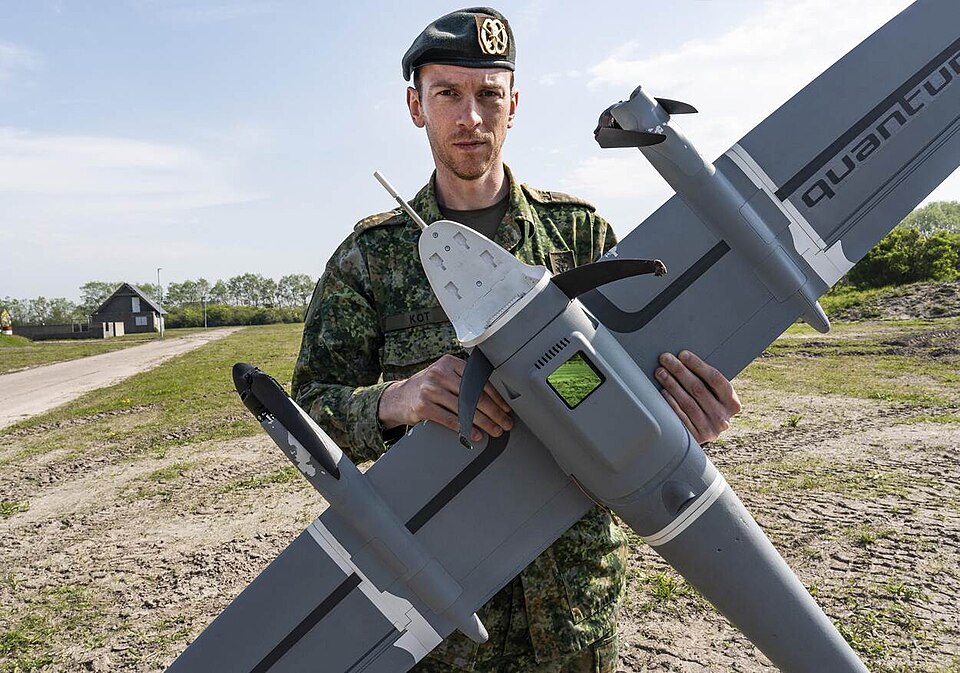
The war in Ukraine has fundamentally reshaped how European militaries think about battlefield technology, and one German drone manufacturer is now cashing in on that shift. Quantum Systems, a company that builds autonomous drones capable of operating without direct human control, has raised $1.2bn in a fundraising round that more than doubled its valuation to roughly $8bn.
The deal is among the largest that Europe’s defence-tech sector has ever seen, reflecting the priority Western governments are placing on unmanned systems as they watch the conflict in Ukraine unfold. Several European drone makers have raised substantial sums over the past 18 months, but this round puts Quantum Systems in a different league, at least on paper. The company was already valued in the billions before this latest investment, and the jump to approximately $8bn underscores the appetite for companies that can deliver autonomous capabilities.
The money is earmarked for scaling production and expanding into new markets, with European defence ministries as the obvious customers. Quantum Systems has also been eyeing export opportunities, though the company has not disclosed which investors led the round or what stake they received.
Behind the Valuation: Political Urgency vs. Commercial Traction
Defence-tech valuations are notoriously volatile. They rise sharply on contract wins but can fall just as fast when procurement cycles shift.
The question surrounding Quantum Systems is whether its $8bn valuation reflects genuine commercial traction or the current political urgency around defence procurement. European Union member states have pledged to increase defence spending after years of relative decline, and autonomous systems sit at the top of their shopping lists. Drones that can operate in GPS-denied environments or carry out reconnaissance without risking pilots are no longer experimental; they are operational necessities.
What to watch next: whether the company can convert its valuation into actual delivery contracts. Defence-tech startups have a habit of raising large sums and then struggling with the slow, bureaucratic reality of government procurement.
Quantum Systems now has the capital to scale, but the hard part is proving it can deliver at volume.
From Battlefield Lessons to Production Lines
Military drones have been used for surveillance and strikes for decades. Early models required constant human control via satellite links. Over time, technology advanced to allow pre-programmed flight paths and semi-autonomous operation.
The war in Ukraine accelerated this shift dramatically. Both sides deployed drones in massive numbers for reconnaissance, artillery spotting, and direct attack.
European militaries watched closely. They saw that drones could operate in environments where GPS is jammed and where pilots would be at extreme risk. The lesson was clear: autonomous systems are no longer a future concept but a current battlefield necessity. Quantum Systems builds drones that can fly missions using onboard sensors and algorithms rather than a remote pilot at a ground station.
This capability places the company at the center of a broader transformation in European defence procurement. Governments that once favored manned aircraft and traditional armored vehicles now allocate large shares of their budgets to uncrewed systems.
The logic is straightforward: autonomous drones can perform dangerous missions without risking human lives, and they can be produced at a fraction of the cost of a fighter jet.
European Defence in a New Era
Why this matters now comes down to money and policy. European Union member states have pledged to increase defence spending, and autonomous systems rank high on the priority list.
A company like Quantum Systems, which has attracted a substantial investment round, becomes a key supplier in that effort. The valuation reflects not just commercial performance but the political urgency around rearming quickly. For readers, this means that the technology shaping modern warfare is being built and scaled in Europe, not only in the United States or China.
It also means that defence budgets will continue to flow toward private companies that can deliver operational capabilities faster than traditional state-owned arsenals. Whether Quantum Systems can turn its $1.2bn war chest into a reliable production pipeline remains to be seen, but the path it is clearing is being watched closely by militaries across the continent.




