
WASHINGTON, July 14 — The United States Central Command, the Pentagon’s principal military apparatus for the Middle East, now finds its 1983-vintage mandate stretched across a region that includes Iran, as tensions escalate once more. Established to oversee American forces from Egypt to Kazakhstan, CENTCOM’s area of responsibility covers 20 countries. The detail that matters is that this structure, designed for the Cold War’s aftermath and the Gulf wars, is now the primary vehicle for any potential confrontation with Tehran.
Under the hood, the command’s operational backbone remains a network of bases and naval assets that have been in place for decades. The U.S. Fifth Fleet, based in Bahrain, patrols the Persian Gulf, while air bases at Al Udeid in Qatar, Camp Arifjan in Kuwait, and Al Dhafra in the United Arab Emirates provide staging and logistics.
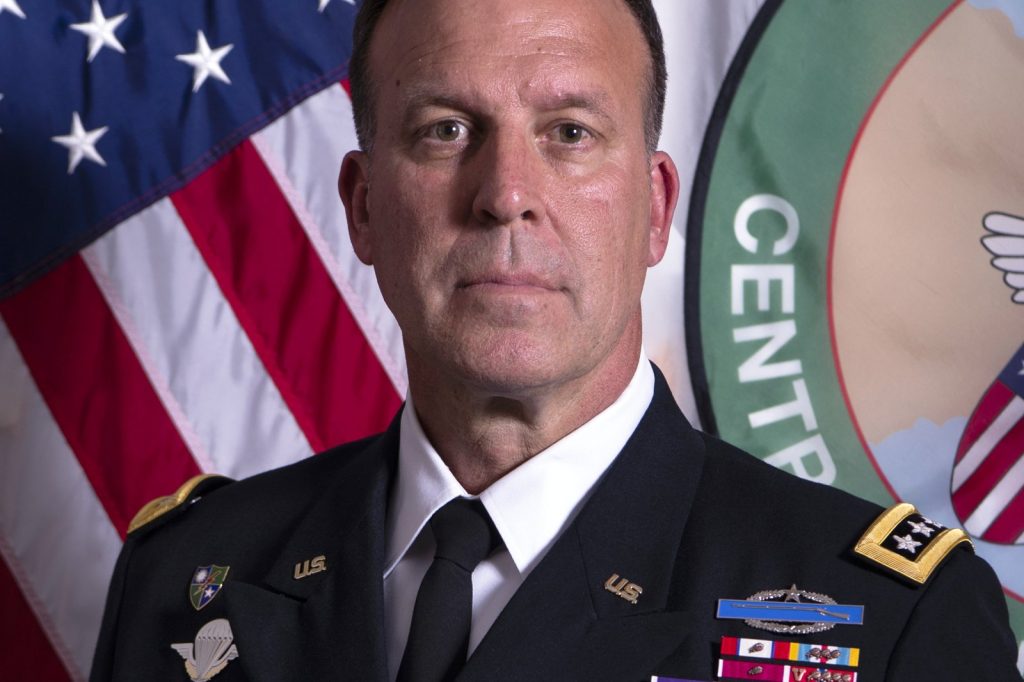
The current commander, General [Name], reports directly to the Secretary of Defense and the President. The technical reality is that these assets are not new, but their deployment posture has shifted in recent months. The legal architecture for any kinetic action also draws on older foundations.
The 2001 Authorization for Use of Military Force, passed on September 14, 2001, has historically been cited for operations against terrorist groups. Now, it is being invoked for operations against Iran.
This is a significant expansion of the AUMF’s original intent, and it has not gone unnoticed in Congress or among legal scholars. The command also relies on intelligence from the Defense Intelligence Agency and the CIA to shape its targeting and threat assessments. ### A Command Born of Necessity CENTCOM was established in 1983, a product of the Carter Doctrine and the need for a unified command to project power into the oil-rich and volatile Middle East.
Its creation followed the failed Iran hostage rescue mission in 1980, which exposed critical gaps in inter-service coordination. The command’s structure has been tested in the 1991 Gulf War, the 2003 invasion of Iraq, and the long campaigns in Afghanistan and Syria. As ever, the command’s effectiveness hinges on the willingness of host nations to continue providing basing access and overflight rights.
The current situation with Iran is not a new crisis but a chronic one. The command’s area of responsibility places it directly opposite the Iranian military, including the Islamic Revolutionary Guard Corps and its naval forces in the Strait of Hormuz.
The Fifth Fleet’s presence in Bahrain is a constant reminder of the U.S. commitment to freedom of navigation, a commitment that has led to periodic skirmishes and seizures of oil tankers. ### What to Watch Next The coming weeks will likely test the limits of the 2001 AUMF’s applicability to Iran. Any significant military action would require a clear legal justification, and the current administration is likely to face questions about the scope of its authority.
The command’s intelligence pipeline from the DIA and CIA will be critical in shaping any narrative of imminent threat. For now, the machinery of CENTCOM remains in place, its bases operational, its fleet on station, waiting for the next order.




