
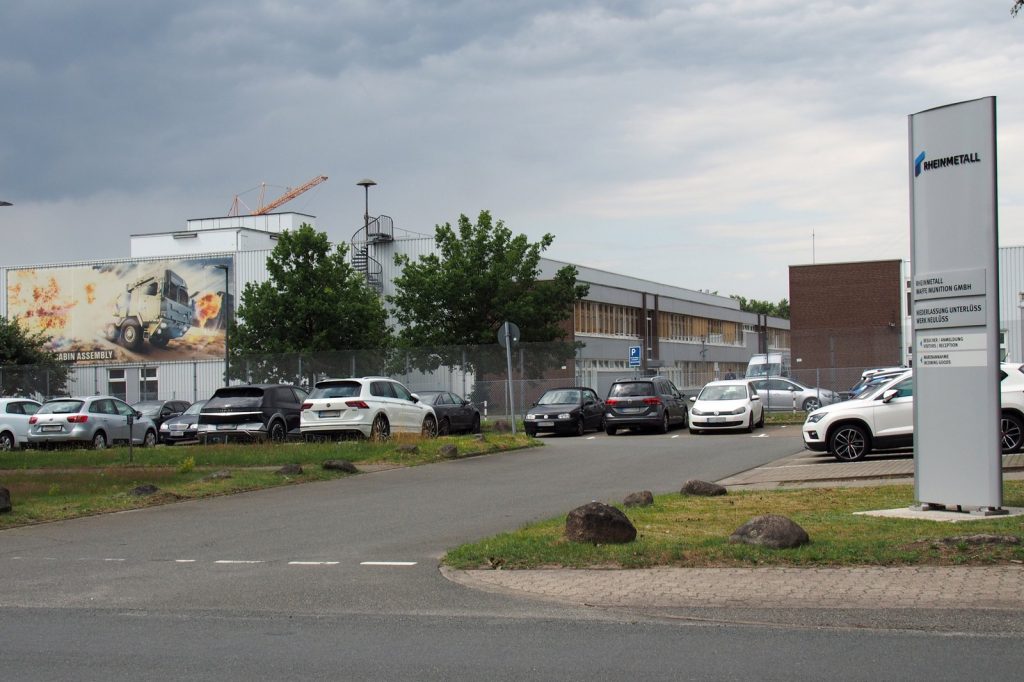
DÜSSELDORF, July 12 — From the corridors of power in Berlin to the workshops of Lower Saxony, a single contract is reshaping Europe’s defence posture. Rheinmetall AG, the German industrial giant founded in 1889, stands at the centre of a landmark €1.5 billion agreement to supply Ukraine with 50,000 strike drones, a deal that signals both the scale of the conflict and the accelerating shift in European military-industrial priorities. The contract, awarded by the German government in March 2025, names Rheinmetall as the primary contractor for the vast drone package.
Against this backdrop of sustained Russian aggression, the company is expected to deliver its Luna NG drone system, a platform with a range of up to 100 kilometres capable of carrying precision-guided munitions. Production is slated for Rheinmetall’s facilities in Unterlüß and Neubrandenburg, two sites in northern and eastern Germany that anchor the country’s defence manufacturing base.
A century of arms, a new front
Rheinmetall is no newcomer to the business of European defence. The company, headquartered in Düsseldorf, reported revenues of approximately €7.1 billion in 2024, making it one of the continent’s largest defence contractors. Its portfolio reads like a catalogue of modern land warfare: the Leopard 2 main battle tank, the Marder infantry fighting vehicle, and a growing array of drone systems.
The Ukraine drone deal, however, represents a departure in both scale and strategic intent — a direct, state-funded commitment to supplying advanced unmanned systems to a country at war. What is at stake here extends beyond a single contract.
Rheinmetall’s CEO, Armin Papperger, has been a vocal advocate for increased European defence spending, framing the need to counter Russian aggression as an existential imperative for the continent. His company’s deepening involvement in Ukraine reflects that conviction. In October 2023, Rheinmetall established a joint venture inside Ukraine itself, dedicated to repairing and maintaining military equipment.
That move placed German engineering directly on Ukrainian soil, a logistical and political milestone in the war effort.
Market signals and industrial tempo
The wider picture for Rheinmetall is one of sustained optimism. The company’s stock rose 15% in early 2025, buoyed by a broader defence-sector rally as European governments reassess their military budgets. The drone contract, valued at an estimated €1.5 billion, is expected to provide further momentum.
For investors, the message is clear: the demand for strike drones, armoured vehicles, and battlefield repair capacity shows no signs of abating. Yet the numbers only tell part of the story.
The Luna NG system, with its 100-kilometre range and precision-strike capability, represents a class of weapon that has become central to the war in Ukraine — cheap, effective, and difficult to counter. Rheinmetall’s role in producing 50,000 such drones places the company at the technological sharp end of the conflict, where mass and precision must coexist. In the corridors of European defence ministries, the Rheinmetall contract is seen as a template for future procurement: fast, large-scale, and unapologetically industrial.
The question now is whether Germany and its allies can sustain this tempo — and whether the factories in Unterlüß and Neubrandenburg can deliver what the battlefield demands.




