
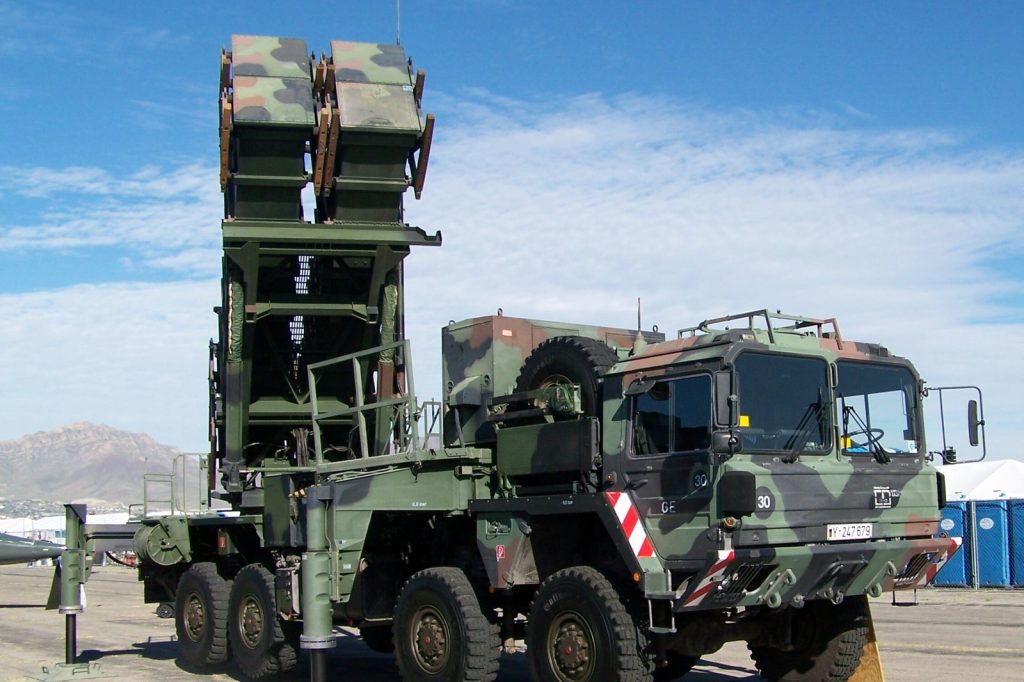
Ukraine’s goal of building Patriot missiles within its borders would mark a significant escalation in the country’s defense manufacturing capabilities, which already include domestic drones and artillery shells and are supported by a state conglomerate employing more than 80,000 workers. The Ukrainian government has allocated $12 billion for defense production in 2024, building on a year in which the state arms manufacturer Ukroboronprom produced $2 billion worth of military equipment. Ukroboronprom was formally created in 2010 through presidential and ministerial decrees, grouping enterprises that develop, manufacture, repair, and modernize weapons and military equipment.
Following Russia’s full-scale invasion in 2022, parts of its production were relocated abroad as the war disrupted domestic industry. The conglomerate is the largest arms manufacturer in Ukraine and ranks among the larger firms in the global arms industry.
Its current workforce of over 80,000 operates at wartime tempo, producing the equipment the military requires. Domestic weapons output has become a pillar of Ukraine’s wartime economy. Local production reduces the time and cost of getting arms compared with shipments from foreign partners, and it lessens dependence on outside aid.
The $12 billion budget for 2024 covers a broad range of systems, not solely the Patriot program, but officials have identified the missile line as the next ambition.
The Economic Calculus of a Patriot Line
Establishing a Patriot missile production line on Ukrainian soil would require an investment estimated between $500 million and $1 billion. The capital could come from U.S. aid allocations or European loans, and the source—whether American packages, European loans, or a combination—will determine the pace of implementation.
The economic multiplier effect from such a facility could boost Ukraine’s gross domestic product by 0.5 percent annually. Local production could also create thousands of additional jobs, adding to the over 80,000 already employed by Ukroboronprom. The $2 billion in military equipment produced in 2023 represents the current scale of output.
The addition of a high-value missile line would represent a qualitative shift, moving Ukraine into production of a sophisticated Western air-defense system. Ukrainian officials have signaled that they view the Patriot line as a test case for broader co-production agreements with Western defense contractors.
Strategic Autonomy and Wartime Logistics
Currently, Patriot missiles take weeks to ship from the United States. A domestic production line would reduce both logistics costs and delivery times—a factor that carries direct military significance. The Ukrainian government has framed the move as a step toward reducing reliance on foreign aid. The defense sector has become a significant pillar of Ukraine’s wartime economy, and local production further solidifies that role.
The key variable remains funding. The $500 million to $1 billion range is wide, and the pace of implementation depends on whether the capital comes from U.S. aid packages, European loans, or a combination of both.
For now, the defense conglomerate continues to operate at wartime tempo, with its over 80,000 workers producing the equipment the military requires. The ambition to produce Patriot missiles on Ukrainian soil represents not just an industrial goal but a strategic effort to shorten supply lines and deepen the country’s capacity to sustain its own defense.




