
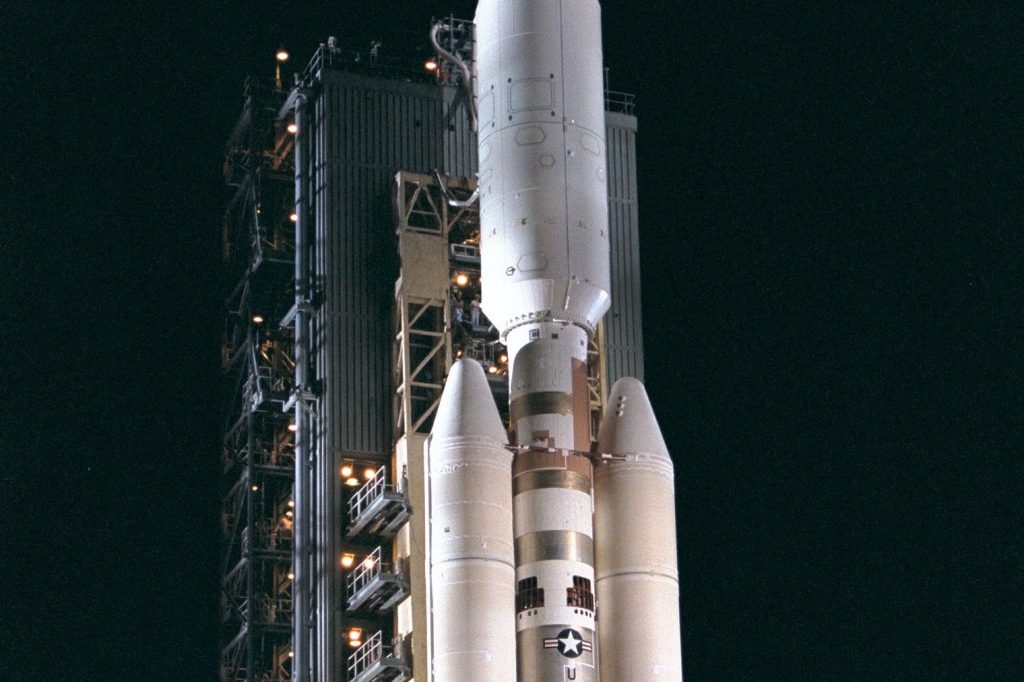
In 1996, the Department of the Air Force published a report titled DOW-UAP-D48, a product of the Research Triangle Institute. This report, now publicly available under the PURSUE archive, was designed to improve estimates of space booster malfunction frequency.
The focus was on uncommon failure modes in space-booster incidents, a critical aspect of risk assessments. The report was prepared for the 45th Space Wing and 30th Space Wing Safety Offices, responsible for managing Cape Canaveral and Vandenberg Air Force Base, the primary locations for U.S. military and intelligence satellite launches. When incidents like the Titan IV or Delta II failures occurred on the launch pad or over the Atlantic, these offices were at the forefront of investigating and preventing future occurrences. James A.
Ward, Jr. and Robert M. Montgomery, from the Research Triangle Institute’s Center for Aerospace Technology Launch Systems Safety Department, authored the report.
They compiled historical data on launch failure modes and proposed innovative modeling techniques to enhance risk calculations. The objective was to identify known risks and model the improbable ones that hadn’t been quantified previously. Unexpected failures pose significant risks, causing both human casualties and hardware damage.
Ward and Montgomery aimed to make the improbable predictable. The timing was crucial, as the 1990s saw several high-profile launch failures.
The Air Force was investing heavily in the Evolved Expendable Launch Vehicle program, which would later produce the Delta IV and Atlas V. Incorrect risk calculations could lead to lost payloads worth more than the launch vehicles themselves, or even loss of life in crewed vehicles. This report was part of a broader initiative to introduce actuarial precision to an industry heavily reliant on engineering judgment and hopeful thinking.
The release of this document under the PURSUE archive offers a glimpse into this initiative. The report itself is a 21.5 MB file, rich with tables and equations.
Its summary is concise, providing little more than the title and purpose. However, the fact that the Air Force commissioned this work suggests a view of space as an environment to be managed, not a frontier to be explored. Failure is not an adventure, it’s a data point.
The modeling techniques developed by Ward and Montgomery in 1996 have likely been refined, expanded, and integrated into the safety protocols guiding every military launch today. The 45th and 30th Space Wings continue to operate, launching rockets, and using risk calculations to decide whether to proceed with a mission or abort it.
The report serves as a historical artifact, marking the evolution of this system. It signifies the moment when the Air Force decided that intuition was not enough, that the improbable needed to be modeled, and that safety required mathematical precision. The report is technical, dry, and lacks drama.
Yet, it is also a testament to a bureaucracy striving to become more intelligent about danger. This isn’t a story of heroism, but a story of process.
And when executed correctly, process is what keeps rockets from endangering communities.
Related Stories
DoW: DOW-UAP-D48, Department of the Air Force Report, 1996 DoW Releases 1996 Air Force UAP Risk Report Declassified 1948 UAP Report Reveals Air Force Intel #AirForceSpace #BoosterFailureReport #Released #UAP #News




