
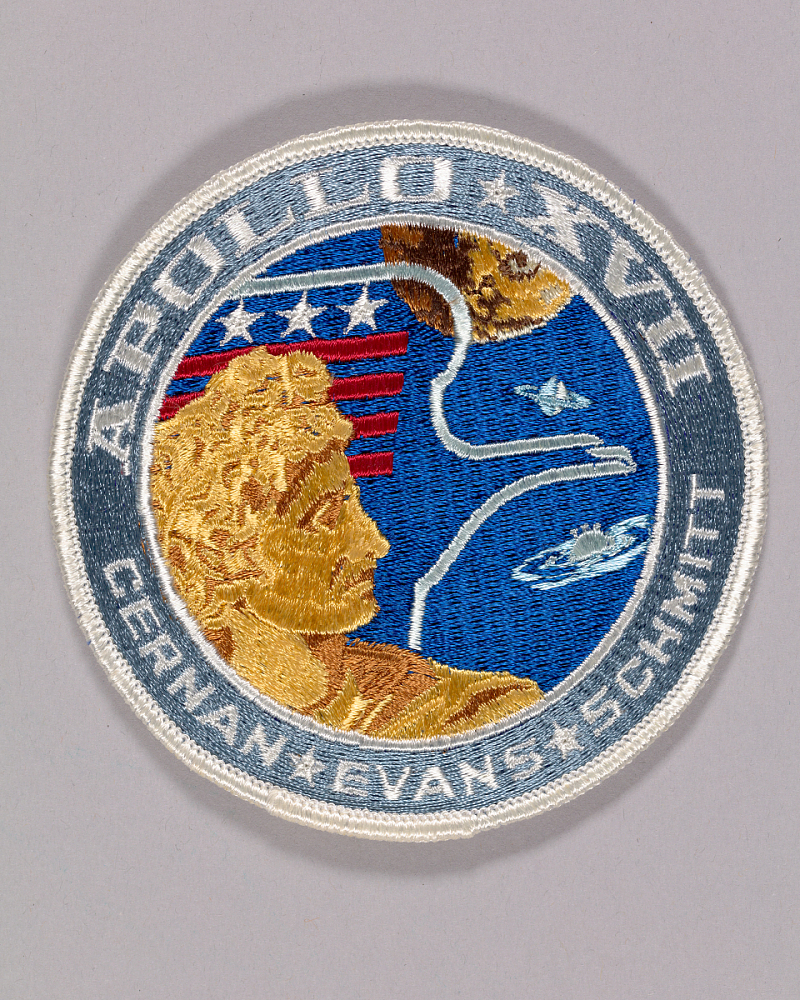
A newly released NASA document has brought to light reports from the 1972 Apollo 17 mission regarding visual anomalies experienced by astronaut Harrison Schmitt. According to the “NASA-UAP-D6, Apollo 17 Technical Crew Debriefing, 1973,” Schmitt observed continuous light flashes throughout the voyage while dark adapted, including one instance he believed occurred on the lunar surface. The records, which include an excerpt from a debriefing conducted on January 4, 1973, were made public on May 8, 2026.
The release was facilitated by the U.S. Department of War as part of the PURSUE archive, an initiative dedicated to the declassification of records concerning unidentified aerial phenomena. Apollo 17 is noted as the sixth mission to land astronauts on the Moon and the ninth crewed U.S. mission to the satellite.
In the debriefing, Schmitt discussed his experiences in relation to the Apollo Light Flash Moving Emulsion Detector (ALFMED) experiment. He noted that while he saw no visible flashes during the period he wore blindfolds for the study, the flashes returned the following night before he went to sleep. NASA scientists have historically attributed such visual sensations to cosmic rays passing through the eyes, a phenomenon that can occur even when the eyes are closed.
The ALFMED experiment was specifically designed to record and study these events using detectors and blindfolds. The inclusion of this report in the PURSUE archive aligns with a larger trend of government interest in unexplained phenomena.
According to a Wikipedia summary, NASA assembled the Unidentified Anomalous Phenomena Independent Study Team (UAPIST) in 2022. Chaired by David Spergel, this panel of sixteen experts was tasked with creating a roadmap for how NASA and other organizations should analyze unidentified anomalous phenomena (UAPs). Although the Apollo 17 document does not explicitly categorize Schmitt’s observations as UAPs, nor does it link the flashes to any external craft or objects, its release under the PURSUE initiative suggests the government views these historical accounts as relevant.
The provided records contain no additional commentary from the Department of War or NASA regarding the cause of the flashes. Several details remain unaddressed in the released materials.
It is not specified whether the flash Schmitt observed on the lunar surface was ever analyzed or explained by scientists, nor is it clear if the ALFMED data showed a correlation between his reports and cosmic ray events. Furthermore, the official description does not explain the criteria used to select this specific document for release, leaving it unclear if the Department of War views the report as a UAP-related event or a general historical observation. The U.S. Department of War has stated that further records will be released as part of its ongoing declassification efforts.
Future disclosures may provide more context regarding how the government has historically analyzed astronaut reports of this nature.




